





Silvered Metal Vase Pair
These silvered metal vase pair selections bring together 19th Century and 20th Century examples shaped in varied styles from Victorian to Art Deco.
Silvered Metal Vase Pair
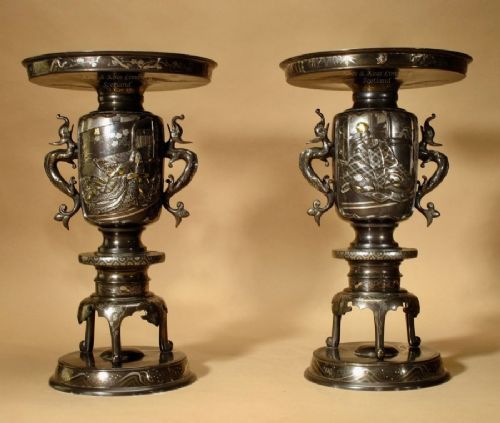
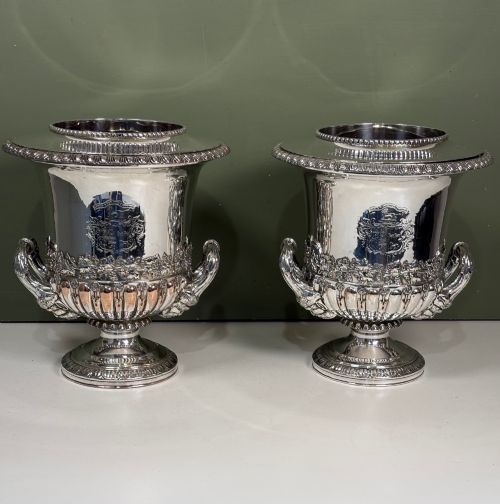
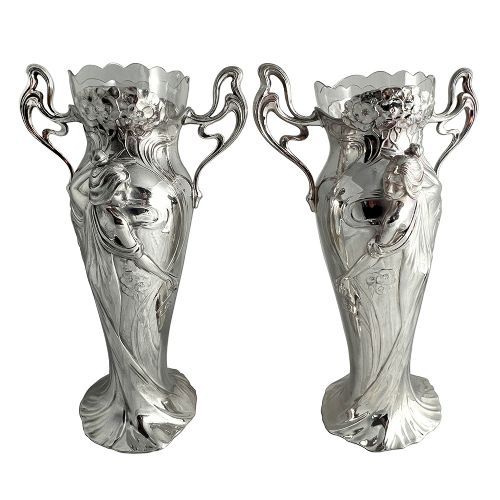
When you search for a silvered metal vase pair, you are looking at dual decorative vessels fashioned from materials such as silver plate, chrome, pewter, and bronze. The pieces span from the 19th Century and Victorian eras into the 1920s and 1930s, encompassing forms like wine coolers, pedestal urns, and figural maiden vases.
On this page, you are most likely to meet 19th Century silver plated items or Art Deco chrome pairings. Makers such as WMF and Beldray Ltd appear alongside Japanese Meiji Period bronze inlaid pieces and French Grand Tour neoclassical urns.
The assortment shifts between classical revival forms and modernist Secessionist designs. Buyers encounter both lidded ormolu vessels and simpler faux urns intended for prominent display in a room.
How they were made
The construction of these vessels relies on base metals finished with silver plating, chrome, or silvered bronze. Artisans shaped pewter, bronze, and base metals through casting and metalworking techniques characteristic of their respective periods.
Many examples incorporate mixed media elements such as glass inserts or marble components. Surface decoration often includes gold inlay, silver inlay, and figural sculptural additions cast alongside the main body of the vessel.
Silvered Metal Vase Pair Retail Price Guide 2026
Typical asking prices for silvered metal vase pair among the pieces listed under this phrase on Sellingantiques today, from the lower quarter to the upper quarter. They describe what is for sale here now, not the wider market.
Some pairs double as wine coolers, ensuring your vintage beverages remain as chilly as the metalwork enclosing them.
What varies in quality
Quality in these pieces is determined by the crispness of the casting and the refinement of the surface finish. Items featuring detailed figural work or intricate metal inlay demonstrate a higher level of workshop execution than plain production pieces.
The integrity of the metal surface plating and the weight of the underlying bronze, pewter, or chrome set the better examples apart. Finer pieces maintain balanced proportions and harmonious integration between mixed materials like glass and metal.
WMF·Beldray Ltd
The Silvered Metal Vase Pair Glossary
- Silver Plate
- A thin layer of silver applied to a base metal such as copper or Britannia metal. This technique allowed manufacturers to produce lustrous vessels at a lower cost than solid silver.
- Art Deco
- A design style from the 1920s and 1930s characterised by sleek geometric lines and industrial materials like chrome. Pieces from this period favor streamlined forms over ornate historical revivalism.
- Ormolu
- Gilded bronze applied to ornamental objects and furniture mounts. The technique creates a rich golden finish that contrasts with silvered metals.
- Secessionist
- An early twentieth century Central European design movement that rejected historicism in favor of clean forms and stylized natural motifs. It shares roots with Art Nouveau and the Vienna Secession.
Silvered Metal Vase Pair: Frequently Asked Questions
What periods do these pairs cover?
The selection spans from the 19th Century and Victorian eras into the early decades of the twentieth century. Examples include items dated around 1900, 1920, and 1930.
Design styles shift accordingly, moving from classical revival and Japanese Meiji Period works to Art Nouveau and Art Deco creations.
How were these metal vessels used?
These pieces functioned primarily as decorative ornaments, garnitures, or display urns within period interiors. Some specific forms, such as wine coolers, served a functional role during dining.
Pairs were typically manufactured to flank a fireplace mantel, sideboard, or central table as part of a symmetrical arrangement.
How do I care for silvered metal?
Silvered and plated surfaces require gentle cleaning with a soft cloth to avoid wearing away the thin metallic layer. Abrasive polishes should be avoided, especially on chrome and delicate silver plate.
Keeping the pieces away from excessive moisture preserves both the metal finishes and any integrated glass or marble elements.
How do I distinguish Victorian from Art Deco pairs?
Victorian and 19th Century pieces often display ornate classical details, figural maiden motifs, or heavy bronze casting influenced by the Grand Tour. They lean towards historical revivals and traditional urn shapes.
Art Deco pairs from the 1920s and 1930s utilise clean lines, polished chrome, and geometric styling that reflect industrial manufacturing of the interwar period.