



Silver Wine Base
These silver wine base pieces are table silver and drink vessels designed to hold bottles and cups securely, bringing traditional British dining elegance home.
Silver Wine Base
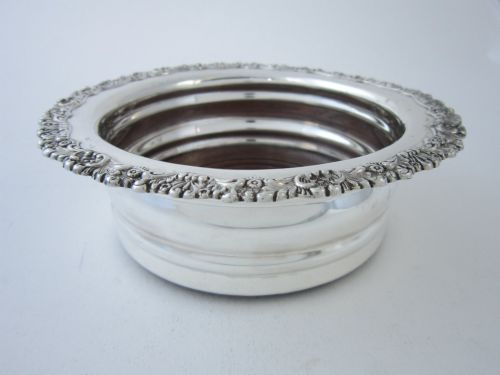
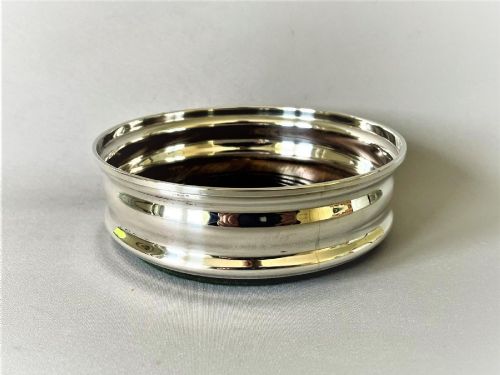
When you search for silver wine base, you encounter a selection of table vessels designed primarily for wine service, including bottle coasters, decanter rests, and goblets. These items function as practical dining accessories that protect table surfaces while displaying fine drinkware.
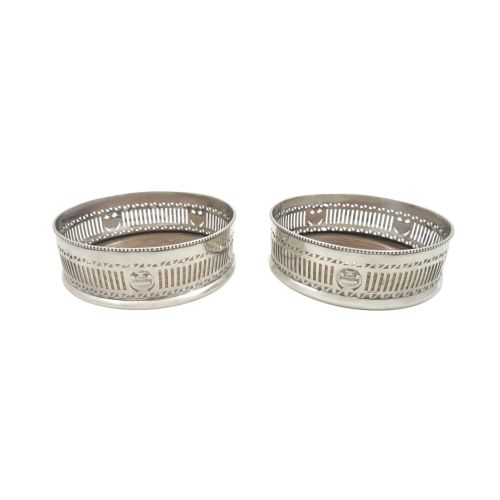
The pieces appearing on this page span several distinct eras, notably the Victorian, Edwardian, and Georgian periods, alongside twentieth-century iterations from the 1910s, 1920s, and 1960s. Common forms include single bottle coasters, paired champagne holders, presentation bowls, and traditional chalices.
Makers utilised various traditional formats, ranging from simple mahogany-based coasters with silver rims to elaborate Art Nouveau fruit bowls and vase-shaped goblets. Collectors frequently encounter matching pairs alongside individual serving pieces intended for formal dining.
How they were made
Artisans constructed these items using sterling silver, silver plate, and Old Sheffield plate, frequently combining metalwork with timber components such as mahogany. Interiors often feature felt linings or wooden bases to cushion glass bottles and prevent scratching.
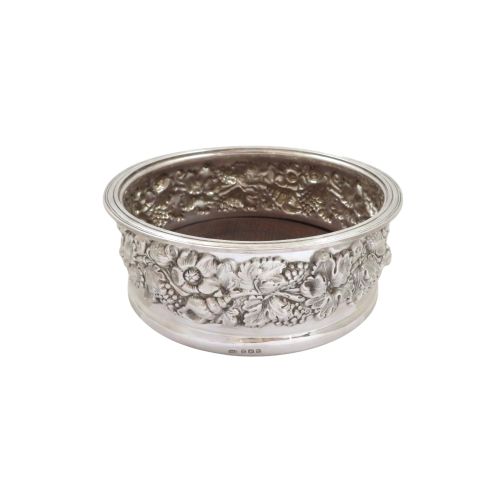
Silversmiths employed techniques including casting, hammering, and engraving to achieve decorative motifs such as grape and vine patterns. Plated pieces utilised base metals fused with silver layers or applied silver coatings to create durable diningware.
Silver Wine Base Retail Price Guide 2026
Typical asking prices for silver wine base among the pieces listed under this phrase on Sellingantiques today, from the lower quarter to the upper quarter. They describe what is for sale here now, not the wider market.
Listings incorporate items from the Victorian, Edwardian, and Georgian eras, alongside mid-century twentieth-century examples.
What varies in quality
The standard of craftsmanship depends upon the precision of the metalwork, the depth of any repoussé or engraved decoration, and the integrity of the joints between metal and wood. Superior items display crisp detailing in ornamentation such as vine leaves and heavy gauge silver or thick plating.
Condition factors relate to the preservation of the silver surface, the stability of internal wooden bases, and the intact nature of any protective felt lining. Pieces retaining clear hallmarks or original makers' marks command greater interest from discerning collectors.
The Silver Wine Base Glossary
- Sterling silver
- A silver alloy containing 92.5 percent pure silver by mass and 7.5 percent other metals, usually copper, ensuring structural durability for tableware. This standard has governed British silversmithing for centuries.
- Old Sheffield plate
- An early form of silver plating produced by fusing a sheet of silver to a thicker copper ingot before rolling them together into sheets. This technique predates modern electroplating and leaves a distinctive edge where copper shows.
- Bottle coaster
- A small, portable tray or stand designed to hold a wine bottle on the dining table, allowing it to be slid smoothly between guests. They often feature raised rims and weighted bases.
- Silver-gilt
- Silver that has been coated with a thin layer of gold on its surface, sometimes referred to as vermeil when applied to sterling silver. This treatment protects the underlying metal and offers a rich two-tone appearance inside goblets.
- Chalice
- A large stemmed drinking cup or goblet, historically used for ceremonial purposes but adapted in Georgian and Victorian times for formal dining and presentation. They typically feature a deep bowl, a knopped stem, and a broad foot.
Silver Wine Base: Frequently Asked Questions
What is a silver wine base?
A silver wine base refers to table accessories designed to support and display wine bottles, decanters, or drinking vessels during meals. These items protect polished wooden dining tables from moisture rings and drips.
They appear as coasters, bottle trays, or elevated stands, often combining silver or silver plate with wood and felt.
How were silver bottle coasters used?
In formal dining settings, hosts placed wine bottles inside coasters so guests could slide them smoothly across the polished mahogany table after the servants left the room.
The raised rims kept the bottles secure while the felt or wooden bases absorbed condensation and prevented scratching.
How do I clean silver wine coasters?
Cleaning requires a soft microfibre cloth and a reputable silver polish formulated to remove tarnish without abrading the metal surface. Care must be taken around wooden bases and felt linings to avoid moisture damage.
Regular, gentle wiping preserves the chased details and hallmarks far better than harsh chemical dips.
Are older coasters safe for modern bottles?
Most historic bottle coasters accommodate standard wine and champagne bottles, though modern magnum sizes or oversized specialty bottles may exceed older dimensions.
Checking the internal diameter of the coaster ensures proper fit for contemporary glassware.