


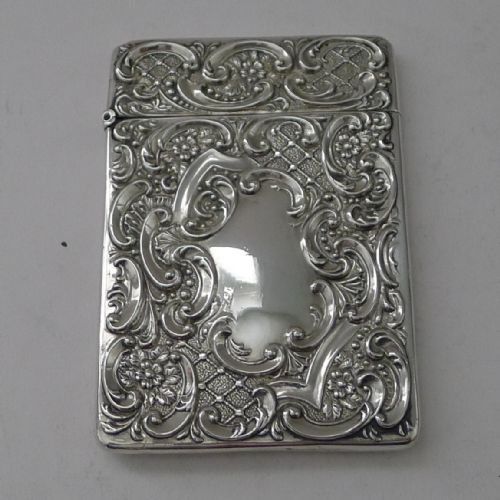


Silver Visiting Card
Silver visiting card cases are pocket carriers for social exchange, combining precise metalwork with Victorian and Edwardian etiquette.
Silver Visiting Card
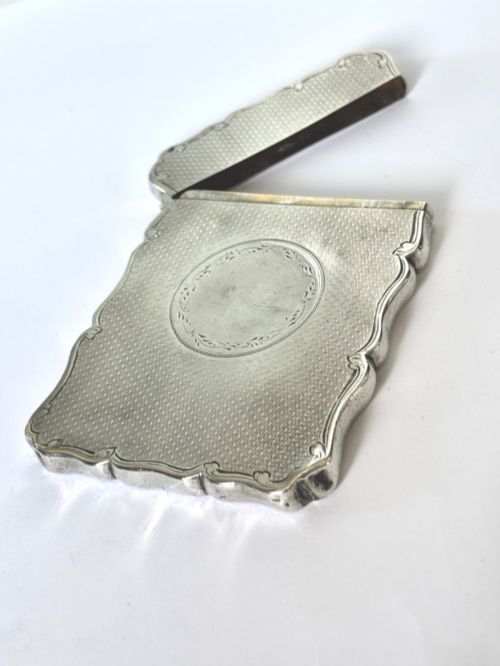
A silver visiting card case is a slender pocket receptacle designed to hold calling cards for nineteenth-century social calls. Most examples on this page date from the Victorian and Edwardian eras, spanning the mid-nineteenth century through the early twentieth century.
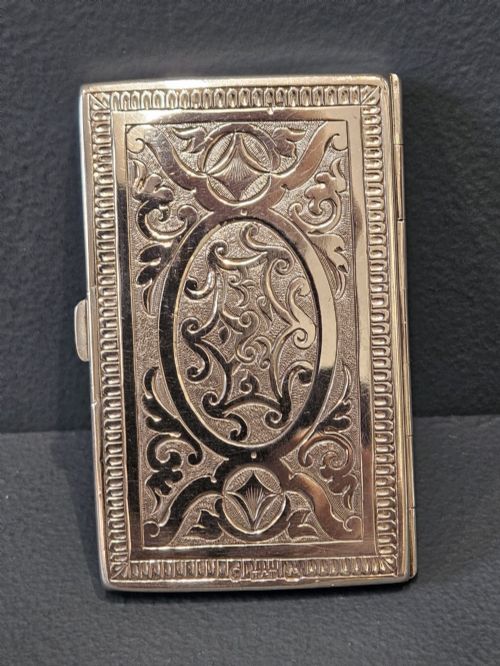
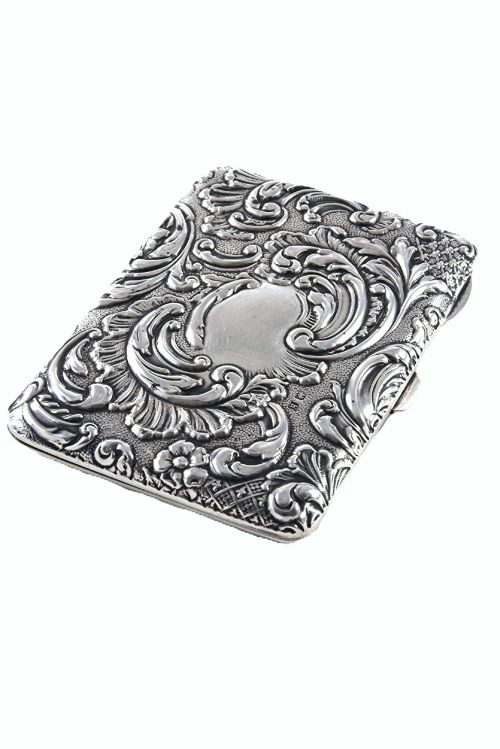
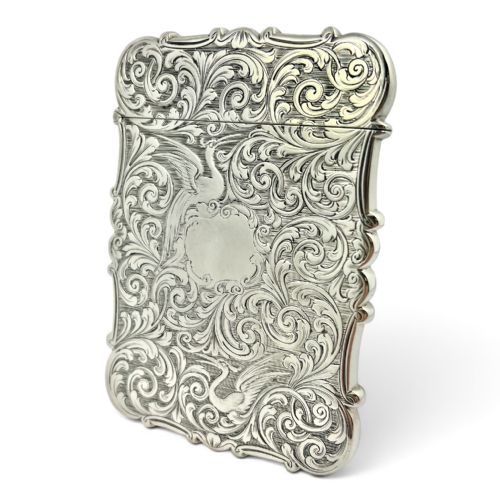
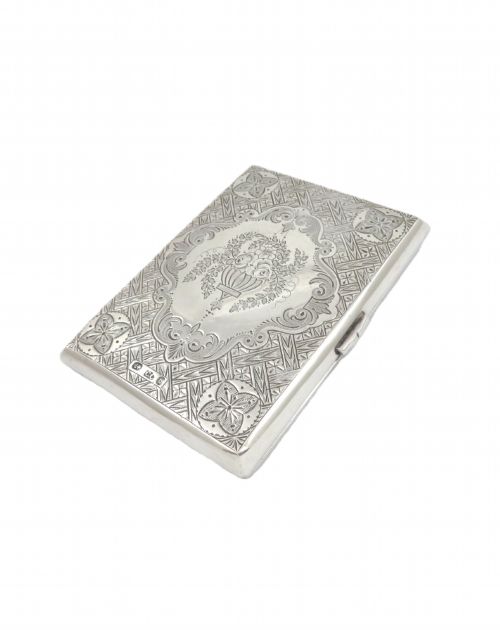
The forms vary from simple rectangular sterling silver boxes to slimline aide-mémoire items with integrated writing tablets. Collectors encounter plain polished surfaces alongside deeply engraved foliage, repoussé deities, and architectural castle top motifs.
Makers utilised diverse materials beyond sterling silver, incorporating tortoiseshell, mother of pearl, bone, and Connemara marble into the outer panels. These variations reflect both British assay office standards and international workshops from America to India.
Materials and construction techniques
Silversmiths constructed the primary body from sterling silver, shaping sheet metal through folding and soldering to form rigid protective enclosures for paper cards. Hinged lids and delicate catches secured the contents while sliding mechanisms operated supplementary aide-mémoire notebooks.
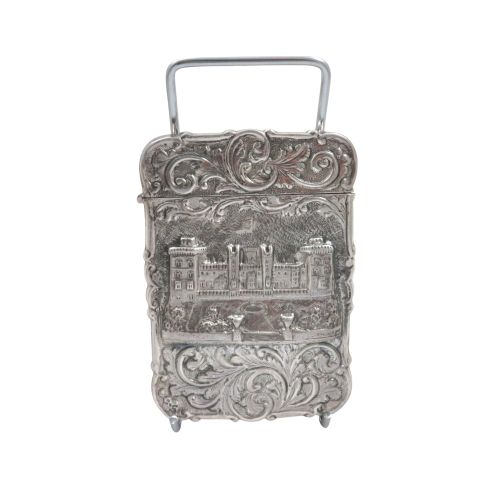
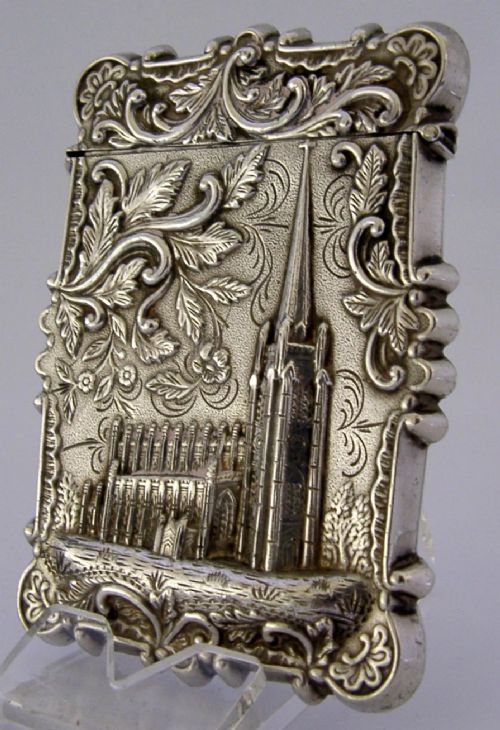
Decoration relied heavily on hand engraving, chasing, and repoussé work to push intricate relief patterns into the silver. Castle top designs required specialised dies or meticulous hand chiselling to render specific architectural landmarks in miniature detail.
Certain pieces integrated organic elements such as tortoiseshell and mother of pearl panels, pinned or glued onto metal backplates. Silver gilt treatments added a rich golden surface layer to the interior or exterior of specific Arts and Crafts items.
Silver Visiting Card Retail Price Guide 2026
Typical asking prices for silver visiting card among the pieces listed under this phrase on Sellingantiques today, from the lower quarter to the upper quarter. They describe what is for sale here now, not the wider market.
Listings feature items from the Victorian and Edwardian periods, incorporating materials such as tortoiseshell, mother of pearl, and Connemara marble.
Distinctions in craftsmanship and design
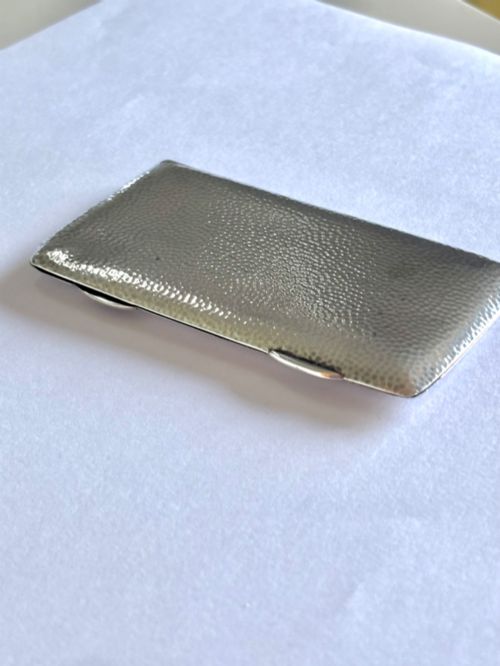
Quality rests upon the crispness of the chased or engraved detail and the structural integrity of the hinge. Superior examples display deep, three-dimensional architectural relief or precise hammered textures rather than shallow, worn surface stamping.
The incorporation of sculptural elements like castle top facades or pictorial scenes such as Windsor Castle and St Paul's Cathedral elevates the execution. Exceptional pieces also feature uncommon secondary materials like Connemara marble or complex dual-purpose aide-mémoire interiors.
Sampson Mordan·Nathaniel Mills·George Unite·Foxall and Co
The Silver Visiting Card Glossary
- Castle top
- A silver case featuring a detailed architectural relief of a famous landmark on the cover. These architectural vignettes are prized by collectors for their miniature precision.
- Aide memoire
- A pocket notebook or case equipped with leaves and often a tiny pencil for recording notes or appointments. They frequently double as calling card holders.
- Repousse
- A metalworking technique where the artisan hammers the metal from the reverse side to form a raised design in relief. Details are subsequently refined from the front using chisels.
- Silver gilt
- Sterling silver that has been coated with a thin layer of gold on its surface. This treatment provides a warm two-tone appearance.
- Sterling silver
- An alloy consisting of ninety-two point five percent silver and seven point five percent other metals, typically copper. British items bear hallmark stamps verifying this standard.
Silver Visiting Card: Frequently Asked Questions
How were these cases used?
Owners carried them in pockets or reticules when visiting acquaintances to leave a card if the host was not at home.
Some variants included internal writing tablets or spring clips to manage notes and cards simultaneously.
How do I identify Victorian examples?
Victorian pieces often display rich ornamentation, including floral engraving, Gothic Revival motifs, or detailed architectural castle top scenes.
Assay office marks and date letters stamped into the silver provide precise manufacturing years.
What are castle top cases?
Castle top cases feature high-relief depictions of famous British or international buildings pressed or chased onto the lid.
Examples include specific landmarks like Windsor Castle or St Paul's Cathedral.
Did makers use other materials?
Yes, silversmiths combined sterling silver with tortoiseshell, mother of pearl, bone, and Connemara marble.
These mixed-material pieces showcase diverse aesthetic influences from Anglo-Indian designs to Arts and Crafts simplicity.