





Silver Vermeil Spoons
Silver vermeil spoons bring a warm gilt lustre to the table, offering centuries of craftsmanship in sterling silver and gold wash.
Silver Vermeil Spoons
When you search for silver vermeil spoons, you encounter a range of forms spanning the Georgian period to the mid-twentieth century, including serving spoons, caddy spoons, and sifter spoons. These items combine silver bases with gilt surfaces, reflecting diverse regional practices from British workshops to Imperial Russian and continental European centres.
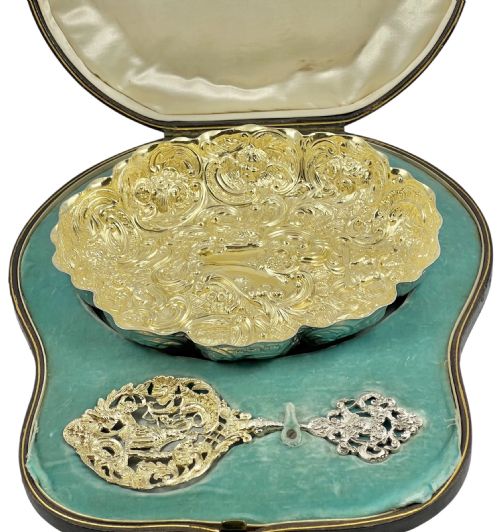
The pieces on this page encompass various styles, notably Georgian, Edwardian, Arts and Crafts, and Victorian designs. Alongside standard flatware, the selection includes specialised items such as medical kits and sugar bowls paired with spoons, demonstrating the wide utility of gilt silver objects.
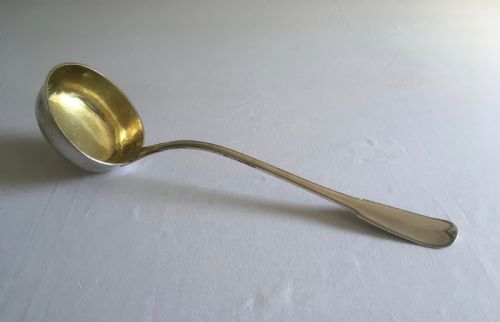
Origins vary across the evidence, featuring items from London, Moscow, and Denmark, alongside German ladles and Russian niello work. This international spread shows how different silversmithing traditions interpreted the application of gold over silver surfaces.
Materials and construction
Makers utilised sterling silver and solid silver as the primary substrate, applying gold gilt, silver-gilt, or gold wash to the finished metal surface. This technique provided the rich yellow or warm metallic tone associated with vermeil without relying entirely on solid gold.
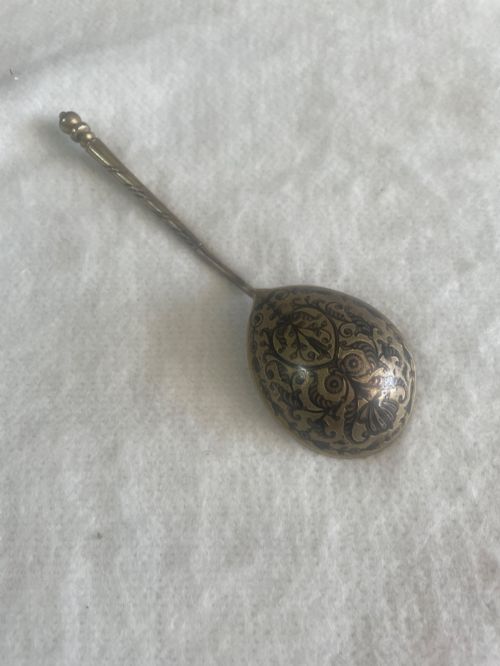
Decoration often involved niello work for dark contrasting designs, alongside cloisonné enamel and vibrant enamel applications as seen on Danish Christmas spoons. Caddy spoons and larger serving pieces were shaped through traditional hammering, piercing, and casting methods.
Silver Vermeil Spoons Retail Price Guide 2026
Typical asking prices for silver vermeil spoons among the pieces listed under this phrase on Sellingantiques today, from the lower quarter to the upper quarter. They describe what is for sale here now, not the wider market.
Travelling medical kits tucked inside silver cases ensure that even nineteenth-century coughs met with proper metallurgical dignity.
Factors of quality and finish
Quality in these pieces rests upon the crispness of the chasing, the intact survival of the gold gilt or silver-gilt layer, and the precision of decorative elements like cloisonné enamel or niello inlay. Finer examples retain their original gilding depth and show minimal wear on high-friction bowl edges.
The integrity of the underlying silver structure and the legibility of hallmarks, makers' marks, and town marks further distinguish superior items. Pieces featuring complex hand-formed shovel bowls or detailed medical kit fittings demonstrate higher levels of specialised craftsmanship.
William Chawner II·Vasily Agafonov
The Silver Vermeil Spoons Glossary
- Vermeil
- Sterling silver coated with a layer of gold. This finish offers the appearance of solid gold while utilising a silver base.
- Niello
- A black metallic alloy used as an inlay on engraved silver. It creates distinct contrasting patterns, frequently found on Russian pieces.
- Caddy spoon
- A short spoon designed for measuring tea leaves from a caddy. These often feature decorative shovel or shell bowls.
- Sifter spoon
- A spoon with a pierced or perforated bowl used for dusting sugar over food. The piercing patterns vary by period and style.
- Silver-gilt
- Silver that has been coated with a thin layer of gold. The terms silver gilt and gold gilt denote a similar decorative surface treatment.
Silver Vermeil Spoons: Frequently Asked Questions
What is a silver vermeil spoon?
A silver vermeil spoon is a sterling or solid silver piece coated with a layer of gold. This combination provides the rich appearance of gold while maintaining a silver core.
The listings show examples ranging from early Georgian items to mid-twentieth-century designs, each displaying the characteristic warm tone of the gilt surface.
How were caddy spoons used?
Caddy spoons were utilised to scoop dry tea leaves from storage containers known as tea caddies. Their compact size and shallow bowls made them practical for daily domestic routines.
Many surviving examples feature shovel-shaped or decorative bowls that reflect the specific aesthetic preferences of the Georgian and Victorian eras.
How do I identify a Russian niello spoon?
Russian niello spoons feature dark contrasting metallic inlays pressed into engraved silver designs. These pieces often originate from Moscow centres during the nineteenth century.
Examining the surface reveals intricate geometric or floral patterns defined by the dark niello work against the bright silver and gilt ground.
Are these spoons made of solid gold?
No, these pieces are constructed from silver or sterling silver with a surface application of gold gilt. The technique applies a thin gold layer over the silver base metal.
This method was standard practice for creating decorative tableware that combined the durability of silver with the visual warmth of gold.