

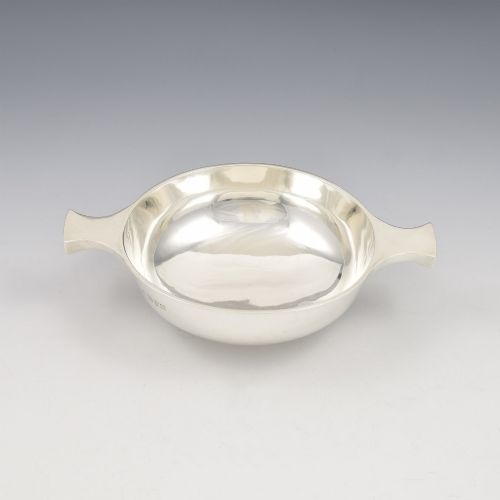


Silver Two Handle Bowl
These silver two handle bowl examples range from early porringers to mid-century quaichs, offering twin grips and centuries of smithing history for your table.
Silver Two Handle Bowl
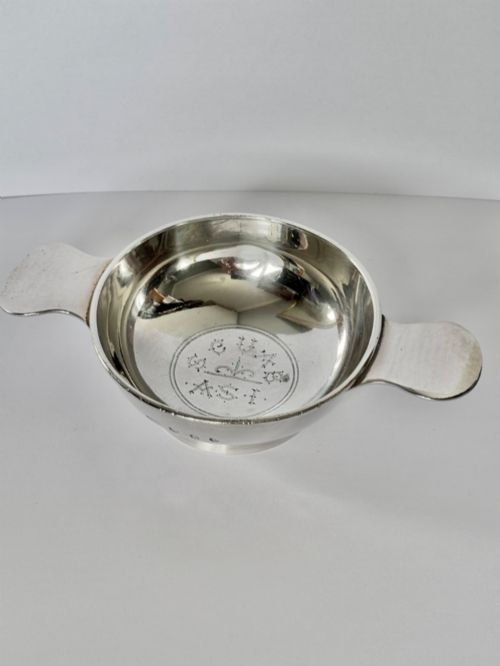
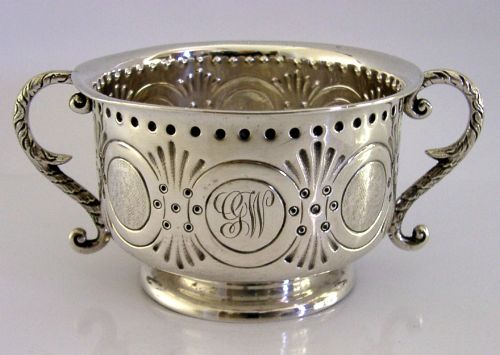
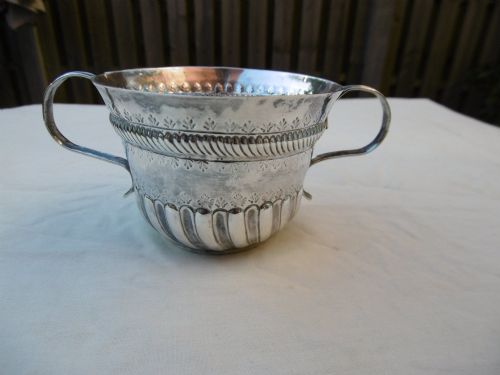
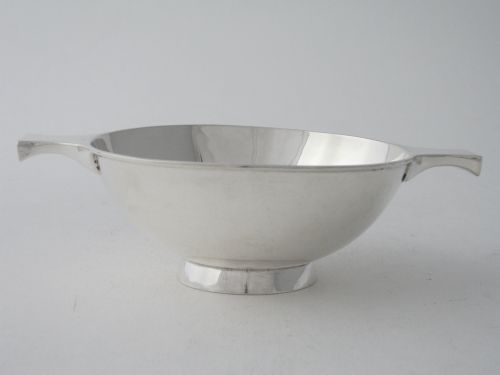
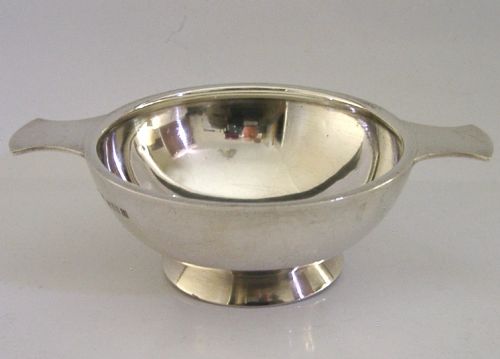
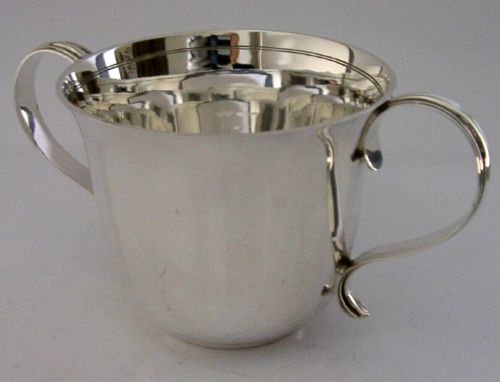
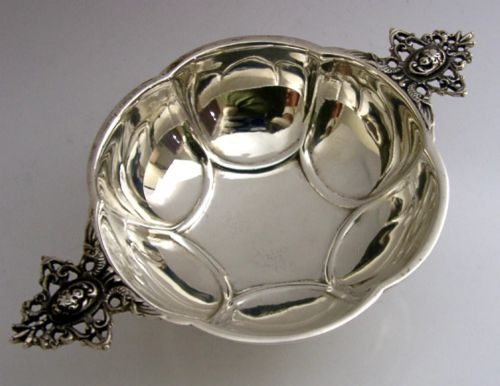
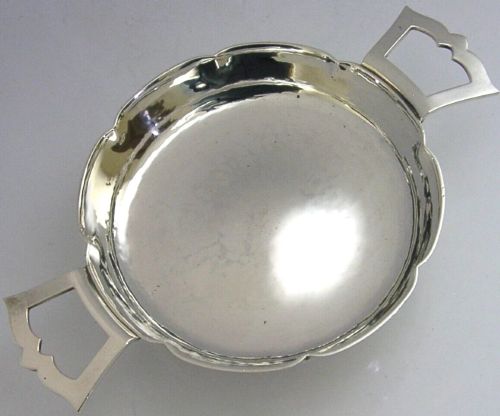
A silver two handle bowl encompasses forms such as porringers, quaichs, sugar bowls, and barware vessels designed with twin terminals for lifting. You will encounter pieces spanning the seventeenth century through to the mid-twentieth century, with strong representation from the Edwardian period and the 1930s.
The traditional porringer and the Scottish quaich dominate the forms, alongside punch bowls, trophy cups, and Dutch brandy bowls. These vessels served diverse domestic functions, from personal christening cups and broth bowls to shared drinking vessels and presentation pieces.
How they were made
Silversmiths utilised sterling silver, solid silver, and Britannia standard silver, alongside silver plate and electroplated nickel silver for later or larger display pieces. Technique relied on hand-raising from flat metal sheets or casting bodies and handles separately before soldering them securely in place.
Decoration varied from planished surfaces showing hammer marks to cast heraldic motifs, repoussé panels, and crisp engraving. Makers utilised traditional joining methods to attach distinct lug handles, loop handles, or cast scroll grips to the main bowl body.
Silver Two Handle Bowl Retail Price Guide 2026
Typical asking prices for silver two handle bowl among the pieces listed under this phrase on Sellingantiques today, from the lower quarter to the upper quarter. They describe what is for sale here now, not the wider market.
Listings feature sterling silver, silver plate, and Britannia standard silver across periods from the 17th century to the mid-20th century.
What varies in quality
Quality rests in the weight of the metal, the crispness of any chased or planished surface decoration, and the structural integrity of the handle joints. Early Britannia standard pieces and seventeenth-century porringers command attention for their historical scarcity and survivor's condition.
Maker execution defines the upper tier, where identifiable silversmiths or London guilds produced balanced proportions and clean hallmarks. Lesser examples might show thinning metal from aggressive cleaning or later repairs to the delicate twin handles.
John William Kirwan·Asprey·George Greenhill Jones·R E Stone·Nathan and Hayes·Daniel and Arter·John Barrett
The Silver Two Handle Bowl Glossary
- Porringer
- A two-handled bowl used historically for porridge, broth, or as a christening gift. These vessels often feature pierced flat handles or scroll grips.
- Quaich
- A traditional Scottish two-handled drinking vessel used for whisky or other spirits. The form typically includes short, flat projecting lugs rather than vertical loops.
- Britannia Standard
- A higher grade of silver purity introduced in England in 1696 to discourage the melting of coinage. It contains 95.84 percent pure silver.
- Planished
- A metalworking finish achieved by hammering the surface with a small-faced hammer to create a textured, light-reflecting pattern. This technique is prominent in Arts and Crafts silver.
- Barware
- Vessels and implements intended for the preparation and serving of drinks. In this category, the term usually applies to quaichs and brandy bowls used for spirits.
Silver Two Handle Bowl: Frequently Asked Questions
What is a silver porringer used for?
Historically, a porringer served as a small personal bowl for soft foods like porridge, broth, or posset. Over time, many evolved into decorative presentation pieces or traditional christening gifts for newborns.
The twin handles allowed the vessel to be lifted easily with two hands. Today, collectors primarily display them as fine examples of early silversmithing.
How do I identify a Scottish quaich?
A quaich is immediately recognisable by its shallow, circular bowl and two opposing flat handles, known as lugs. They originated in the Scottish Highlands as communal drinking vessels for whisky.
Later examples from the Edwardian era and mid-century retain this distinctive silhouette. They often feature simple bands or traditional Celtic engraving.
What does Britannia standard silver mean?
Britannia standard is a purer alloy than standard sterling silver, containing 95.84 percent pure silver instead of 92.5 percent. The English government mandated this higher standard between 1696 and 1719.
Pieces from this era bear specific hallmarks, including the figure of Britannia and a lion's head erased. Finding an 18th-century porringer with this standard marks it as an early survival.
How should I clean my silver bowl?
Cleaning requires a mild silver dip or a gentle cream polish applied with a soft cloth to protect the surface. Avoid abrasive scrubbing pads that can wear away thin silver plating or soften antique hallmarks.
Rinse the bowl thoroughly in warm water and dry it completely with a lint-free cloth. Regular, gentle dusting is often sufficient for pieces kept on display.