





Silver Topped Barware
Silver topped barware brings together glass vessels and precious or plated mounts to pour drinks with genuine period character.
Silver Topped Barware
Silver topped barware encompasses functional vessels designed for serving wine, spirits and mixed drinks, uniting glass bodies with silver elements. These pieces span from the Victorian and Edwardian eras through to the Art Deco period, capturing changing tastes in domestic entertaining.
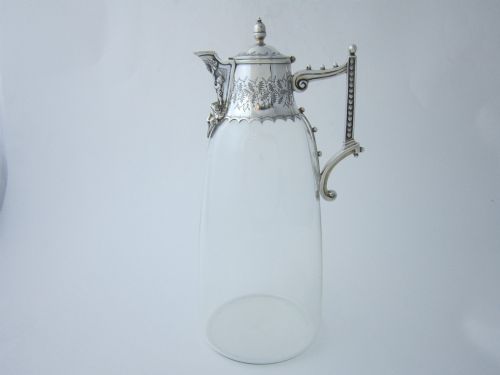
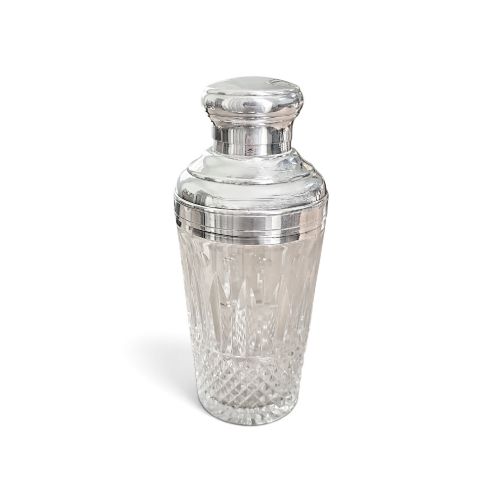
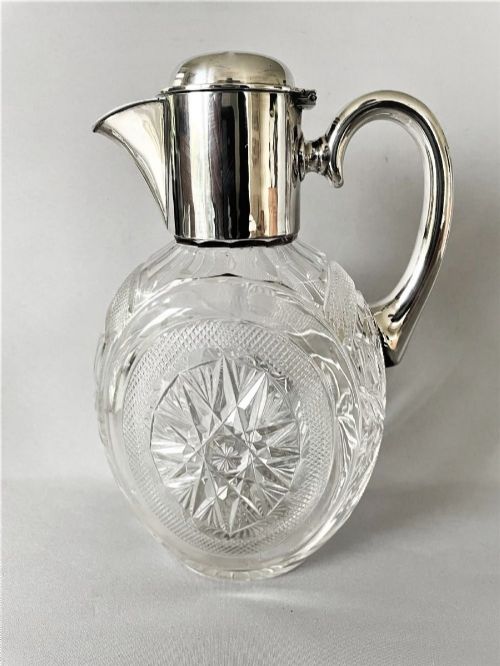
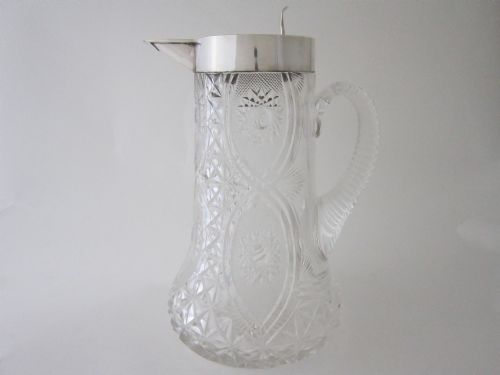
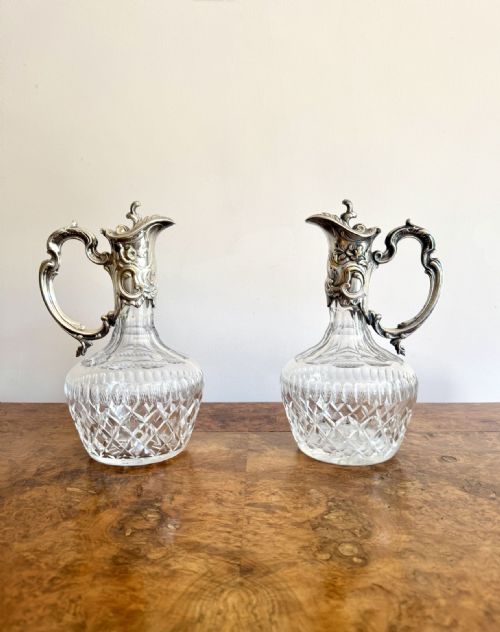
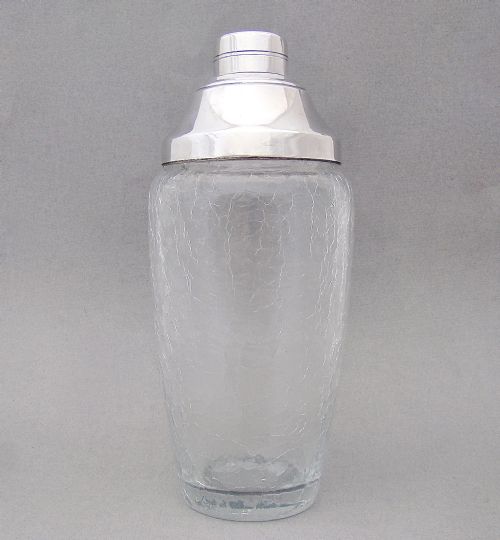
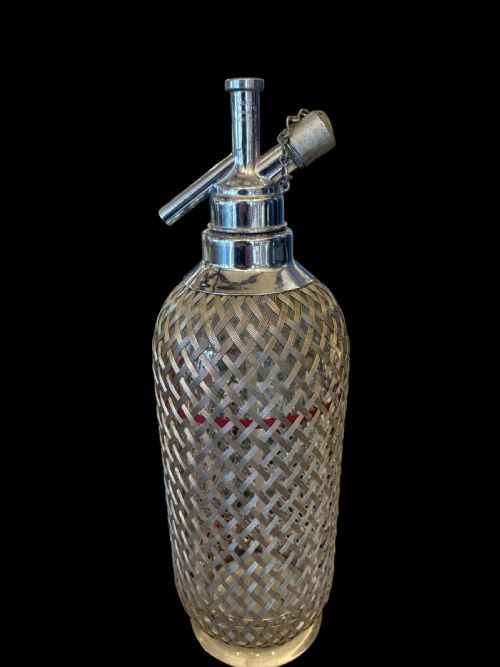
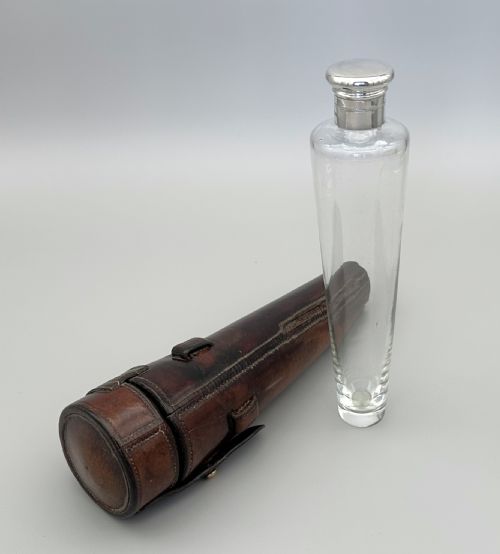
The selection on this page centres upon decanters, claret jugs, whisky noggins, cocktail shakers, hip flasks, and soda syphons. Among these, cut glass decanters and whisky noggins fitted with sterling silver mounts appear most frequently.
Originating predominantly from English and French makers, these objects served both utilitarian and display purposes in the dining room and drawing room. Their survival reflects a long tradition of hospitality and the durable nature of their construction.
How they were made
Makers combined blown or cut glass bodies with mounts fashioned from sterling silver or silver plate, often securing them with cork stoppers. Clear glass, cut glass, crackle glass, and coloured glass such as cranberry and blue varieties form the translucent bases.
Metalworking techniques involved casting, hammering, and plating to shape the collars, lids, and handles that encase the glass necks. Mounts were then meticulously fitted to the glass contours, sometimes incorporating internal mechanisms for spouts or hinges.
Silver Topped Barware Retail Price Guide 2026
Typical asking prices for silver topped barware among the pieces listed under this phrase on Sellingantiques today, from the lower quarter to the upper quarter. They describe what is for sale here now, not the wider market.
Listings feature sterling silver and silver plate combined with clear, cut, crackle, and coloured glass across the Victorian and Art Deco eras.
What varies in quality
The standard of silver topped barware is determined by the clarity and depth of the glass cutting, alongside the substantial weight of the metal mounts. Heavier gauge sterling silver collars and crisp, deep faceting on the glass distinguish finer examples.
Maker attribution and the precision of the fit between metal and glass also influence distinction. Pieces bearing clear hallmarks from established workshops demonstrate superior craftsmanship compared to unmarked or plated alternatives.
William Comyns·Asprey London·Hukin & Heath
The Silver Topped Barware Glossary
- Noggin
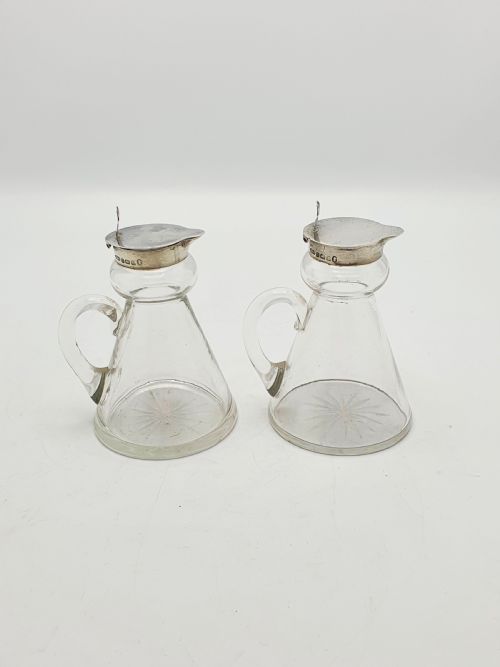
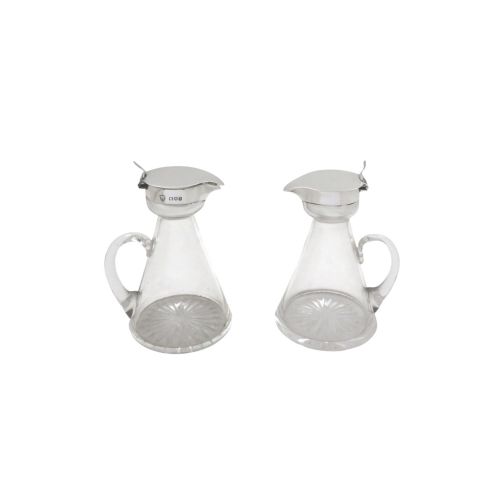
- A small vessel used for serving a single measure of spirits, typically whisky, often accompanied by a hinged silver lid and a star-cut base.
- Claret jug
- A large pouring pitcher designed specifically for red wine, combining an ornate handle and mount with an extensive glass body.
- Bitters jigger
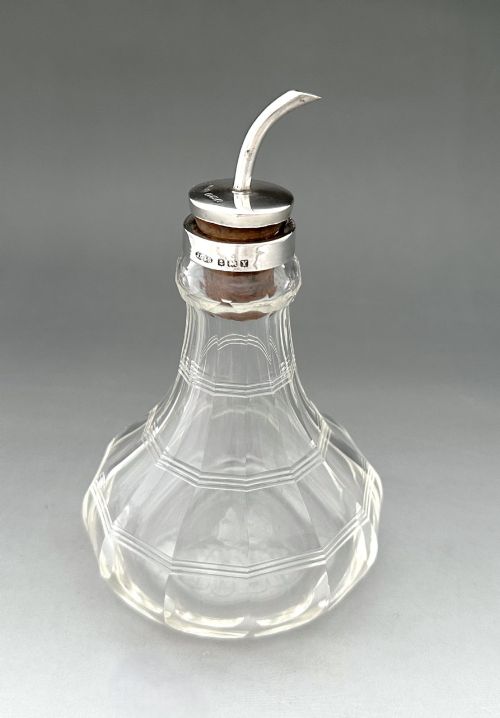
- A small dispenser used for adding concentrated botanical flavourings to cocktails, frequently fitted with a specialised pouring top.
- Sterling silver
- An alloy consisting of silver and other metals, prized for its durability and standard purity, commonly stamped with British assay marks.
- Soda syphon
- A pressurized bottle used to dispense carbonated water, usually encased in a wire mesh or fitted with a metal dispensing head.
Silver Topped Barware: Frequently Asked Questions
What is a whisky noggin?
A whisky noggin is a small, individual decanter designed to hold a single measure of spirits, typically featuring a sturdy glass body and a hinged silver top.
These pieces were common on sideboards and smoking tables during the Victorian and Edwardian periods for personal hospitality.
How do I clean silver topped barware?
Cleaning requires careful handling of both the glass and the metal mounts, keeping polish away from vulnerable glass surfaces and cork inserts.
Warm soapy water and soft cloths preserve the integrity of antique silver plating and sterling collars without causing abrasion.
How are different periods identified?
Periods are identified through a combination of stylistic cues, such as geometric Art Deco lines or elaborate Victorian ornamentation, alongside metal hallmarks.
Assay marks and registration dates stamped onto the silver mounts provide precise chronological markers for many pieces.
Were these items meant for daily use?
These items were produced for active use in domestic entertaining, formal dining, and travel across the nineteenth and twentieth centuries.
Their robust construction in glass and metal ensured they could withstand regular handling during the service of wine and spirits.