
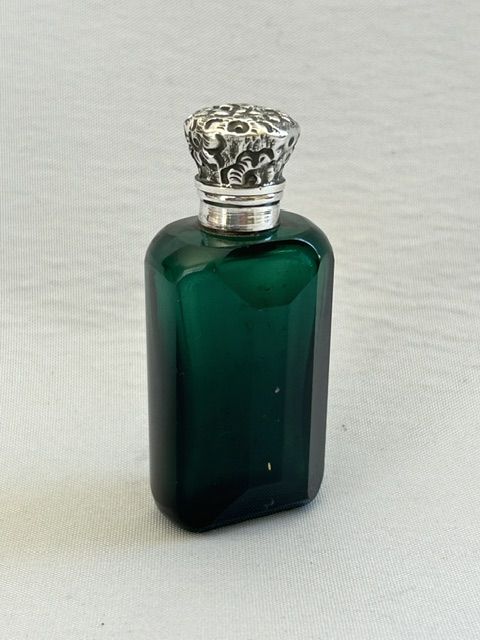

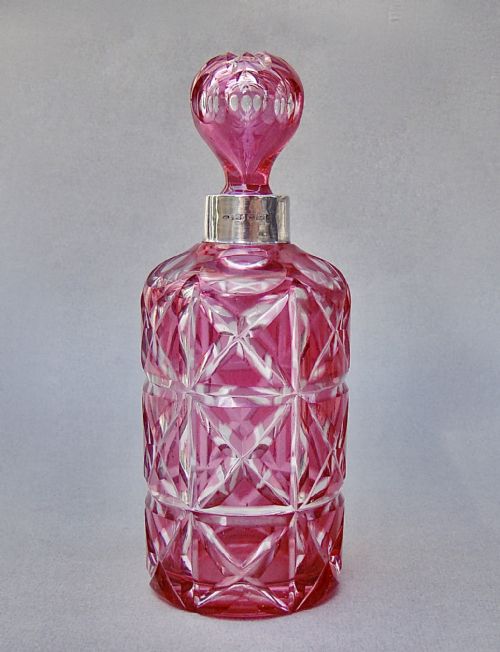


Silver Top Perfume Flask
These silver top perfume flask pieces combine precious metal mounts with glass bodies, offering a portable vanity accessory from the nineteenth and early twentieth centuries.
Silver Top Perfume Flask
A silver top perfume flask combines a glass body with a fitted metal lid, designed to hold scented liquids for personal use. The form appears frequently from the Victorian period through the Edwardian era and into the Art Deco years.
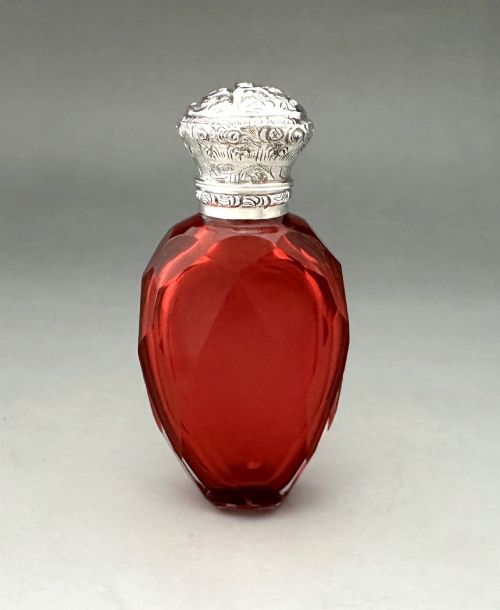
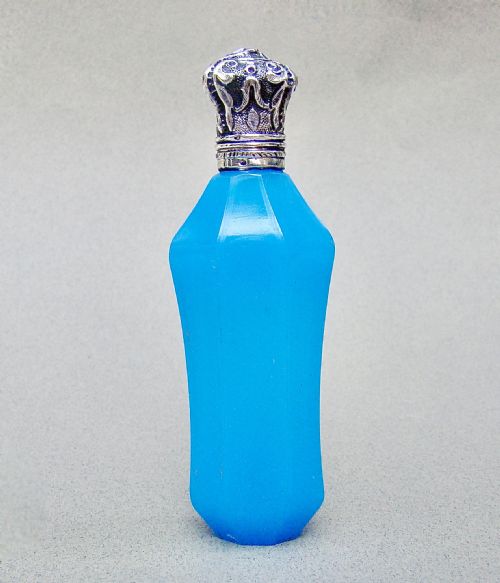
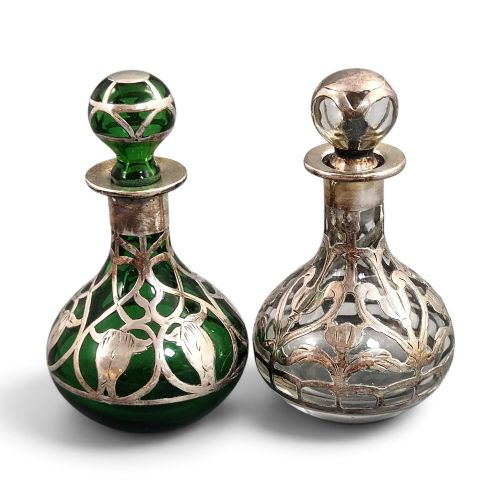
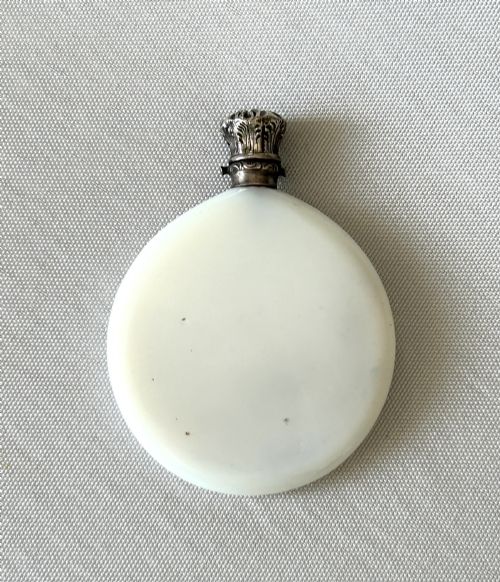
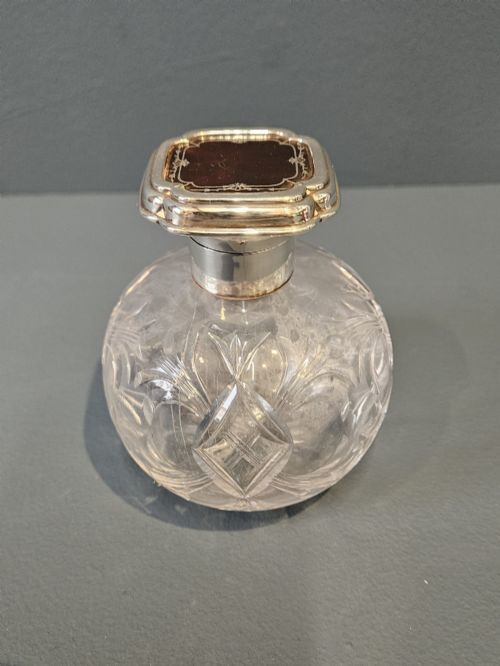
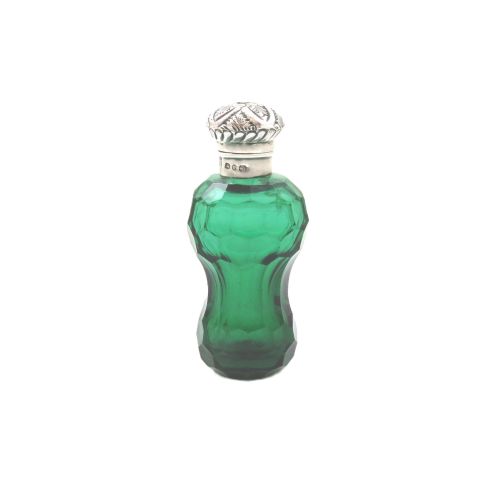
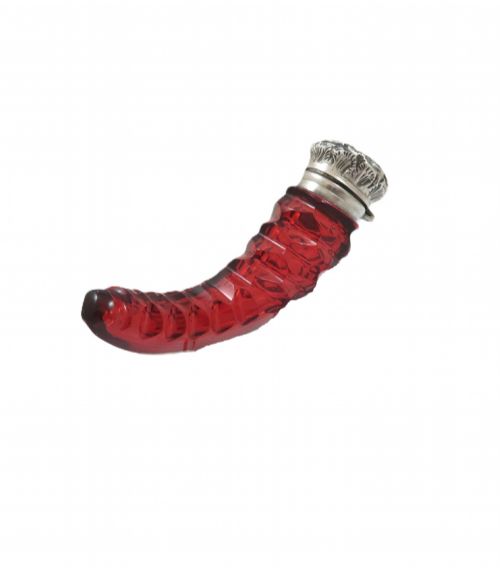
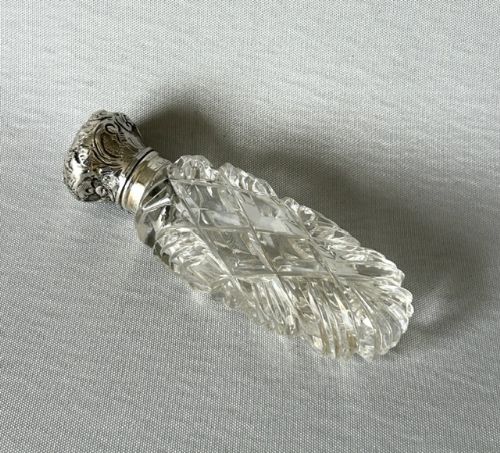
Most examples found in these listings pair sterling silver or silver mounts with coloured or clear glass vessels. Makers utilised various glass types including opaline, cranberry, ruby, teal, and cut crystal.
The selection ranges from small pocket bottles to larger vanity pieces, occasionally incorporating tortoiseshell or guilloche enamel alongside the silver top.
Materials and construction
Glass bodies were blown or moulded into various shapes such as eggs, icicles, or traditional bottles, often casing one layer of coloured glass over another. Overlay techniques allowed craftsmen to cut through the outer glass layer to reveal the contrasting colour beneath.
Silver mounts and lids were shaped by hand or stamped, frequently bearing hallmarks from assay offices like Birmingham that record the year of creation. Enamel work and silver overlay were then applied to the metal and glass surfaces to add decorative detail.
Several flasks take the form of speckled eggs and miniature champagne bottles, proving that Victorians enjoyed hiding their cologne inside whimsical disguises.
Distinctions in quality
Quality depends on the complexity of the glasswork, such as deep hand-cutting or layered overlay, combined with the intricacy of the silver mount. Pieces featuring guilloche enamel, detailed Murano murrine work, or specialised glass types like vaseline and opaline stand apart from simpler clear glass items.
The precision of the hallmarks and the weight of the solid silver lid also mark the distinction between standard production items and finer examples.
Gorham·Harold Bushell and Co·Franchini and Bigaglia·Barnsley and Co
The Silver Top Perfume Flask Glossary
- Sterling Silver
- An alloy containing 925 parts of silver per 1000 parts of other metals, commonly used for the lids and mounts of these flasks.
- Opaline Glass
- An opaque or translucent glass developed in the nineteenth century, often appearing in pastel shades of blue, white, or turquoise on these scent bottles.
- Guilloche Enamel
- A decorative technique where enamel is layered over mechanically engraved metal, frequently seen on the silver tops of Edwardian and Art Deco flasks.
- Murrine
- Coloured patterns made in glass by stretching molten glass canes, characteristic of Venetian glass production.
- Cranberry Glass
- A rich red glass coloured with gold chloride, popular for Victorian and Edwardian scent bottles.
Silver Top Perfume Flask: Frequently Asked Questions
How do I clean a silver top perfume flask?
Use a soft cloth to polish the sterling silver lid while avoiding abrasive cleaners that might scratch the metal or glass.
Take care to keep moisture away from the interior lining or cork stopper if the flask retains its original fitting.
Can these flasks still hold perfume?
Many retain their original stoppers and can hold liquid, though older cork or glass stoppers may not form a complete seal.
Most buyers display them on vanity trays or dressing tables rather than carrying them daily.
How do I identify the date of a flask?
Examine the silver mount for hallmarks that indicate the assay office, maker, and year of production.
Stylistic elements like Art Nouveau curves or Edwardian proportions also help narrow down the period.
What glass colours are most common?
Cranberry and cut clear glass appear frequently across Victorian and Edwardian examples in the listings.
Opaline, ruby, and green glass variants also occur regularly alongside tortoiseshell and enamel details.