

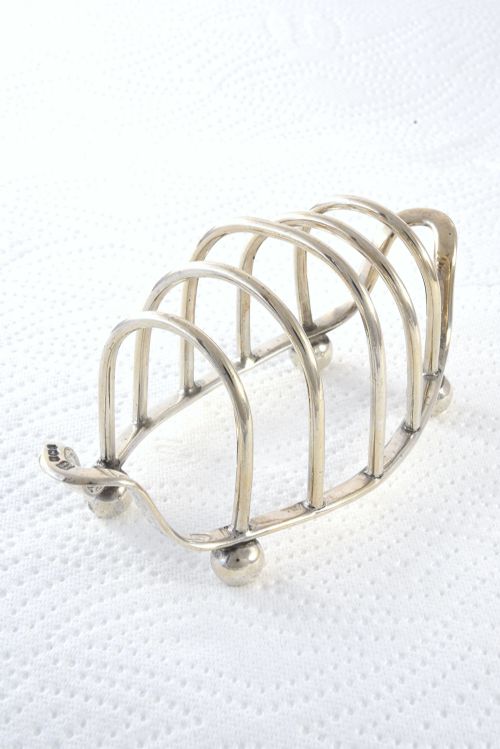


Silver Toast Server
A silver toast server brings morning breakfast to life, offering a clever way to keep slices crisp at table.
Silver Toast Server
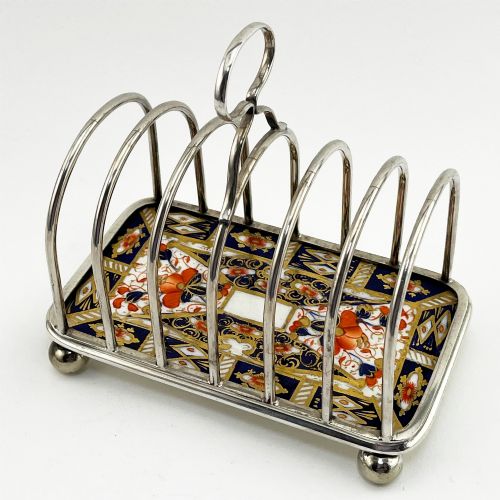
A silver toast server usually takes the form of a toast rack, designed to hold individual slices upright so steam escapes and crusts stay dry. These pieces emerge from periods spanning the Georgian era through the Victorian, Edwardian, and Art Deco years, reflecting shifting dining habits.
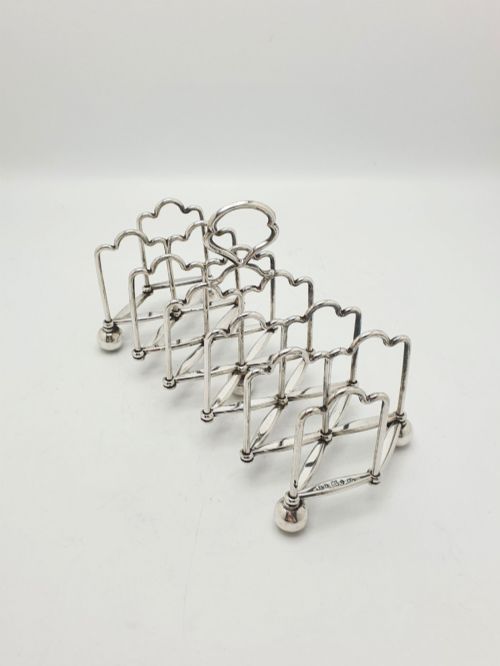
Most examples found here appear in sterling silver or silver plate, sometimes accompanied by Old Sheffield plate or electroplated nickel silver. Forms range from simple four-slice models to extending designs and specialist toasted cheese dishes.
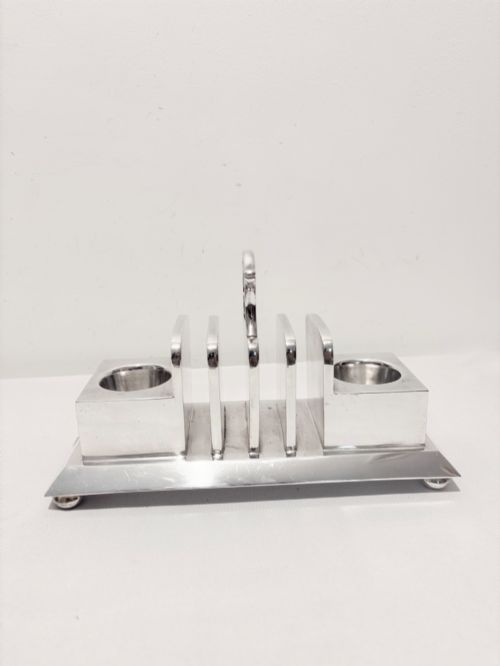
The aesthetic of a silver toast server shifts from restrained Georgian lines through ornate Victorian novelty and Aesthetic Movement flourishes to the clean geometry of the 1930s. Buyers encounter diverse regional and maker marks stamped directly into the metal.
Materials and construction
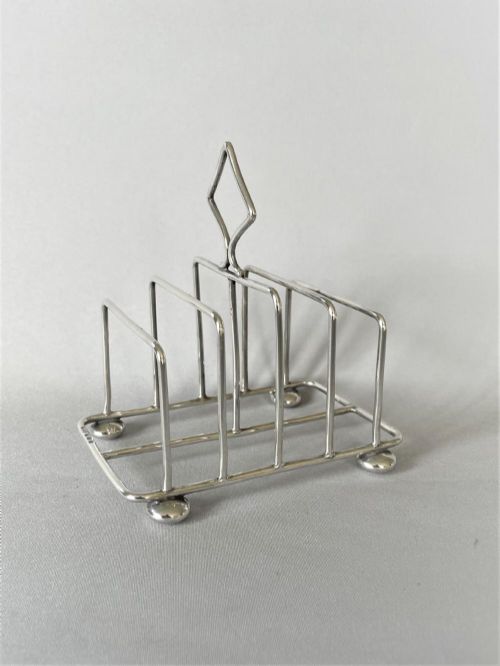
Silversmiths constructed these servers using solid sterling silver or by applying silver to base metals through early plating methods like Old Sheffield plate or later electroplating. Individual wire or bar sections were carefully soldered to form the dividing loops and sturdy base frames.
Handles and feet often involved casting distinct elements before attaching them securely to the main rack body. Makers frequently incorporated wooden components or ball feet to insulate heat and protect dining surfaces.
Silver Toast Server Retail Price Guide 2026
Typical asking prices for silver toast server among the pieces listed under this phrase on Sellingantiques today, from the lower quarter to the upper quarter. They describe what is for sale here now, not the wider market.
Some Victorian breakfast tables featured novelty toast servers shaped like riding stirrups, ready for hounds and horses.
Judging quality in silver toast servers
Quality rests upon the crispness of the wirework and the integrity of the soldered joints connecting the dividers to the base. Heavier gauge metal provides structural rigidity, ensuring the rack resists bending during daily use.
Design ambition separates standard tableware from exceptional work, particularly where makers employ modernist principles or novelty equestrian motifs. Preserved silver surfaces and legible hallmarks further elevate a piece.
Elkington·Hukin & Heath
The Silver Toast Server Glossary
- Toast rack
- A table utensil featuring multiple upright metal loops designed to hold slices of toast. This form prevents condensation from making the bread soggy.
- Old Sheffield plate
- An early composite material made by fusing a thin sheet of silver to a thicker copper base. Pieces produced this way show subtle traces of copper beneath worn high points.
- Electroplated nickel silver
- A base metal alloy of copper, nickel, and zinc coated with a layer of pure silver through electrolysis. This technique became widespread during the nineteenth century for producing durable tableware.
- Hallmark
- A series of stamped official marks indicating the metal purity, assay office, and year of manufacture. These symbols allow collectors to date British silver with precision.
- Equestrian
- A decorative theme incorporating horse-related motifs such as stirrups or riding crops. In toast servers, this style appears in handles and structural framing.
Silver Toast Server: Frequently Asked Questions
What is a silver toast server used for?
A silver toast server holds warm toast upright at the breakfast table. The open divisions allow air to circulate around each slice.
This method keeps the toast crisp rather than trapping steam against the plate.
How do I clean a silver toast server?
Clean silver toast servers using a soft cloth and a specialised silver polish designed to remove tarnish gently. Avoid harsh abrasive cleaners that can scratch the metal surface.
Wash the piece in warm soapy water afterwards and dry it thoroughly with a lint-free cloth.
How do I tell Victorian toast servers apart from Georgian ones?
Georgian toast servers typically feature simpler wire frames and restrained forms reflecting neoclassical tastes. Victorian examples often introduce heavier ornamentation, novelty shapes, and varied feet.
Examining the style of the handle and any stamped hallmarks helps confirm the period of manufacture.
Can I use an antique silver toast server daily?
Antique silver toast servers suit regular daily use provided they receive gentle handling and careful hand washing. Solid silver and sturdy plate endure daily breakfast service remarkably well.
Store them safely when not in use to prevent accidental bending of the delicate wire dividers.