


Silver Tea Caddy Jar
A silver tea caddy jar brings together period craftsmanship and refined utility, holding dry leaf securely while looking correct on the dining table.
Silver Tea Caddy Jar
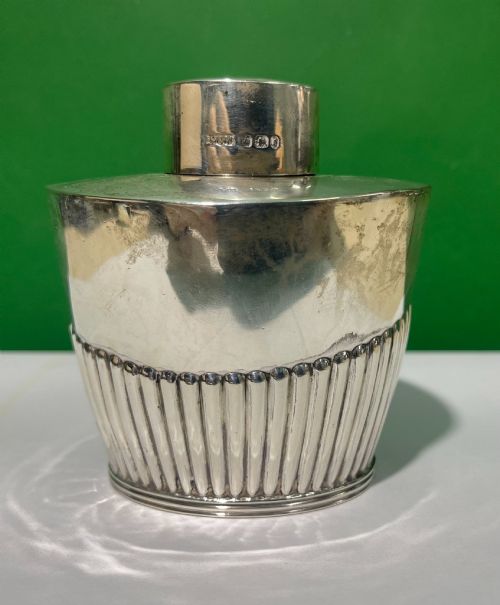
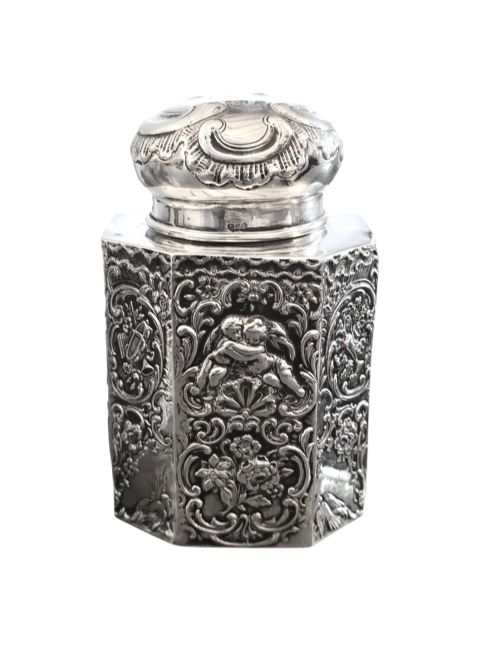
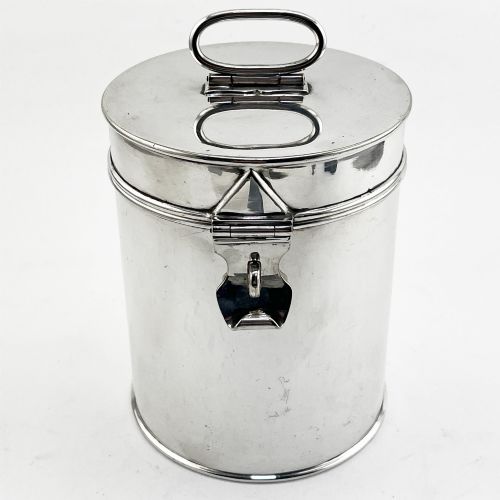
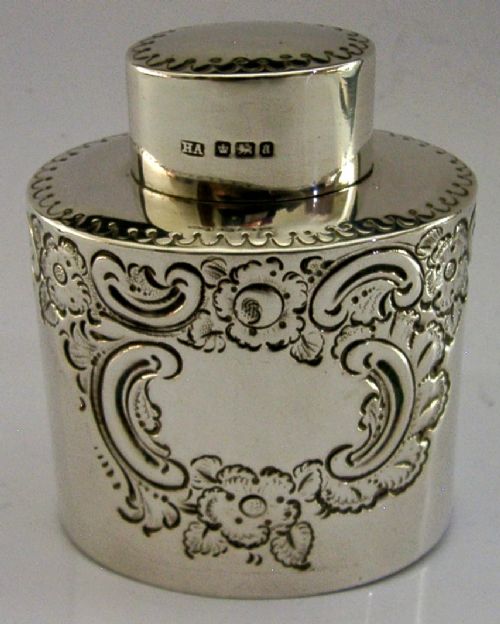
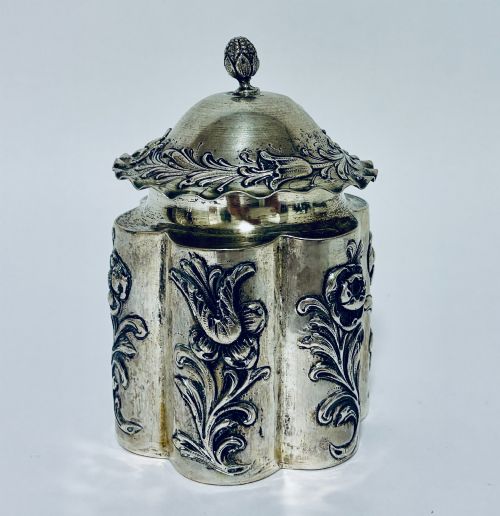
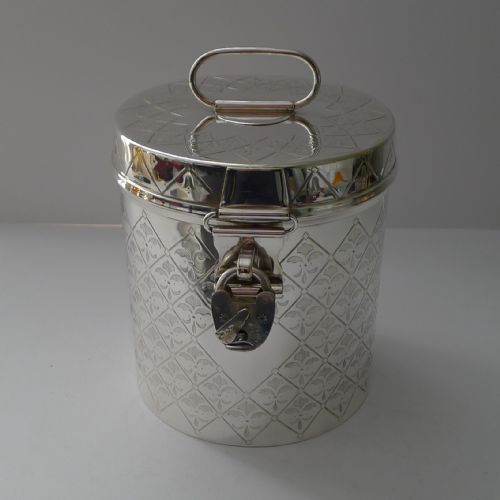
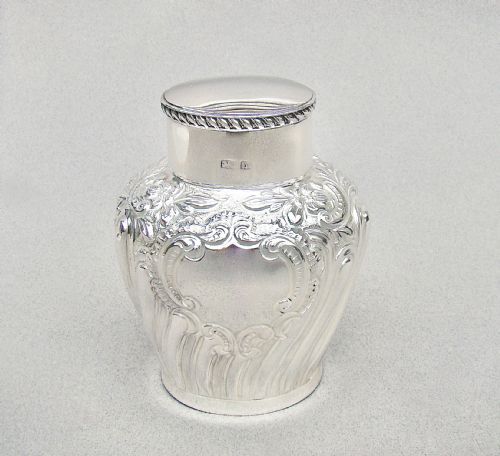
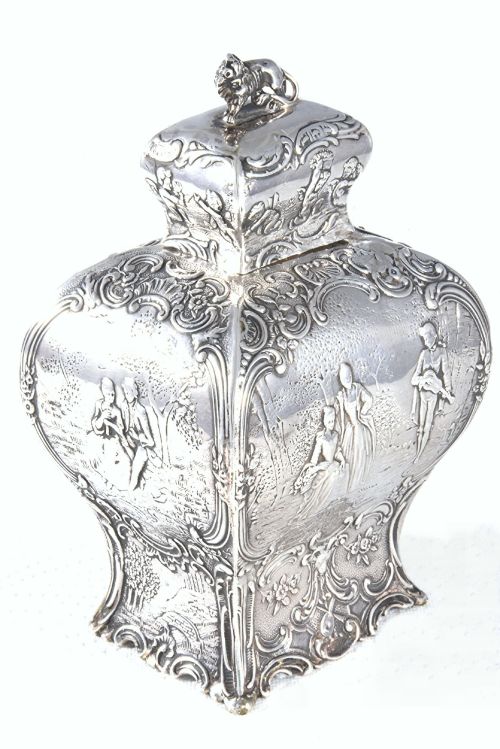
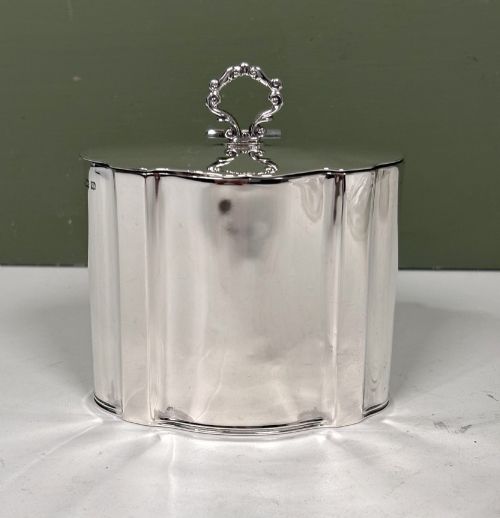
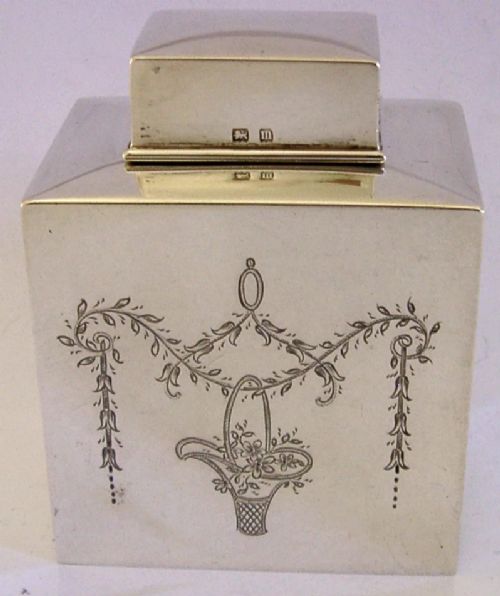
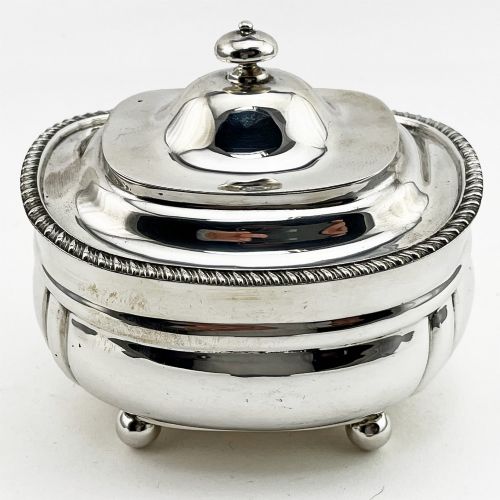
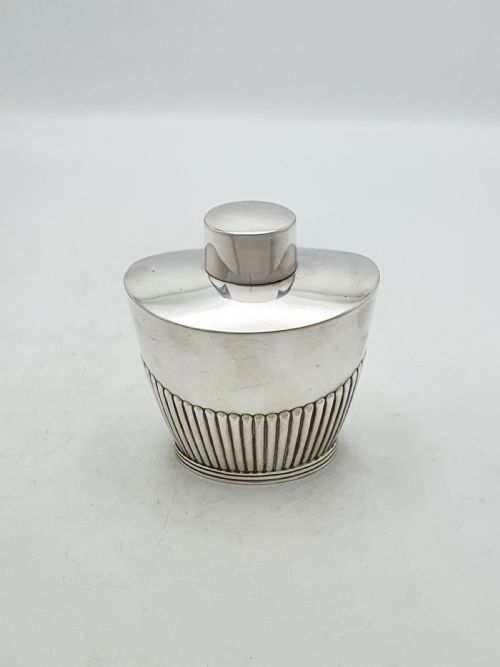
When searching for a silver tea caddy jar, buyers encounter containers designed to store and preserve dry leaf in the Victorian, Edwardian, and George V periods. The form appears as hexagonal boxes, bombe shapes, campaign canisters, and tall cylindrical jars with fitted lids.
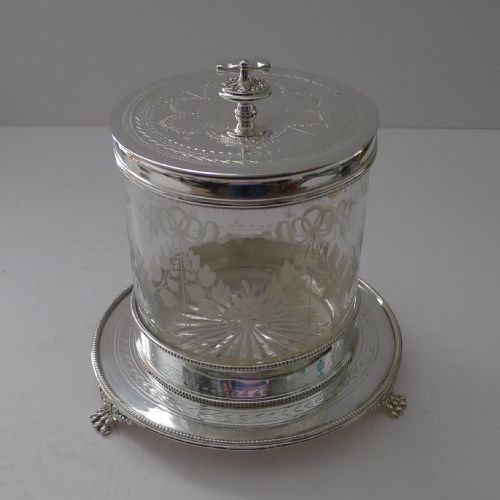
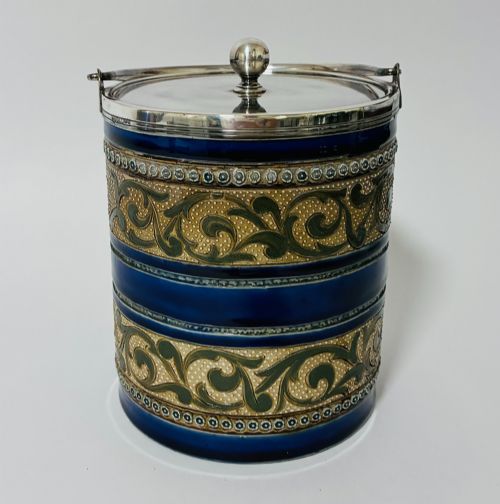
Most examples originate from British workshops spanning the late nineteenth and early twentieth centuries, alongside occasional Georgian predecessors. Alongside traditional tea caddies, the selection frequently incorporates biscuit barrels and novelty canisters framed in metal.
Materials and Construction
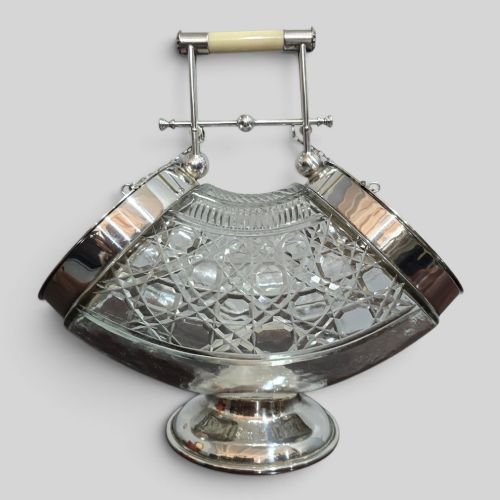
Maker workshops utilised sterling silver, silver plate, and Old Sheffield plate, often mounting these metals onto cut glass, oak, ebonised wood, and ceramic bodies. The metal components show hammering, piercing, and chased decoration characteristic of Victorian and Edwardian manufacturing techniques.
Lids are constructed as hinged covers or pull-off caps, occasionally featuring locks or inner stoppers to maintain dry conditions. Glass bodies display hobnail cutting, while wooden and ceramic inserts provide rigid interior frames.
Silver Tea Caddy Jar Retail Price Guide 2026
Typical asking prices for silver tea caddy jar among the pieces listed under this phrase on Sellingantiques today, from the lower quarter to the upper quarter. They describe what is for sale here now, not the wider market.
Listings feature sterling silver, silver plate, cut glass, oak, and ebonised wood spanning the Victorian and Edwardian periods.
Distinctions in Grade
The weight of the metal and the thickness of the gauge set standard production apart from heavier, bespoke pieces. Higher grade items display crisper chasing, substantial cast handles, and fully legible hallmarks stamped by prominent silversmiths.
The integration of mixed materials alters the character of a piece, separating simple plated items from solid sterling constructions paired with heavy cut crystal or seasoned oak.
Berthold Muller·Mappin and Webb·Thomas Hayes·Zimmermann·Goldsmiths and Silversmiths Co.·Asprey and Co.·Atkin Brothers·William Hutton
The Silver Tea Caddy Jar Glossary
- Sterling Silver
- A standard alloy composed of silver and other metals to ensure durability, marked by specific hallmarks denoting purity.
- Old Sheffield Plate
- A fused composite material made by melting a thin sheet of silver onto a thicker copper base.
- Hobnail Cut
- A geometric pattern carved into glass bodies, creating rows of small projecting points that catch the light.
- Bombé
- A swelling, convex furniture and vessel profile popular in nineteenth-century designs.
- Hallmark
- Official stamps applied to metal objects indicating the assay office, maker, and year of manufacture.
Silver Tea Caddy Jar: Frequently Asked Questions
What is a silver tea caddy jar?
A silver tea caddy jar is a lidded container fashioned from precious metal or plated alloys, originally manufactured to keep dry tea leaves fresh and protected from moisture.
These vessels vary from simple cylindrical canisters to decorative boxes featuring chased ornamentation and fitted interiors.
How were biscuit barrels used?
Biscuit barrels served as lidded containers placed on dining tables to hold dry baked goods during afternoon tea and formal gatherings.
Their ceramic, glass, or wooden bodies were encased in metal mountings with swing handles for easy passing.
How do I date a silver caddy?
Dating relies primarily on the stamped hallmarks found on the metal components, which indicate the assay office and the active year of the maker.
Stylistic indicators such as Rococo revival motifs or Edwardian proportions offer additional guidance when hallmarks are absent.
Can I store tea in these jars?
While these containers were built for dry storage, many collectors prefer to display them as decorative objects rather than using them for daily provisions.
Original seals and lids may not provide the airtight closure required by modern food storage standards.