


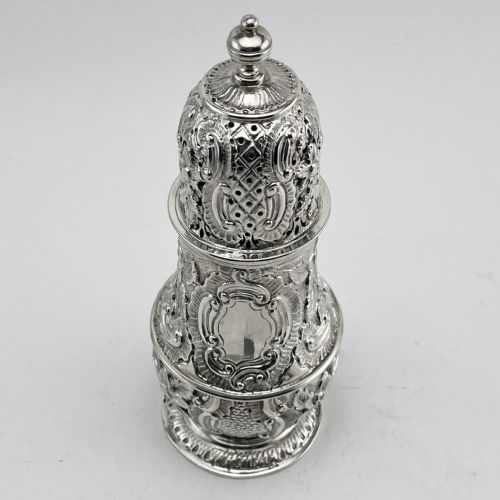


Silver Tableware Shaker
These silver tableware shakers range from modest Victorian pepper pots to towering Edwardian sugar casters meant for the dining table.
Silver Tableware Shaker
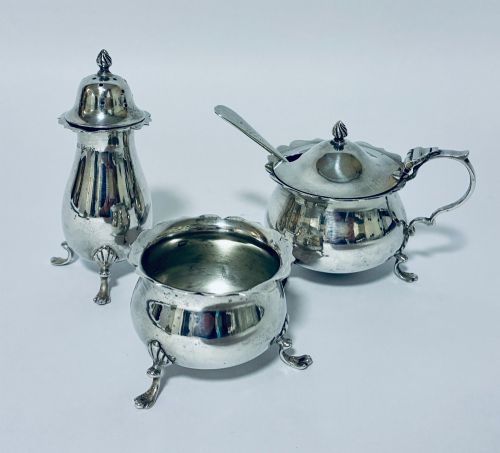
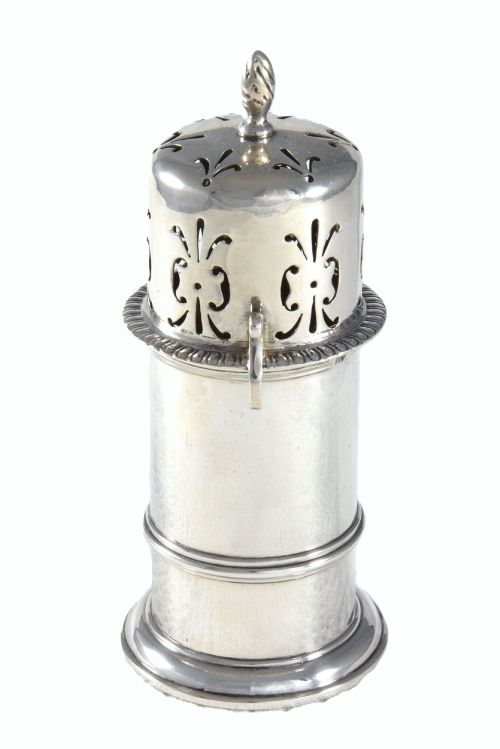
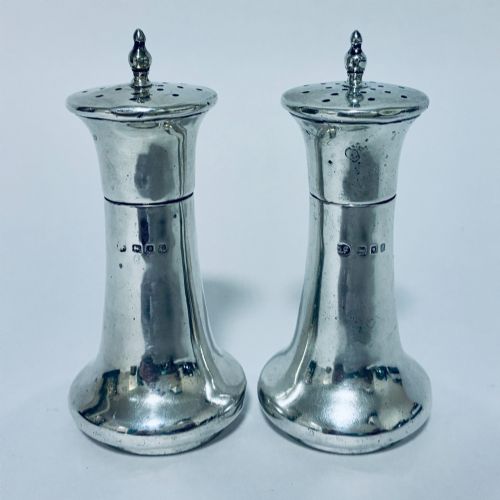
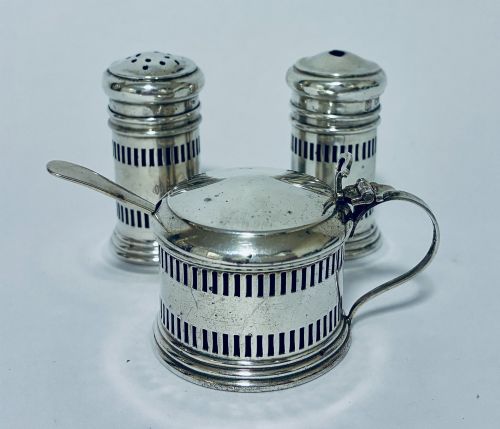
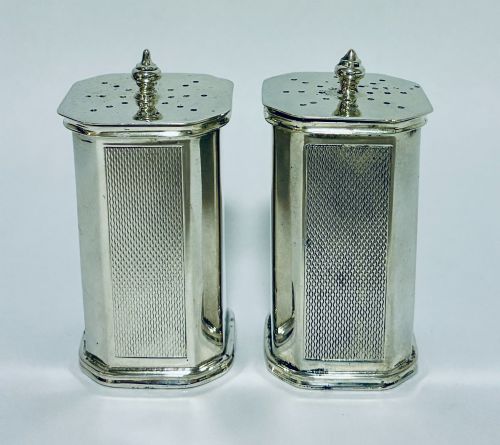
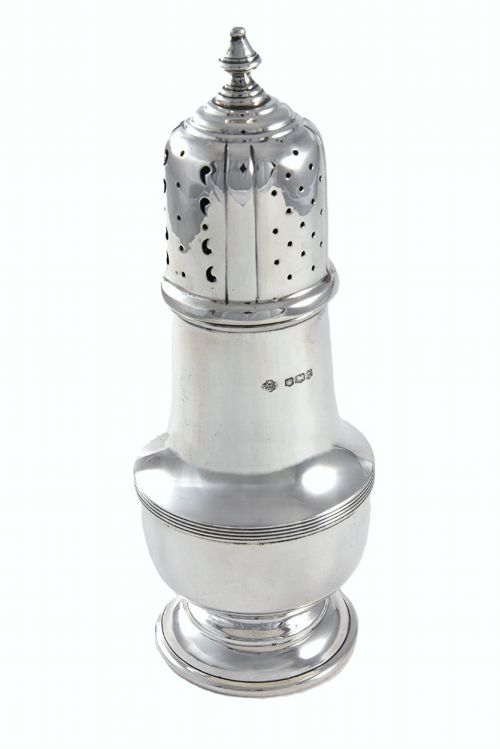
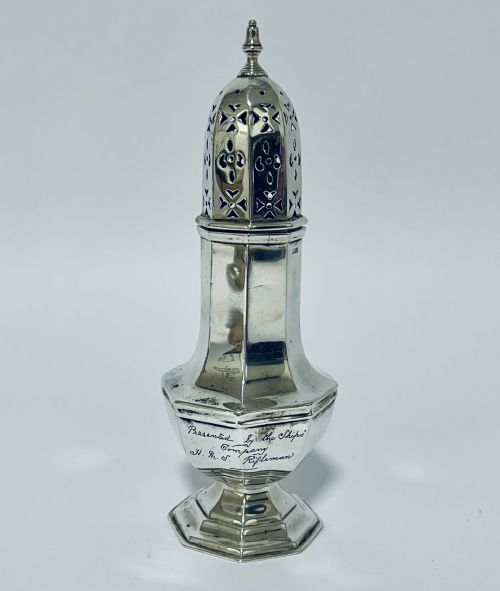
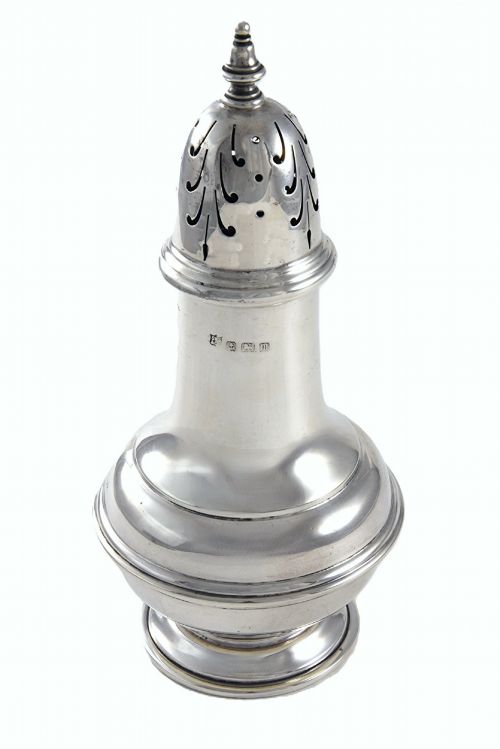
A silver tableware shaker encompasses sugar casters, pepper pots, and larger condiment sets used in formal dining settings. You will frequently encounter tall sugar sifters alongside pairs of small pepperettes and fitted cruet frames.
The pieces span several centuries of British silversmithing, drawing heavily from the Victorian, Edwardian, and Art Deco periods. Early examples from the eighteenth century appear alongside mid-century and revival pieces.
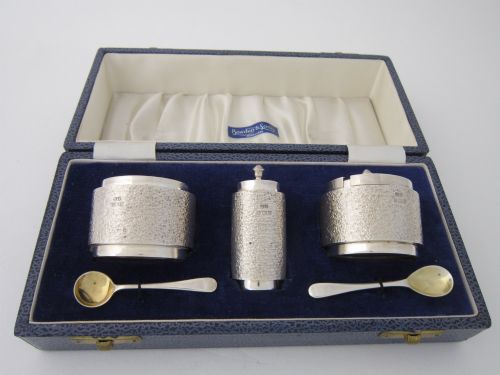
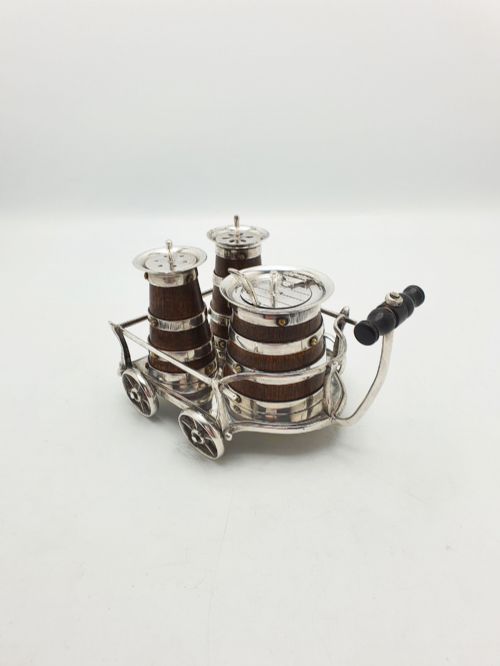
Many items form part of larger matched or unmatched sets, incorporating salt tubs and mustard pots alongside the main shaker. Novelty designs shaped as animals and objects also form a distinct group within the selection.
Materials and Construction
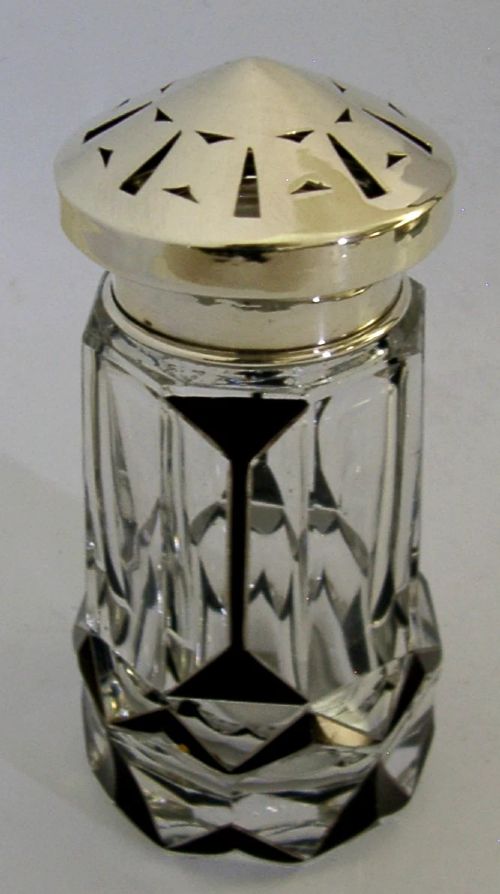
Makers utilised sterling silver, solid silver, and silver plate over base metals, frequently pairing metal bodies with clear cut glass inserts. Enamel details and velvet linings appear in specific cased condiment presentations.
Early eighteenth-century casters rely on heavy cast metal construction, while later Victorian and Edwardian examples utilise rolled sheet silver combined with pierced and chased decoration. Perforated lids allow the contents to be dispensed cleanly.
Silver Tableware Shaker Retail Price Guide 2026
Typical asking prices for silver tableware shaker among the pieces listed under this phrase on Sellingantiques today, from the lower quarter to the upper quarter. They describe what is for sale here now, not the wider market.
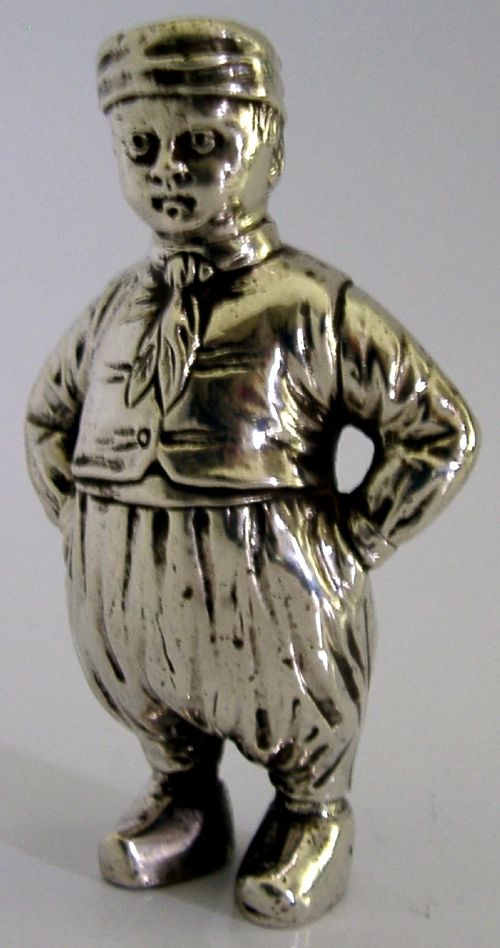
Silversmiths modelled diminutive salt and pepper shakers as owls, chicks, dogs, and farmyard pheasants to amuse Victorian diners.
Assessing the Pieces
Weight and gauge of the metal determine the rigidity of the body and the crispness of the pierced lid pattern. Heavier items maintain their structural integrity better through centuries of cleaning and use.
The precision of the maker marks and the clarity of the chasing separate standard domestic wares from exceptional studio pieces. Novelty items rely on sculptural detail and realistic proportions to succeed.
Simon Pantin·Barker Brothers·James Dixon And Sons Ltd·Thomas Johnson·Thomas Pritchard·Viners
The Silver Tableware Shaker Glossary
- Sugar Caster
- A tall jar with a pierced dome cover used for sprinkling sugar onto food. These tall vessels often taper toward a footed base.
- Pepperette
- A small container designed specifically for holding and dispensing ground pepper at the table. They frequently appear in matching pairs.
- Cruet Set
- A matched collection of bottles, jars, and shakers held in a shared frame or stand. These sets group condiments together for the dining table.
- Silver Plate
- A thin layer of silver fused over a base metal such as copper or Britannia metal. This technique offered an accessible alternative to solid silver.
- Piercing
- Cutting decorative patterns through the metal of a lid or gallery to allow powder to pass through. Silversmiths used saws and punches for this work.
Silver Tableware Shaker: Frequently Asked Questions
What is a silver tableware shaker used for?
These vessels serve to dispense powdered sugar, salt, or pepper during meals. They sit on the dining table as part of a formal place setting.
Larger casters handle sugar for desserts, while smaller pots hold seasonings dispensed directly onto plates.
How do I date an antique silver shaker?
Look for the hallmarks stamped into the metal, which include date letters indicating the specific year of assay. Maker marks and crown symbols also help narrow down the period.
Stylistic clues such as Art Deco geometric lines or Victorian chased flora point toward particular decades of manufacture.
Are novelty silver shakers functional?
Many animal-shaped shakers retain removable heads or screw-in bases that allow them to be filled and used. Some collectors prefer to display them as decorative cabinet pieces due to their age.
Heavier novelty designs function just as well as standard cylindrical pots on the dining table.
What is the difference between a caster and a shaker?
A caster traditionally refers to a taller vessel used for sugar, featuring a pierced lid held on by a bayonet fitting or push-fit rim. Shakers often describe smaller modern or Victorian pots meant for salt and pepper.
Both terms overlap frequently in historical descriptions of tableware.