

Silver Tableware Napkin Rings
Silver tableware napkin rings range from plain Victorian bands to cased Edwardian sets, offering a practical touch of period dining elegance.
Silver Tableware Napkin Rings
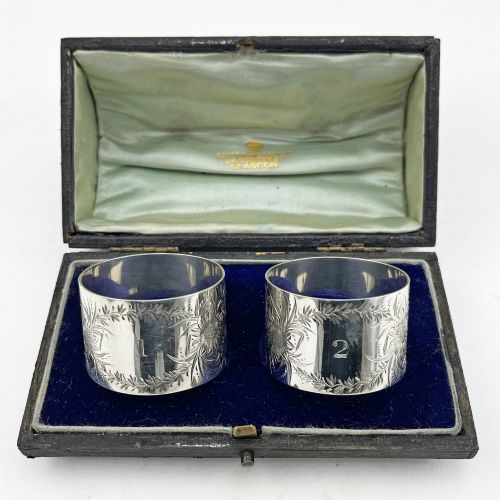
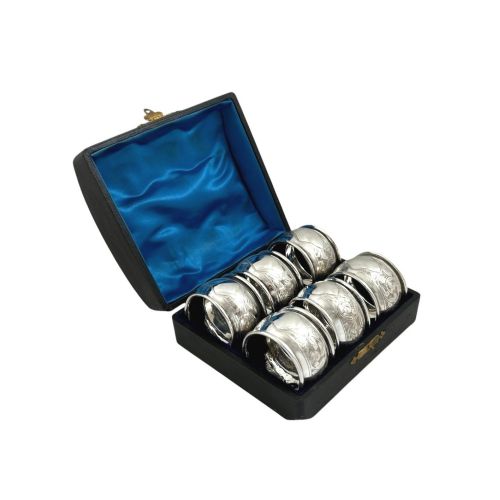
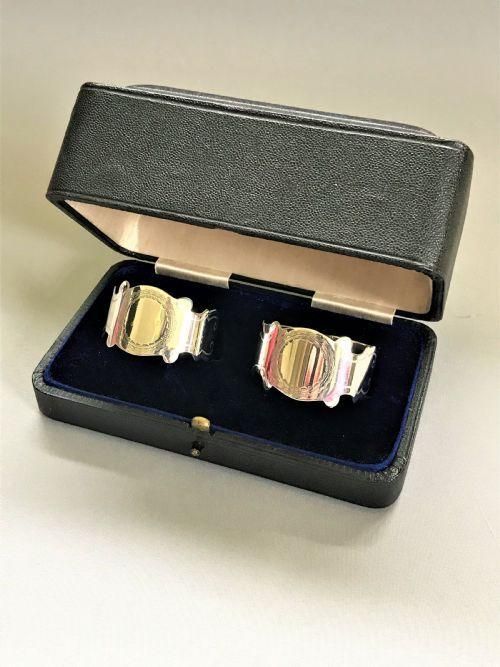
Silver tableware napkin rings are small cylindrical bands designed to mark individual dining napkins at the table. When searching for silver tableware napkin rings, collectors encounter various forms ranging from individual Victorian and Edwardian examples to matched sets housed in fitted presentation boxes lined with silk or velvet.
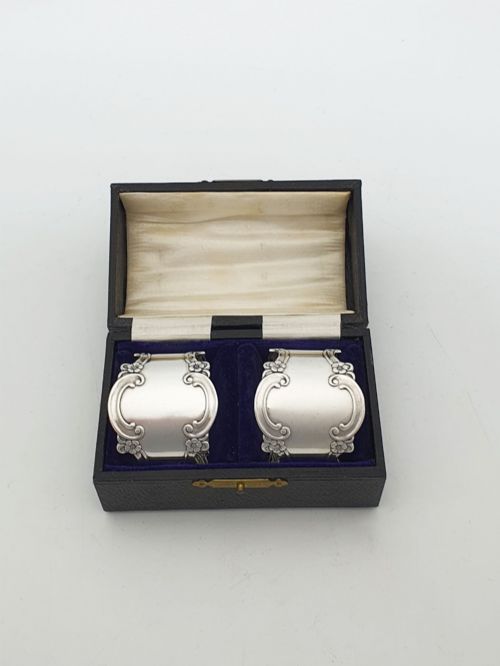
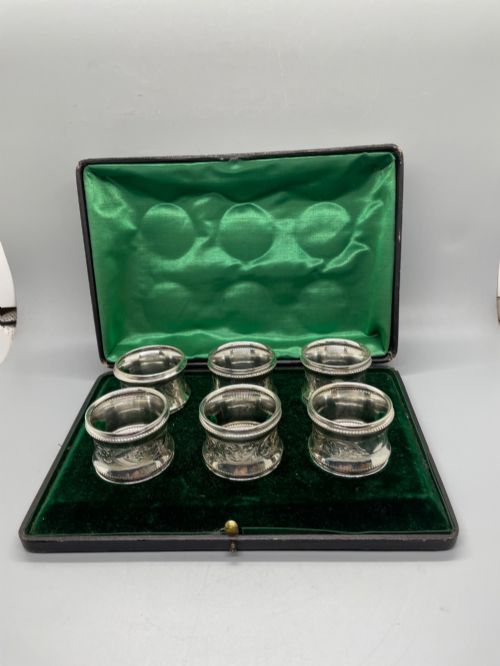
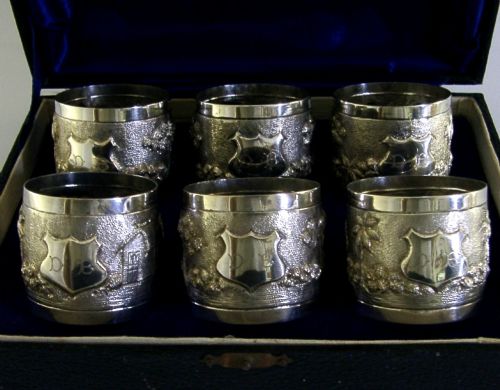
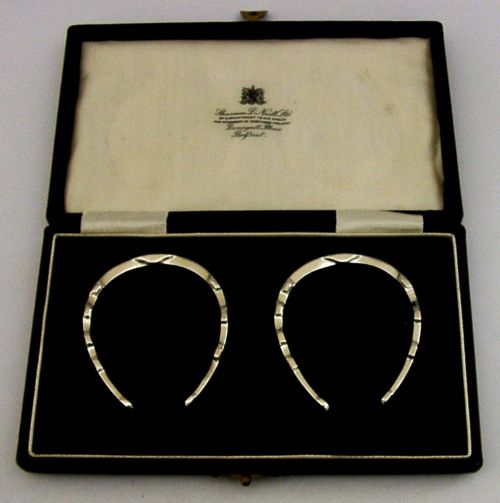
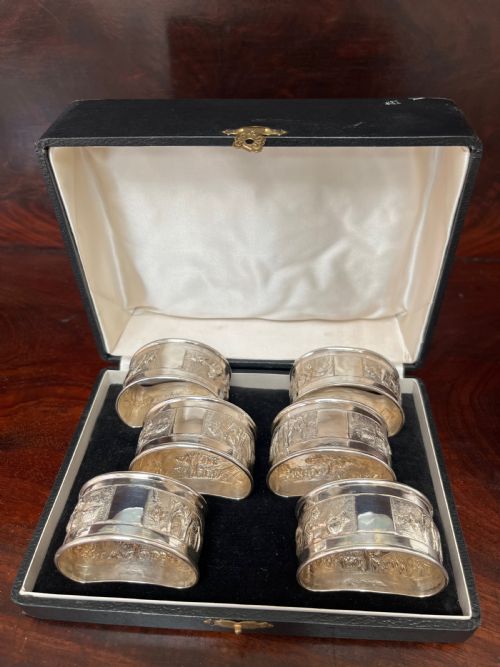
The pieces appearing on this page span the late nineteenth century through to the mid-twentieth century, encompassing Victorian, Edwardian, George V, and Art Deco periods. Many survive as pairs or sets of six, sometimes accompanied by original leatherette or leather cases.
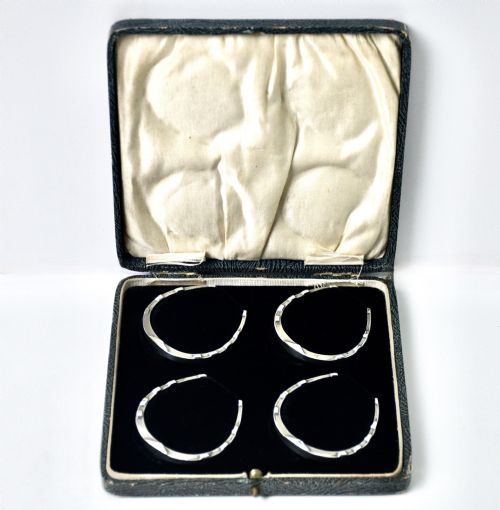
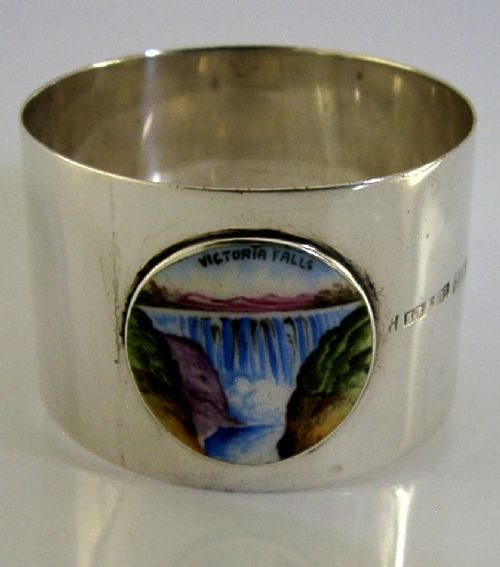
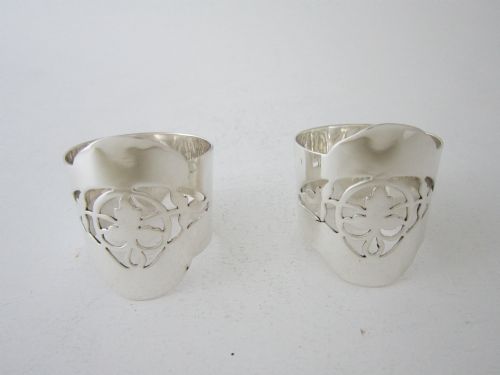
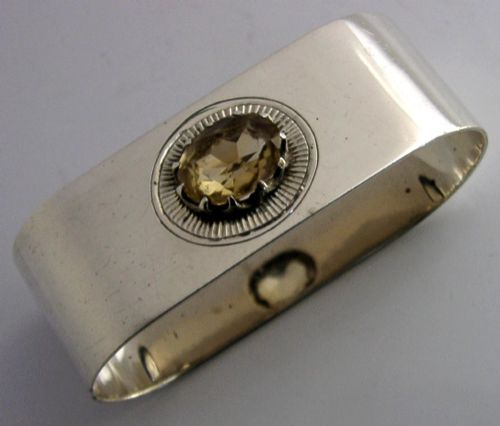
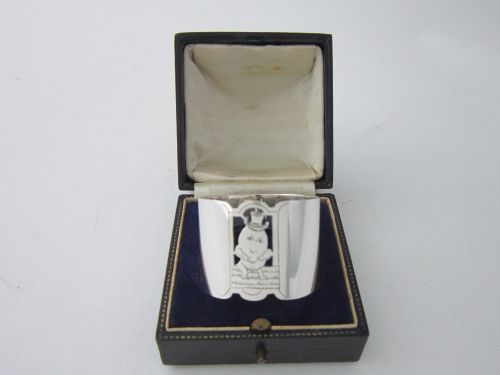
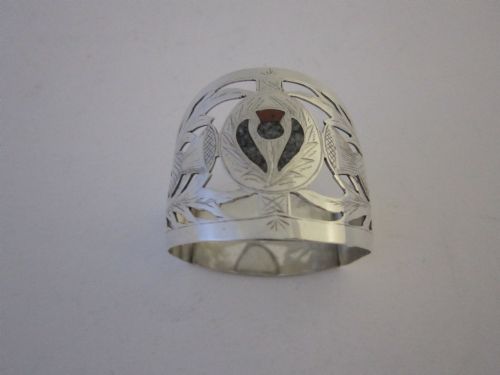
Designs on this page include plain polished cylinders, hammered finishes from the Arts and Crafts movement, novelty shapes modelled as horseshoes, belt buckles, and stirrups, alongside examples inset with citrine or agate stones.
How they were made
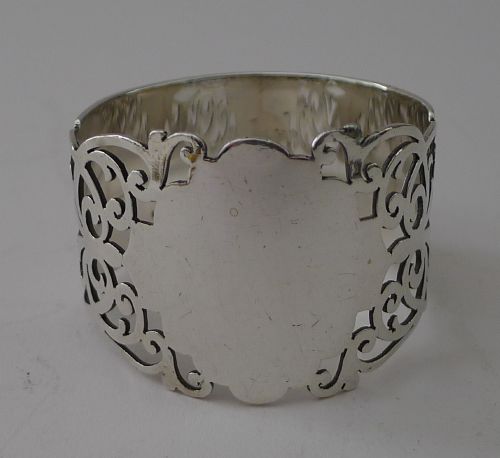
Silversmiths constructed these rings primarily using solid sterling silver or silver plate, occasionally employing silver gilt for a dual-tone finish. Techniques involved shaping sheet metal into cylinders, soldering seams, and applying hand-hammered textures or applied decorative mounts.
Many items incorporate supplementary materials for their presentation cases, utilising silk linings, velvet beds, and leatherette or leather exteriors. Stones such as citrine and agate were selected and set into the silver mounts by hand.
Silver Tableware Napkin Rings Retail Price Guide 2026
Typical asking prices for silver tableware napkin rings among the pieces listed under this phrase on Sellingantiques today, from the lower quarter to the upper quarter. They describe what is for sale here now, not the wider market.
Several Victorian napkin rings are modelled directly as miniature belt buckles, proving that nineteenth-century diners appreciated a cinched waist for their linens.
What varies in quality
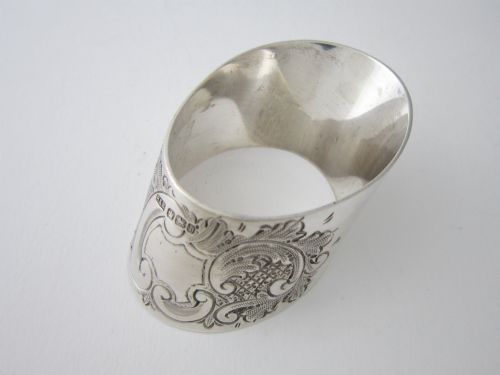
The standard of a piece depends on the weight of the metal and the crispness of the hallmarks stamped into the silver. Substantial gauge sterling silver maintains its shape better over decades of use than thinner stamped alternatives.
Artistry in design elevates certain examples, particularly where novelty motifs like horseshoes or stirrups are executed with sculptural detail rather than simple stamping. The survival of an original fitted box lined with silk or velvet also contributes to the desirability of a set.
ALBERT EDWARD JONES·R. E. Stone·Georg Jensen·Hermes, Paris·C.T. BURROWS & SONS·Mappin & Webb·Cartier·Liberty & Co
The Silver Tableware Napkin Rings Glossary
- Sterling silver
- A silver alloy containing 92.5 percent pure silver by mass, with the remainder consisting of other metals like copper. This standard alloy provides the structural rigidity required for durable tableware.
- Silver plate
- A base metal object coated with a thin layer of pure silver through electroplating or chemical processes. It offers the appearance of solid silver at a different weight and cost.
- Silver gilt
- Silver that has been coated with a thin layer of gold on its surface. This technique creates a warm two-tone decorative effect.
- Hallmark
- An official stamp applied by an assay office indicating the purity of the metal, the maker, and the year of testing. These marks allow collectors to date British pieces accurately.
- Cased set
- A collection of items housed in a fitted container designed specifically to hold them securely. These boxes are frequently lined with silk or velvet and covered in leatherette.
Silver Tableware Napkin Rings: Frequently Asked Questions
How were napkin rings used?
Napkin rings were assigned to individual family members or guests to identify their linen napkin between formal meals. They remained on the dining table or were stored in sideboards until the next gathering.
In larger Victorian and Edwardian households, numbered sets helped servants ensure each diner received their correct linen piece throughout the week.
How do I clean silver napkin rings?
Silver napkin rings require gentle cleaning with a specialist microfibre cloth and mild silver polish to remove natural tarnishing. Harsh abrasive compounds can wear away fine hallmarks and delicate surface engravings.
Pieces containing gemstones like citrine or agate, or delicate silk-lined cases, should be kept dry and polished with care around the stone settings.
How can I date my napkin ring?
Dating relies primarily on the assay office hallmarks stamped into the metal, which record specific symbols for the year of manufacture. Stylistic clues such as Art Deco geometric forms or Victorian figural designs also narrow down the era.
Matching the maker's mark against historical records provides further confirmation of the production period.