




Silver Table Canteen
A silver table canteen organises fine cutlery within a dedicated fitted housing, bringing coordinated service to the dining room.
Silver Table Canteen
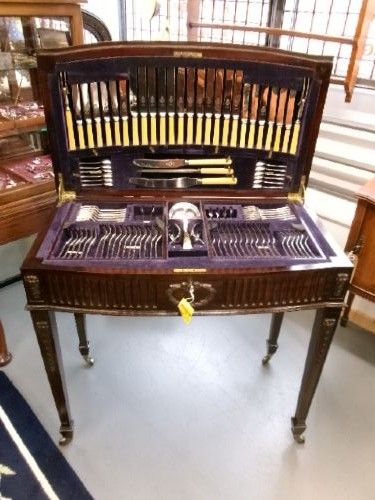
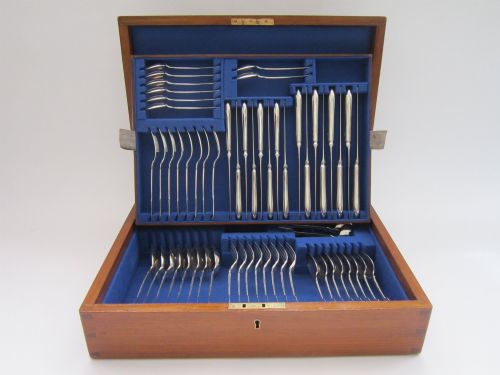
A silver table canteen houses complete sets of forks, spoons, and knives within purpose-built wooden furniture or fitted chests. These dining services range from compact Edwardian oak cases to large Victorian and Art Deco sets designed for twelve or more place settings.
Buyers seeking a silver table canteen most frequently encounter fitted mahogany chests, oak cabinets on stands, and console tables containing matched cutlery sets. These pieces combine practical storage with formal dining presentation, spanning periods from the Victorian era through the 1930s.
Distinctions in quality
Quality differences emerge in the weight of the metal, the integrity of the silver plating, and the density of the timber housing. Substantial gauge silver and robust solid wood cabinets represent the higher tier of production.
The completeness of the fitted service and the precision of the interior joinery further separate standard sets from superior examples. Original matched cutlery by recognised makers holding their fitted housing elevates a piece.
Silver Table Canteen Retail Price Guide 2026
Typical asking prices for silver table canteen among the pieces listed under this phrase on Sellingantiques today, from the lower quarter to the upper quarter. They describe what is for sale here now, not the wider market.
Listings feature canteens housed in oak, mahogany, and walnut cabinets, paired with flatware in sterling silver and silver plate.
Elkington & Co·Walker & Hall·Mappin & Webb·Christofle·Tiffany·Gorham·Posen
The Silver Table Canteen Glossary
- Canteen
- A fitted case, chest, or table designed specifically to hold and organise a complete service of cutlery. These housings protect the flatware from tarnish and wear while keeping sets complete.
- Flatware
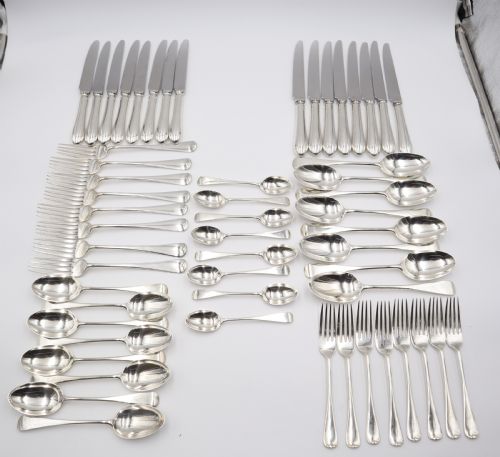
- Table cutlery including forks, spoons, and servers that lie flat on the table or within a tray. In these canteens, flatware is arranged in dedicated slots by type.
- Silver plate
- A base metal, such as nickel silver or copper, coated with a thin layer of pure silver. This technique provided the appearance of solid silver at a more accessible cost.
- Fiddle pattern
- A traditional cutlery handle shape featuring a narrow stem that broadens near the end with a distinct shoulder. This design remained popular throughout the Victorian and Edwardian periods.
- Sterling silver
- An alloy consisting of pure silver and other metals, standardised for durability and strength. Items made to this standard typically bear hallmarks indicating their metal purity.
Silver Table Canteen: Frequently Asked Questions
What is a silver table canteen?
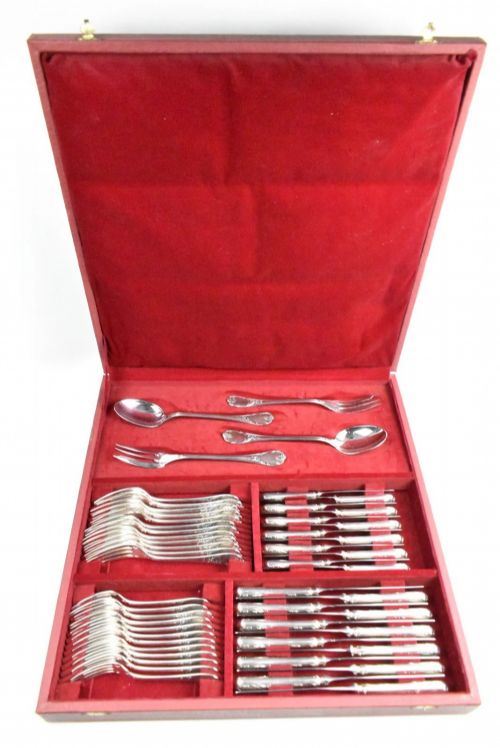
A silver table canteen is a self-contained unit comprising a fitted wooden chest or table and a coordinated set of dining cutlery. The interior is partitioned to hold specific quantities of forks, spoons, and knives securely in place.
Such pieces were essential for formal households, ensuring that all dining implements matched and remained complete for large dinner parties. They range from tabletop boxes to freestanding console furniture.
How do I clean the cutlery?
Silver cutlery requires gentle cleaning with dedicated silver polish and soft cloths to remove tarnish without abrading the surface. Silver-plated items demand similar care to avoid wearing through the thin outer layer of precious metal.
Staining on steel knife blades should be addressed carefully to preserve the metal integrity. Regular use and proper storage in the lined canteen compartments help minimise oxidation between meals.
Are all canteens made of solid silver?
Many canteens utilise silver plate over a base metal rather than solid sterling silver. Makers offered both options to accommodate different budgets while maintaining the same formal appearance on the dining table.
Examining the hallmarks or maker stamps on the reverse of the flatware handles confirms whether the pieces are solid silver or plated.
How do I date an antique canteen?
Dating relies on a combination of cabinet style, wood choice, and the hallmarks stamped onto the metal flatware. Victorian, Edwardian, and Art Deco pieces each exhibit distinct design characteristics in their furniture mounts and handle patterns.
Makers' marks stamped into the silver or plate provide specific attribution to firms operating during particular decades. The overall construction methods of the wooden chest further indicate the manufacturing period.