

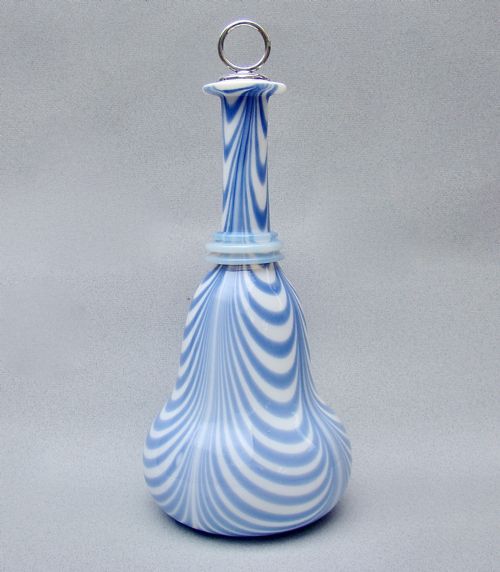


Silver Stopper Decanter
A silver stopper decanter brings together heavy cut glass and hallmarked metal for the table or sideboard.
Silver Stopper Decanter
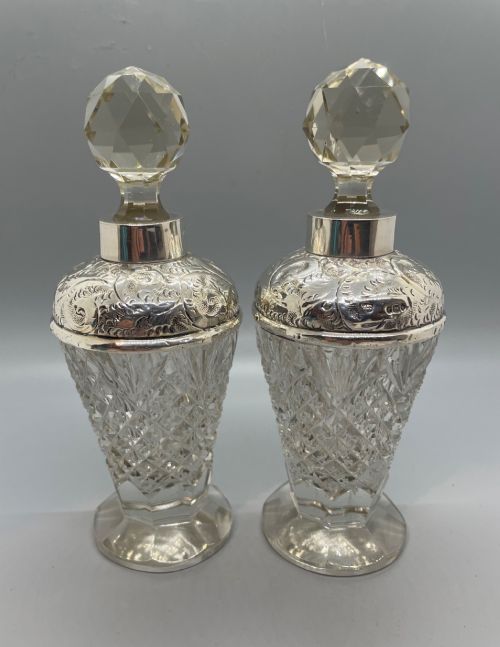
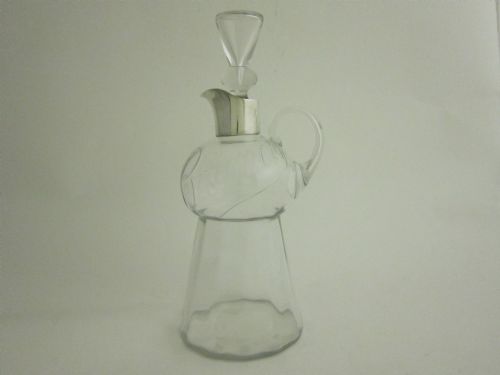
A silver stopper decanter is a vessel designed to hold spirits, wine, or scent, typically combining a glass body with a mounted silver or silver-plated collar and stopper. When searching this phrase, a buyer encounters forms ranging from tall spirit bottles and claret jugs to small scent flasks and novelty thistle containers. The selections span the Victorian, Edwardian, and Art Deco periods, produced in English workshops alongside continental examples.
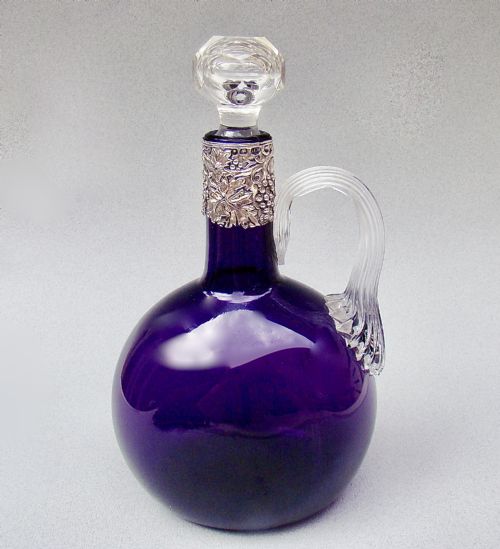
The most common versions on this page are Victorian and Edwardian spirit decanters in cut glass or crystal, fitted with sterling silver collars and matching stoppers. Alongside these standard vessels appear matched pairs, locking decanters by makers such as Betjemann Brothers, and coloured glass pieces in amethyst or green shades. Each item serves both a functional purpose for serving drinks or perfumes and a decorative role on the dining table.
How they were made
The bodies of these vessels rely on glassmaking techniques including mould-blowing, hand-cutting, and crystal production, occasionally utilising coloured glass such as Nailsea, amethyst, or green varieties. Artisans formed the glass into flutes, panels, and intricate patterns before applying mounts. Old Sheffield plate or sterling silver was then shaped into collars, rims, and stoppers to fit the neck of each specific bottle.
Metalwork involved silversmithing techniques like stamping, chasing, and engraving, often finished with hallmarks indicating the assay office and date. Stoppers were ground by hand to ensure a snug fit within the silver or glass collar, while specialised locking mechanisms were incorporated into high-end security decanters from firms like Hukin and Heath.
A silver sandwich board cat acts as a cheerful novelty wine bottle stopper.
What varies in quality
The standard of a silver stopper decanter depends heavily on the crispness of the glass cutting and the weight of the metal mount. Heavier crystal bodies with deep, sharp hobnail or fluted cuts indicate superior craftsmanship compared to light, plain moulded glass. Similarly, substantial sterling silver collars bearing clear hallmarks hold greater distinction than thin silver plate that shows base metal underneath.
Design ambition also separates standard production from finer work. Novelty shapes, such as Scottish thistles or cat bottle stoppers, and functional refinements like locking frames by known makers demonstrate elevated manufacture. The retention of the matching original stopper remains a vital factor in the integrity of any piece.
Henry Matthews·Hukin and Heath·Mappin and Webb·Betjemann Brothers
The Silver Stopper Decanter Glossary
- Hallmark
- A set of official marks stamped on precious metals, showing the maker, standard of purity, assay office, and year of production.
- Claret jug
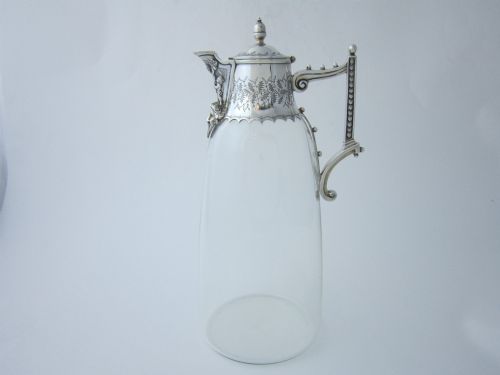
- A large pouring vessel specifically intended for serving red wine at the dining table, usually featuring a hinged silver lid and handle.
- Old Sheffield plate
- An early fused metal technique where a thin sheet of sterling silver is fused to a thicker copper base, common on nineteenth-century pieces.
- Locking decanter
- A specialised bottle secured by a metal framework and a working lock, designed in the Victorian period to restrict access to spirits.
Silver Stopper Decanter: Frequently Asked Questions
What drinks belong in these decanters?
These vessels suit heavy spirits like whisky, brandy, and port, alongside claret and white wine.
Smaller examples serve as perfume bottles or scent flasks on a dressing table.
How do I clean the inside safely?
Wash the glass by hand using warm water and mild soap, avoiding harsh abrasives that scratch the surface.
Take care to keep moisture away from cork-lined silver stoppers during cleaning.
Are the stoppers original to the bottles?
Many retain their matching numbered or ground stoppers, which fit the specific neck precisely.
Replacements do occur, so matching glass tint and cut patterns help confirm authenticity.
How do locking decanters operate?
A metal collar surrounds the neck and stopper, fastened by a hinged bracket with a small key.
Victorian households used these mechanisms to prevent household staff from accessing expensive spirits.