

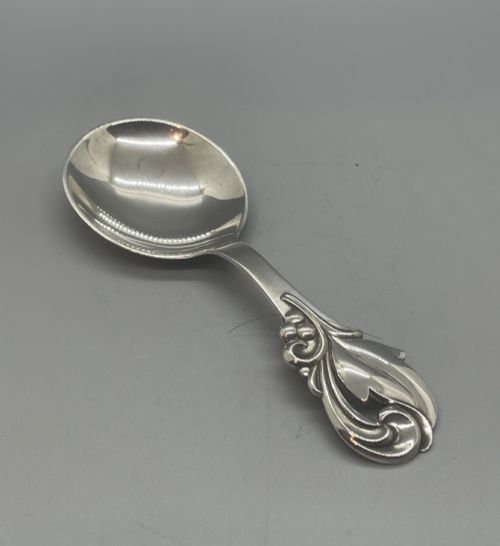
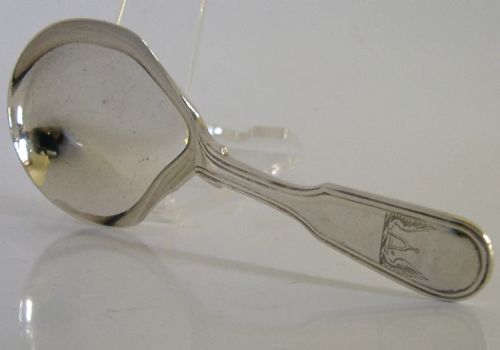
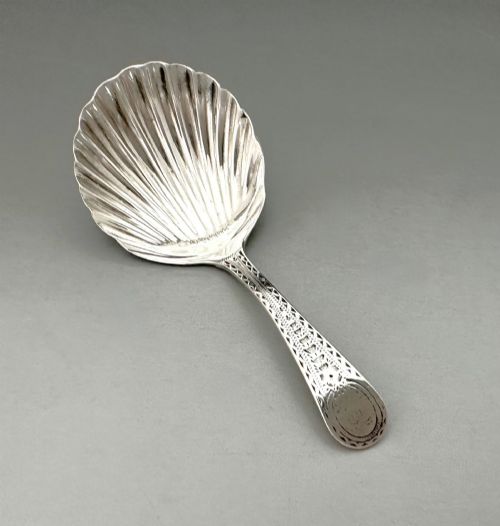
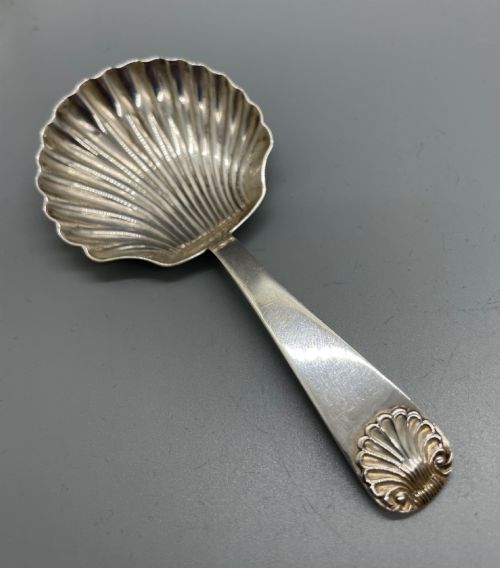
Silver Spoon Scoop
These pieces gather the functional forms of the silver spoon scoop, offering collectors everything from caddy spoons to marrow scoops across centuries of design.
Silver Spoon Scoop
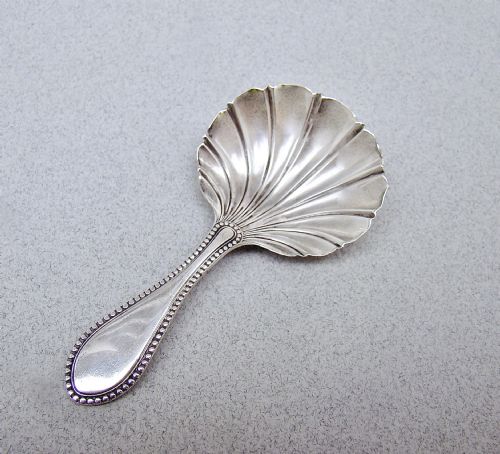
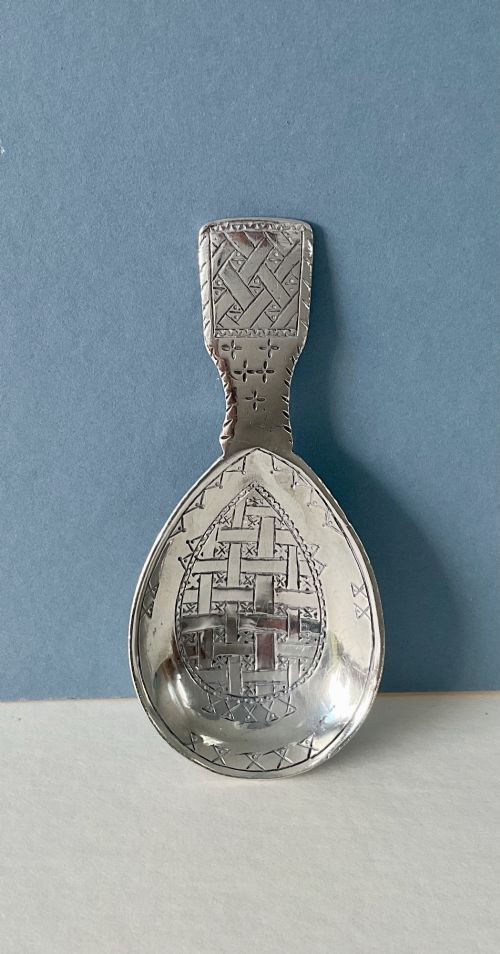
A silver spoon scoop serves specific domestic rituals, appearing most frequently in forms designed for tea caddies, marrow extraction, and cheese serving. When collectors search for a silver spoon scoop, they encounter a diverse grouping of domestic utensils spanning the Georgian, Victorian, and Edwardian eras through to mid-century modern design.
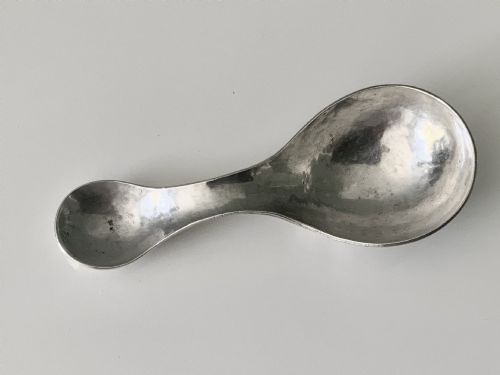
The selection ranges from small caddy spoons used for measuring loose tea leaves to long-handled marrow scoops and stilton scoops created for the dining table. These implements bridge the gap between flatware and serving utensils, showing how silversmiths adapted utilitarian items into decorative tableware.
Pieces from the Georgian and Victorian periods dominate the offerings, though twentieth-century examples introduce Arts and Crafts ideals and Scandinavian minimalism to the traditional forms. Each style reflects the social habits of its respective decade, from formal tea ceremonies to substantial dining room service.
How They Were Made
Silversmiths utilised sterling silver and Britannia silver, often combining the metal with bone, wood, or enamel to create contrasting textures on handles and bowls. Gilding was applied to interiors to protect the silver from the corrosive properties of tea and food acids.
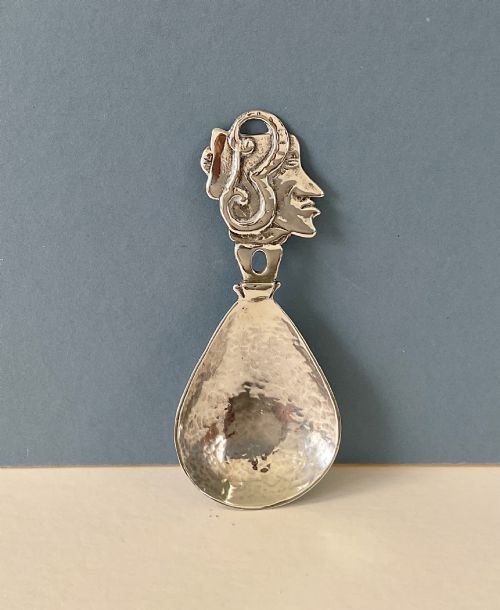
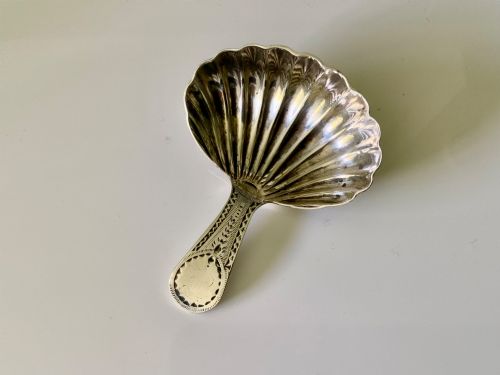
Manufacturing techniques relied heavily on hand-hammering, casting, and engraving, with specialised silversmiths shaping bowls into shells, vine leaves, and jockey caps. Punchwork and intricate chasing decorated the handles, while hallmarks stamped into the metal recorded the maker, assay office, and year of production.
Silver Spoon Scoop Retail Price Guide 2026
Typical asking prices for silver spoon scoop among the pieces listed under this phrase on Sellingantiques today, from the lower quarter to the upper quarter. They describe what is for sale here now, not the wider market.
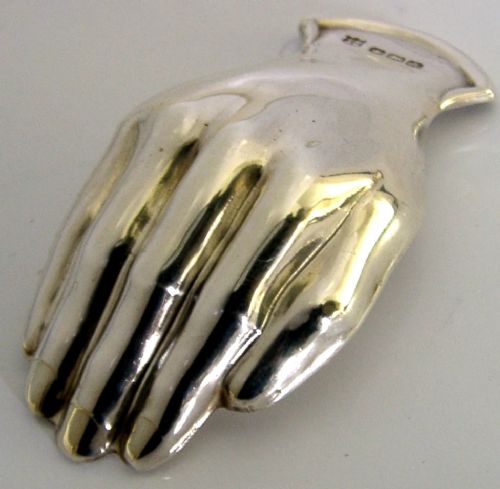
Several makers transformed tea service into novelty art by shaping silver spoon scoops into miniature jockey caps and human hands.
What Varies in Quality
Quality rests upon the crispness of the chasing and the weight of the metal utilised in the bowl and handle. Superior examples display sharply defined motifs, such as individual veins on a vine leaf bowl or precise engraving along the stem, rather than softened contours from excessive polishing.
The reputation of the maker and the clarity of the town marks or maker's punches elevate certain items above standard domestic ware. Pieces that retain their original gilding or combine silver with enamel and carved bone demonstrate higher ambition from the workshop.
Martin Hall And Co·Joseph Willmore·John Walton·William Comyns·Edward Power·Jonathan Hayne·William Neale·David Andersen·Georg Jensen·Samuel Pemberton
The Silver Spoon Scoop Glossary
- Caddy Spoon
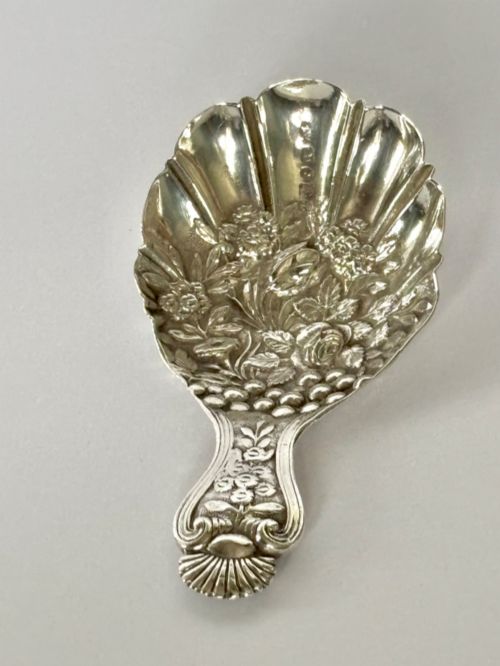
- A small utensil specifically designed for measuring and dispensing loose tea leaves from a caddy. These pieces often feature shallow, decorative bowls shaped like shells, leaves, or caps.
- Stilton Scoop
- A specialised serving utensil with a cylindrical or half-cylinder blade designed for digging into hard cheeses. They frequently feature handles made of wood, bone, or matching silver.
- Hallmark
- A series of official marks stamped onto precious metal items to guarantee their purity, origin, and date of manufacture. These symbols provide a reliable paper trail for identifying regional assay offices.
- Silver Gilt
- Silver that has been coated with a thin layer of gold on its surface, also known as vermeil. This technique was frequently applied to the interior bowls of spoons to prevent tarnishing.
Silver Spoon Scoop: Frequently Asked Questions
What was a caddy spoon used for?
These small spoons measured loose tea leaves from storage jars into teapots during the eighteenth and nineteenth centuries.
Their compact sizes allowed them to sit comfortably inside or atop the tea caddy itself.
How do I identify a marrow scoop?
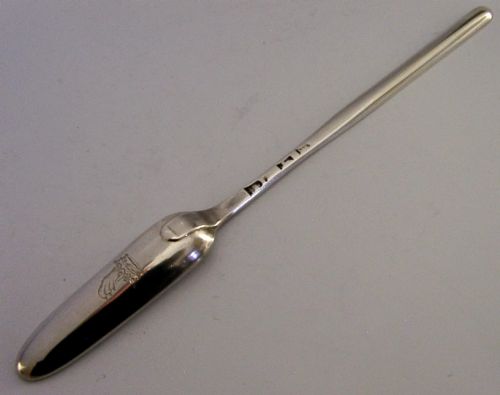
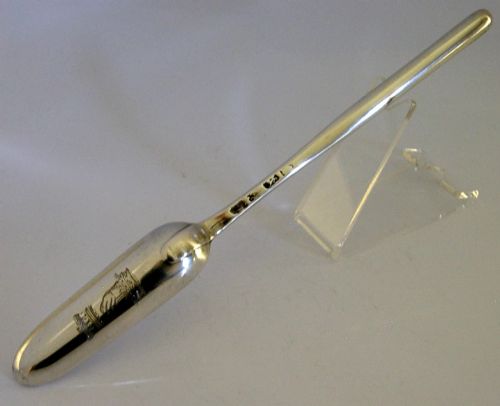
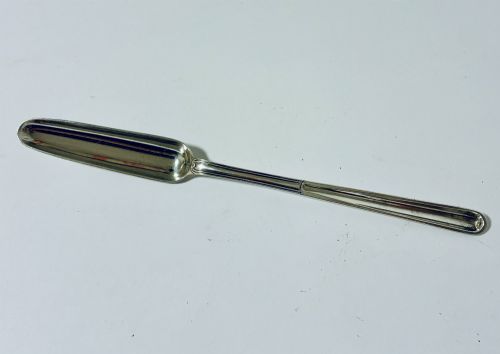
Marrow scoops feature elongated bodies with small, trough-like bowls at one or both ends for reaching inside bones.
They generally lack the wide bowls associated with traditional eating spoons.
What is the difference between a stilton scoop and a cheese scoop?
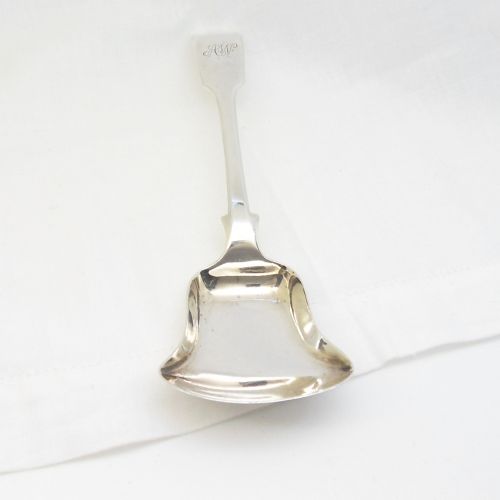
Stilton scoops usually incorporate a long, semi-cylindrical blade designed to tunnel into hard wedge cheeses.
Cheese scoops often take flatter, wider forms suited to slicing or serving broader portions.
Can I date a silver scoop using its marks?
British pieces carry assay office letters and date marks that pinpoint the exact year of production.
Maker's marks alongside these stamps reveal the individual silversmith or workshop responsible for the creation.