





Silver Sherry Wine Tag
These silver sherry wine tag pieces are practical identifiers for decanters, crafted in sterling silver and solid silver to keep your decanted bottles organised in style.
Silver Sherry Wine Tag
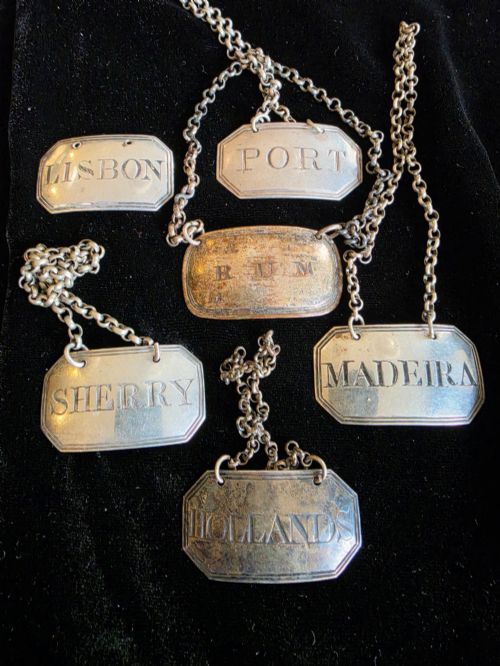
When you search for silver sherry wine tag, you are looking at small identifying labels designed to hang around the necks of decanters. These pieces appear primarily as Georgian and Victorian examples, alongside later twentieth-century interpretations.
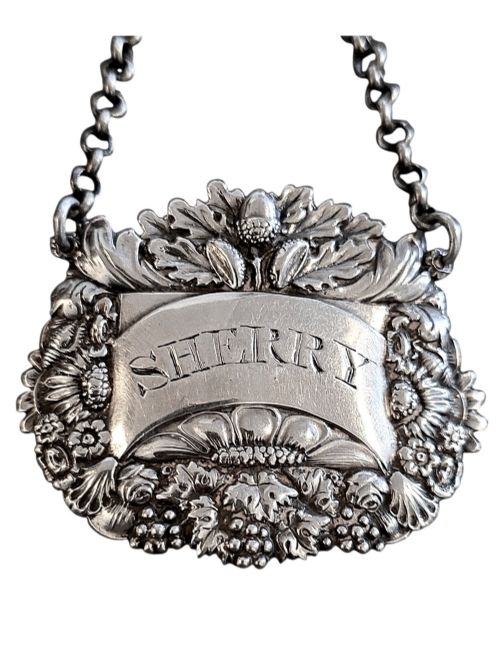
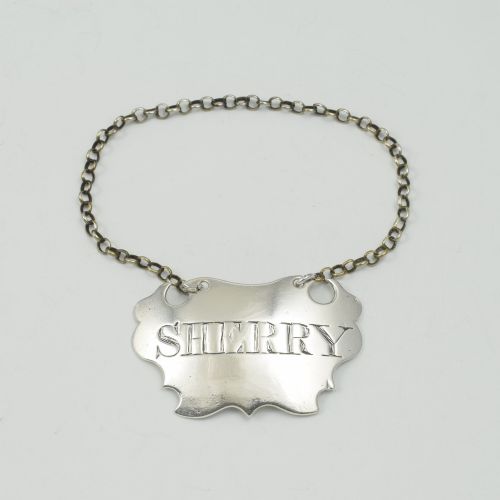
The most common form you will meet on this page is the escutcheon shape or shield-cut label, frequently cast or pierced with the title sherry. These items originate predominantly from traditional British makers working in sterling silver and solid silver.
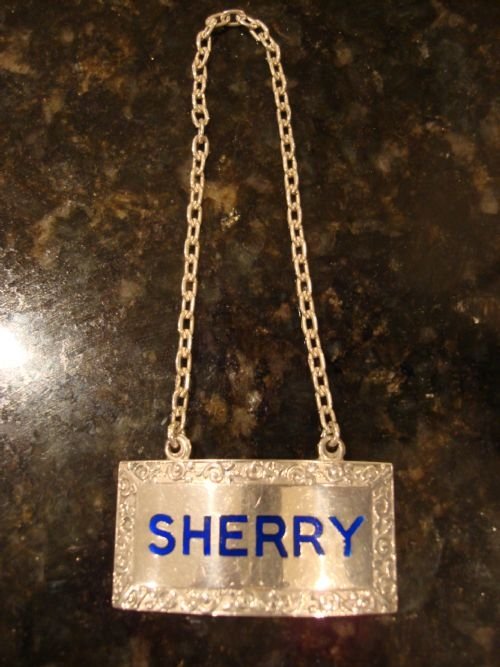
Beyond the standard Georgian and Victorian items, you will occasionally encounter sets of matching decanter labels suspended on silver chains, as well as mid-century pieces and later designs up to the nineteen-sixties.
How they were made
These labels are constructed from sterling silver and solid silver, often shaped using traditional silversmithing techniques such as cutting, piercing, and stamping. Makers frequently employed rococo revival ornamentation or classical scrollwork to decorate the edges.
Many examples incorporate chains of solid silver to secure the tag around the decanter neck, while others rely on simple suspension rings. The lettering for sherry is typically pierced through the metal or engraved directly onto the surface.
Silver Sherry Wine Tag Retail Price Guide 2026
Typical asking prices for silver sherry wine tag among the pieces listed under this phrase on Sellingantiques today, from the lower quarter to the upper quarter. They describe what is for sale here now, not the wider market.
Materials across the selection consist entirely of sterling silver, solid silver, and enamel.
What varies in quality
The distinction between ordinary and superior pieces rests on the crispness of the piercing and the weight of the solid silver used in construction. Maker involvement also plays a central role, with established workshops producing heavier, more finely detailed escutcheons.
Earlier Georgian examples often display sharper hand-engraving and more substantial metal gauges compared to later twentieth-century productions. The presence of matching sets and original silver chains further elevates the distinction of a group.
William Barrett II·John Reily·Peter and Anne Bateman·Mappin and Webb
The Silver Sherry Wine Tag Glossary
- Escutcheon
- A shield-shaped piece of silver designed to bear an inscription or name. This form is particularly common among Georgian decanter labels.
- Decanter Label
- A small tag hung around the neck of a bottle or decanter to identify the contents. They are also referred to as wine tags or bin labels.
- Sterling Silver
- An alloy consisting of silver and other metals, traditionally standardised for British plate. Most pieces on this page are fashioned from this material.
- Georgian
- A stylistic period spanning the reigns of the four Georges, noted for fine silversmithing and classical proportions. Items from this era form a large portion of the available selection.
Silver Sherry Wine Tag: Frequently Asked Questions
What is a silver sherry wine tag?
A silver sherry wine tag is a small piece of silverware designed to hang from the neck of a decanter to indicate that the bottle contains sherry. These items serve both a decorative and a practical purpose in table service.
They are most commonly found in Georgian and Victorian styles, fashioned from sterling silver or solid silver with pierced or engraved lettering.
How do I hang a wine tag on a decanter?
Wine tags are typically suspended using a small silver chain or a rigid metal ring attached to the top of the label. The chain loops around the neck of the decanter just below the stopper.
When pouring, the tag remains hanging in place to identify the contents without needing to be removed.
How can I tell a Georgian label from a later one?
Georgian labels often feature hand-engraved details, distinct escutcheon shapes, and specific hallmarks associated with early nineteenth-century silversmiths. Later pieces tend to have simpler stamped designs or mid-century characteristics.
Examining the weight of the solid silver and the style of the lettering helps indicate the period of manufacture.
Are these labels always found as singles?
While many survive as individual pieces, you will also encounter matched sets of decanter labels designed for different wines. These sets often share the same maker and decorative border.
Finding a matching set complete with original silver chains is less common than discovering single labels.