
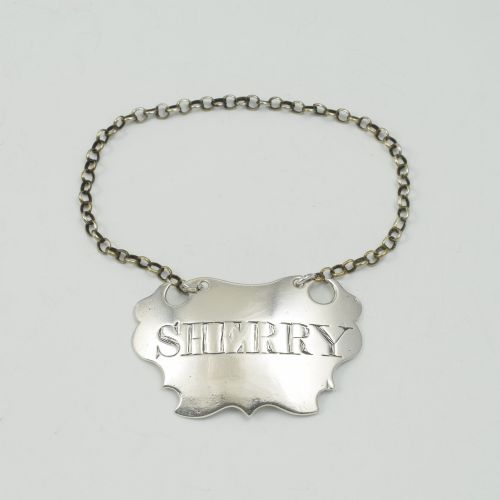


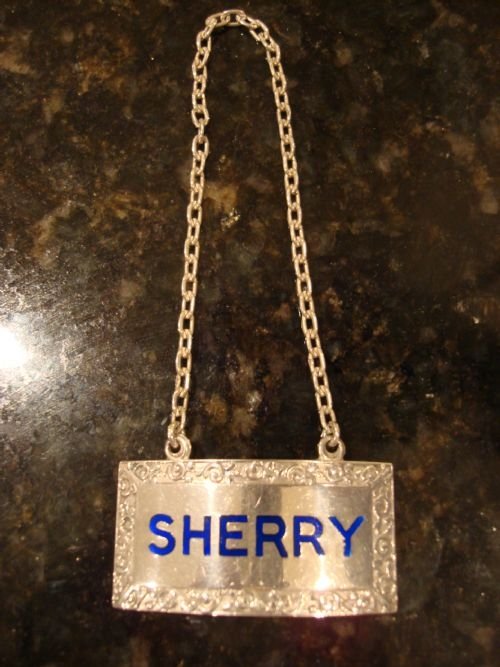
Silver Sherry Wine Label
A silver sherry wine label marks a decanter with bright metal, turning proper hospitality into an art.
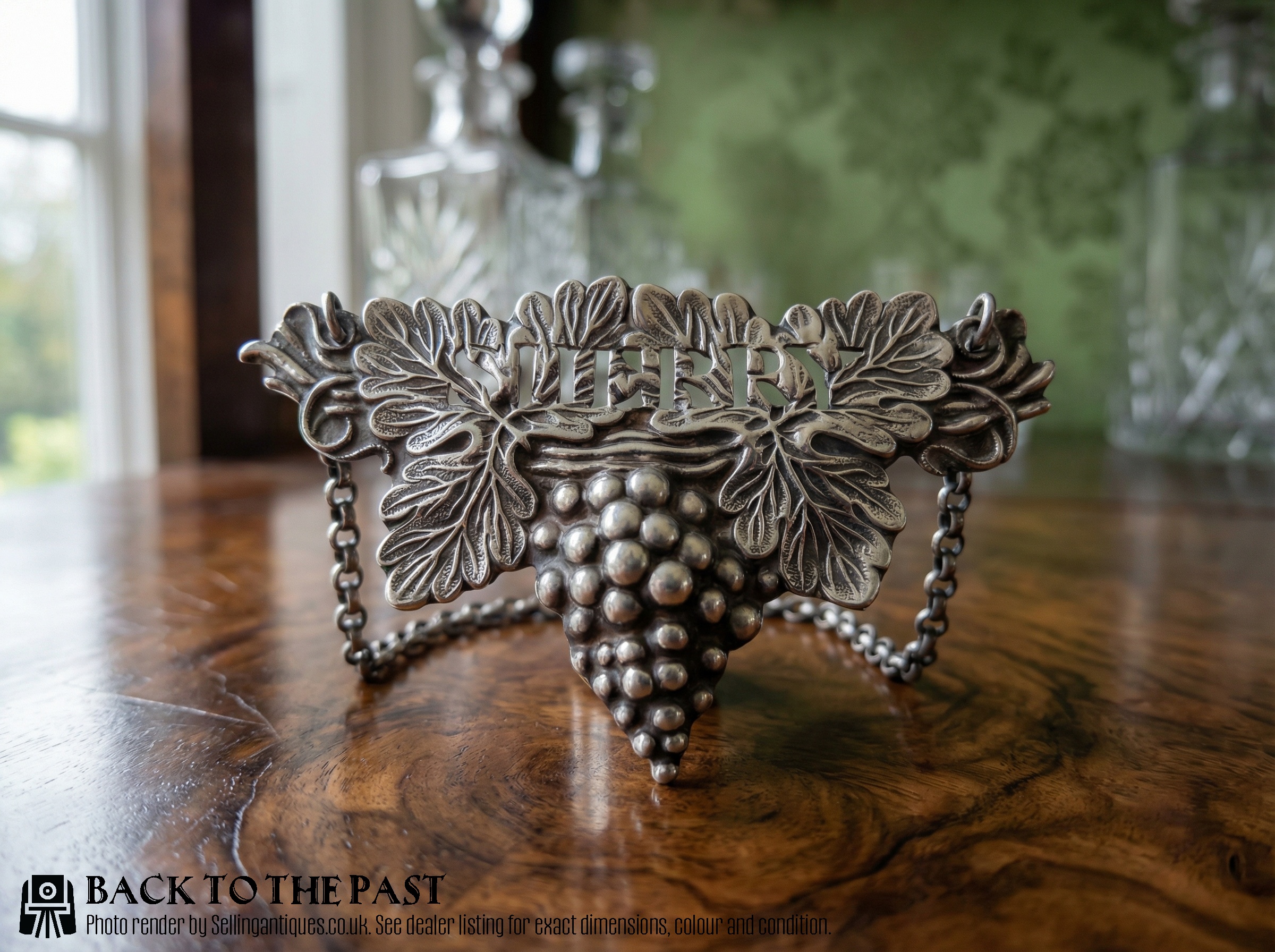
Silver Sherry Wine Label
A silver sherry wine label identifies the contents of a decanter while adding polished character to the bottle's neck. These small identifiers sit suspended on chains or clasp directly around the bottle.
The versions met most frequently on this page span the Georgian and Victorian periods, alongside later twentieth-century examples. Forms range from simple escutcheon shapes to naturalistic vine leaves cast in solid silver.
How they were made
Silversmiths shaped these pieces using sterling silver and solid silver, frequently applying hallmarks to record the assay office, date, and maker. Many examples incorporate delicate chains or incorporate cobalt glass elements to complement the bright metalwork.
Craftsmen utilised techniques such as piercing, stamping, and engraving to render intricate details like trailing vines, rococo revival scrolls, and bold lettering directly onto the metal surface.
Listings feature Georgian, Victorian, and later twentieth-century periods, alongside traditional British and rococo revival styles.
What varies in quality
The distinction between standard production and superior craftsmanship lies in the crispness of the piercing, the depth of the hand-engraving, and the weight of the silver. Early stamped escutcheons display a sharp definition that softer modern castings lack.
The presence of clear hallmarks from recognised makers and silversmiths elevates a piece, confirming its period origin and the purity of the metal used in its construction.
John Reily·William Sharp·Peter and Anne Bateman·Phipps and Robinson·Charles Rawlings·George McHattie·Mappin and Webb
The Silver Sherry Wine Label Glossary
- Escutcheon
- A shield-shaped plate traditionally used for engraving names or coats of arms. In this context, it forms the classic backdrop for the drink title.
- Hallmark
- An official stamp applied by an assay office to indicate the metal standard, the maker, and the year of production. These marks provide a reliable guide to age and origin.
- Solid silver
- Metal content that meets specific statutory standards of purity throughout the object, distinguishing it from plated alternatives.
- Vine leaf
- A decorative motif shaped like the foliage of a grapevine. Silversmiths frequently employed this naturalistic style for wine labels during the Georgian and Victorian eras.
- Decanter label
- A small tag suspended from the neck of a bottle or decanter to identify the spirit or wine held within. They are also known historically as bottle tickets.
Silver Sherry Wine Label: Frequently Asked Questions
How do you attach a wine label to a decanter?
Most wine labels hang from a fine silver chain that loops around the neck of the bottle or decanter. The chain allows the label to rest gracefully against the glass without scratching the surface.
Some rigid or pierced designs sit directly on the bottle neck, utilising the natural taper of the glass to hold their position securely.
Are these labels made of solid silver?
The pieces seen here include sterling silver, solid silver, and silver plate. Hallmarks stamped directly onto the metal indicate the specific standard and origin of the piece.
Checking the reverse or the top edge usually reveals these small official marks stamped by the assay office.
How do I date a Georgian silver label?
Dating relies heavily on the stamped hallmarks, which record the exact year letter and the assay office responsible for testing the metal. The style of the script and the overall shape also provide strong clues to the period.
Early Georgian pieces often feature bright-cut engraving and simple escutcheon or crescent forms, whereas later Victorian examples lean toward heavier cast ornamentation.
Can I use these labels on modern decanters?
These labels suit modern decanters just as well as antique ones, provided the chain length fits the neck diameter. Measuring the circumference of your decanter neck ensures the chain hangs correctly.
Mixing antique silver with contemporary glassware creates an appealing contrast on a dining table or sideboard.