
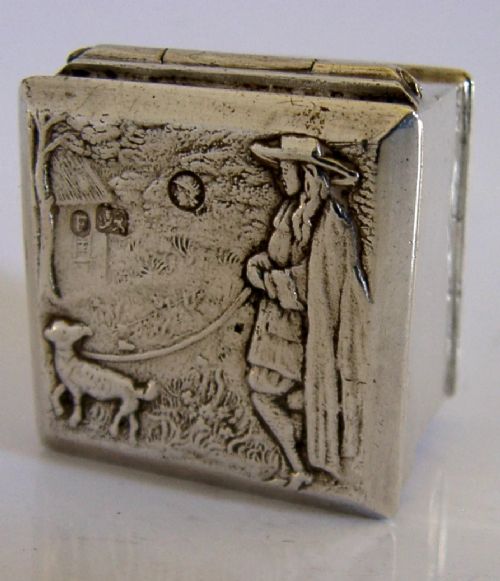


Silver Relief Box
A silver relief box is a container shaped in high or low metalwork, often holding snuff, trinkets, or keepsakes.
Silver Relief Box
A silver relief box is a small container adorned with raised ornamentation, most frequently encountered here as nineteenth-century snuff boxes, trinket boxes, and jewellery caskets.
The pieces span periods from the Georgian and William IV eras through the Victorian decades and into the twentieth century, taking forms such as heart shapes, ovals, and rectangular caskets.
Makers from Britain, France, America, and Asia contributed to these records, working in solid sterling silver, silver gilt, and silver plate.
How they were made
The evidence shows artisans working with sterling silver, silver gilt, and bronze, often employing cast silver techniques for substantial weight and heavy definition.
Relief decoration is achieved through chasing, embossing, and mixed metal working, wherein figures and scenes stand proud of the surface.
Gilding was frequently applied over silver to create a rich gold finish, particularly on interior compartments of snuff boxes and vinaigrettes.
Napoleon Bonaparte occasionally manages to stare out from nineteenth-century metal surfaces.
What varies in quality
Quality rests in the crispness of the raised chasing and the depth of the casting, where sharper relief denotes superior workmanship.
The distinction between solid sterling silver or heavy cast silver and silver-plated metal dictates the intrinsic value and longevity of the piece.
Signed works by known silversmiths exhibit finer hand-finishing on figural scenes and botanical motifs than uncredited mass production.
Edward Farrell·Walker and Hall·Nathaniel Mills·GORHAM·Joseph Willmore
The Silver Relief Box Glossary
- Silver gilt
- Silver that has been coated with a thin layer of gold on its surface. This technique was commonly used to protect the interior of snuff boxes from corrosion.
- Vinaigrette
- A small ornamental box fitted with an internal pierced grille to hold a sponge soaked in aromatic vinegar. These date predominantly to the Georgian and Regency periods.
- Chasing
- A metalsmithing technique where metal is worked from the front with punches to sink the background and push details outward. It creates intricate surface patterns.
- Casket
- A larger decorative box, often lined with fabric, intended for jewellery or keepsakes. French examples frequently feature silvered or gilt copper.
Silver Relief Box: Frequently Asked Questions
What is a silver relief box used for?
These boxes served practical and personal functions in past centuries, holding dry snuff, small amounts of aromatic vinegar, or personal trinkets. Today they are collected as decorative display objects on desks or dressing tables.
The smaller heart-shaped and oval pieces were personal accessories, while heavier table boxes and caskets sat permanently in domestic rooms.
How do I date a silver box?
Dating relies on hallmarks stamped into the metal, stylistic clues from the relief work, and construction methods. British pieces often carry town marks, date letters, and maker's initials.
Georgian and Victorian designs show distinct shifts in botanical and figural motifs, moving from classical scenes to heavier revivalist styles.
What is the difference between solid silver and silver plate?
Solid silver, including sterling standard, consists of the precious metal throughout its structure. Silver plate involves a thin layer of silver bonded over a base metal foundation.
Cast silver items provide a heavier weight and greater durability than plated alternatives.
Are all silver relief boxes British?
The records include pieces from diverse geographic origins, including French caskets, Asian export items, American embossed boxes, and Burmese ceremonial pieces alongside British works.
Continental and Asian makers utilised different alloy standards and decorative motifs compared to London or Birmingham silversmiths.