



Silver Plated Warming Plates
Silver plated warming plates bring nineteenth and twentieth century dining rooms to life, keeping joints and entrees hot at the table.
Silver Plated Warming Plates
Silver plated warming plates encompass serving dishes, entree dishes, meat trays, and lidded tureens designed to keep food warm during lengthy meals. These dining pieces appear primarily from the Georgian, Victorian, and Edwardian eras, spanning the nineteenth and early twentieth centuries.
The versions most commonly met on this page include oval entree dishes on original stands and Old Sheffield Plate warming dishes. Makers utilise base metals such as copper and nickel silver, finished with silver plate or EPNS, frequently accompanied by wood or ebonised wood handles.
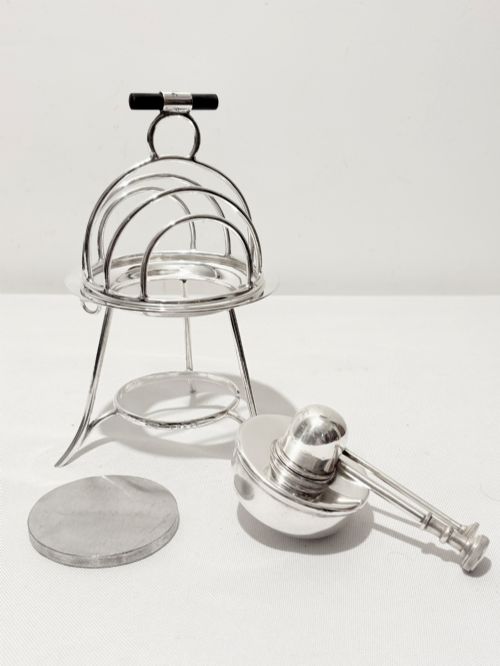
Object forms range from simple serving dishes and covers to spirit kettles on stands and crested Argyle pieces. The stylistic influences visible across these items bridge Regency, Victorian, and Edwardian design traditions.
How they were made
The construction of early nineteenth century pieces relies heavily on Old Sheffield Plate, a technique fusing a thin sheet of silver to a thicker copper core. Later nineteenth and twentieth century examples typically employ electroplated nickel silver, known as EPNS, depositing silver over a base metal through electrical current.
Insulated compartments within the warming plates held hot water to maintain food temperatures at the dining table. Makers integrated wooden fittings, including ebony and ebonised wood, for insulated handles on covers and stands.
Silver Plated Warming Plates Retail Price Guide 2026
Typical asking prices for silver plated warming plates among the pieces listed under this phrase on Sellingantiques today, from the lower quarter to the upper quarter. They describe what is for sale here now, not the wider market.
Listings feature items spanning the Georgian, Victorian, and Edwardian periods, utilising Old Sheffield Plate, copper, and EPNS.
What varies in quality
The distinction between standard utility items and the finest work lies in the crispness of applied crests, the weight of the metal body, and the integrity of the original stands. Pieces retaining their matching bases and complete lidded tureen sets command greater attention from collectors.
The choice of plating method alters the character of the piece, with early Old Sheffield Plate showing subtle copper bleed through wear that differs from the uniform surface of later electroplated items.
Mappin and Webb·Dan Holy
The Silver Plated Warming Plates Glossary
- Old Sheffield Plate
- An early method of fusing silver to a copper base before the invention of electroplating. This technique produces a distinctive dual-metal structure where copper occasionally shows through years of polishing.
- EPNS
- Electroplated Nickel Silver, a method introduced in the nineteenth century for coating a nickel silver alloy with a layer of pure silver. It forms the foundation of most Victorian and Edwardian tableware.
- Argyle
- A specialised vessel featuring an inner chamber for hot water to keep gravies and sauces warm. These pieces often feature plain bodies and crested detailing.
- Entree dish
- A lidded serving vessel intended for the second course of a formal meal. They frequently sit upon dedicated heating stands.
Silver Plated Warming Plates: Frequently Asked Questions
What is Old Sheffield Plate?
Old Sheffield Plate is an early manufacturing method where a thin sheet of silver is mechanically fused to a thick copper core. This technique predates modern electroplating.
Pieces made this way often reveal faint traces of copper along high points and edges after generations of careful polishing.
Are these pieces safe for daily use?
Most buyers display these items as part of traditional table settings or utilise them for formal dinner service. The silver plated surfaces require gentle cleaning materials to preserve the finish.
Modern owners frequently use them for presentation and serving during special gatherings rather than heavy daily cooking.
How do I date an antique warming dish?
Dating relies on stylistic markers from Georgian, Victorian, and Edwardian periods alongside the manufacturing technique. Old Sheffield Plate points toward the Georgian and early nineteenth century.
Later Victorian and Edwardian examples typically employ electroplated nickel silver and bear specific maker marks or registry numbers.