




Silver Plated Pot
A silver plated pot brings the weight and bright gleam of formal service to the table without the heavy cost of solid metal.
Silver Plated Pot
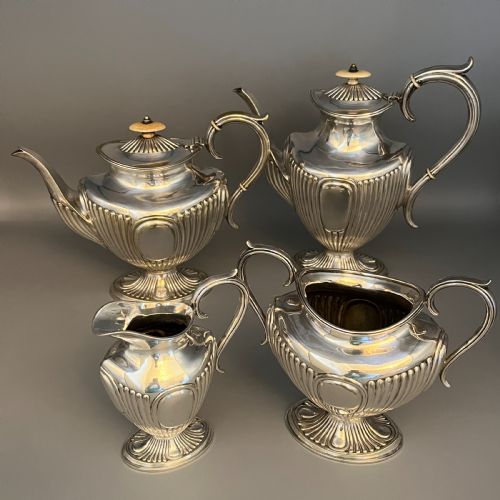
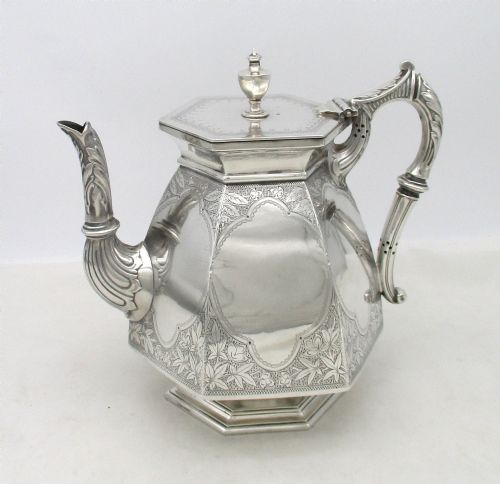
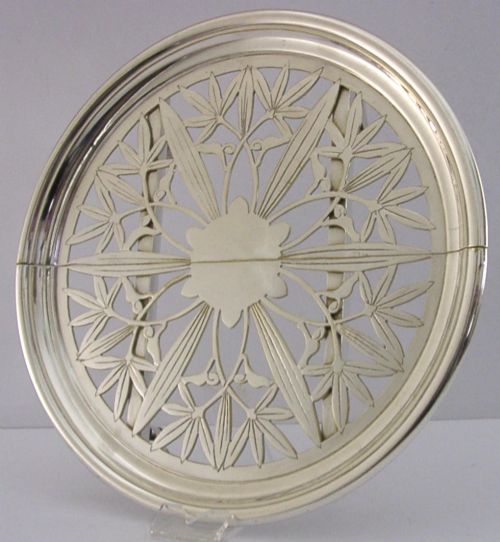
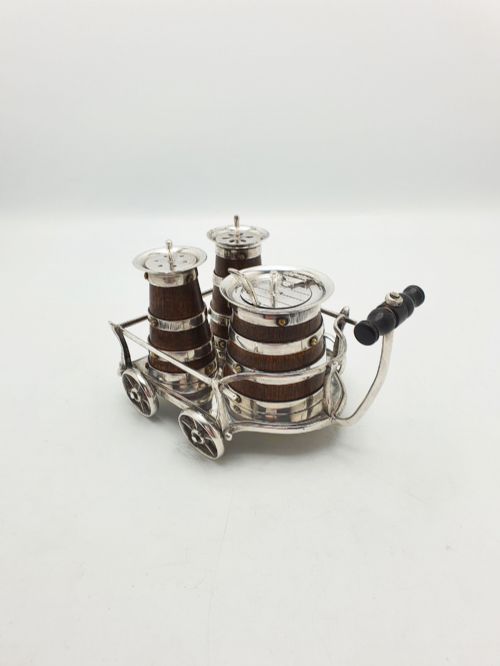
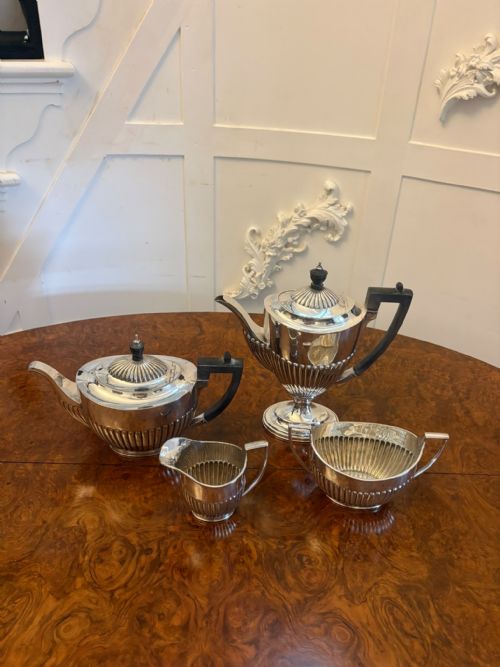
A silver plated pot covers a range of domestic vessels, from tall coffee pots and tea services to gravy warmers and specialised biscuit barrels. The forms encountered here stretch from Georgian Old Sheffield plate through Victorian and Edwardian tea sets down to Art Deco serving stands.
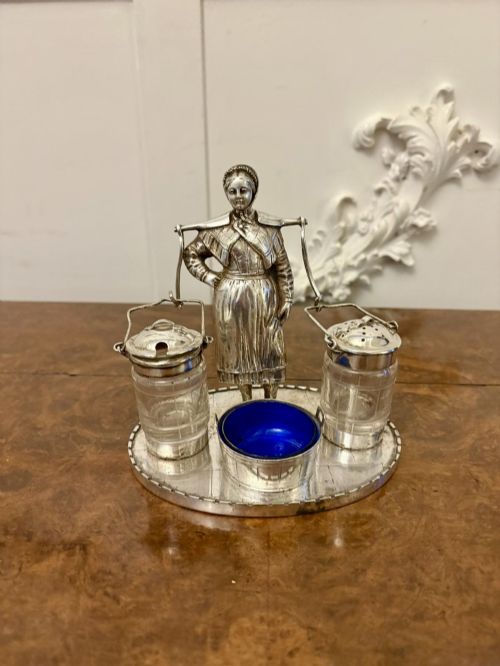
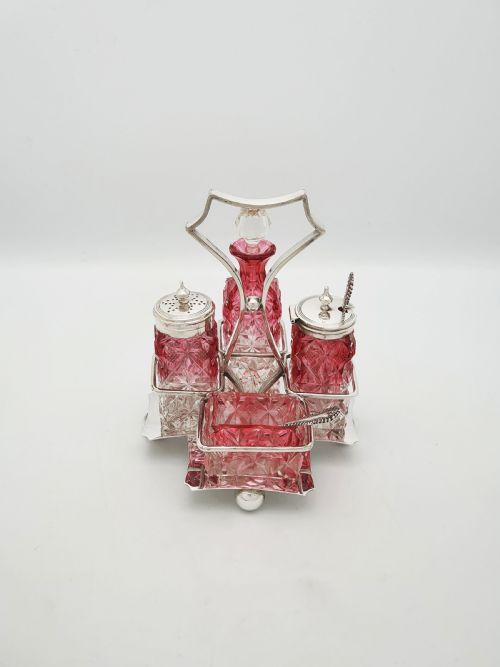
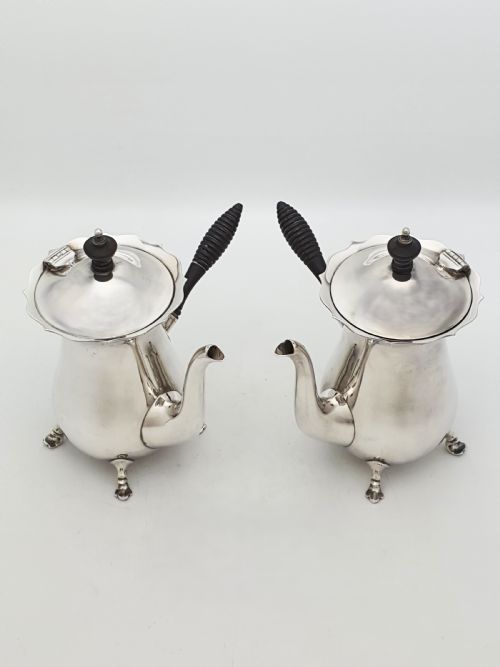
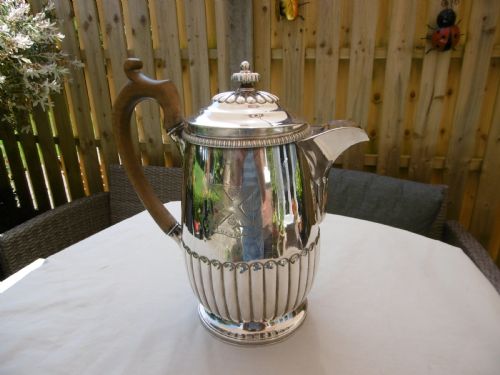
The Edwardian period supplies many of the tea services, cruet sets, and café au lait pots seen on this page, often paired with cut glass or cranberry glass bowls. Earlier pieces from the eighteenth and nineteenth centuries lean towards substantial coffee pots and argyle gravy warmers with crested bodies.
Materials and construction methods
Early examples utilise Old Sheffield plate, a technique fusing a thin sheet of silver to a thicker copper base, sometimes visible at worn edges. Later items rely on electroplated nickel silver, a process that deposited a smooth coat of silver evenly over a base metal alloy.
Makers combined these plated metals with cut glass, cranberry glass, ceramic bodies, and mounts of oak or walnut. Wirework stands, pierced spoons, and ebonised wood handles complete the construction of these functional vessels.
Silver Plated Pot Retail Price Guide 2026
Typical asking prices for silver plated pot among the pieces listed under this phrase on Sellingantiques today, from the lower quarter to the upper quarter. They describe what is for sale here now, not the wider market.
The listings span from the eighteenth century through to the Art Deco period, featuring materials such as cranberry glass, cut glass, and ebonised wood.
Distinctions in quality
Quality rests on the crispness of chased ornamentation, the weight of the underlying metal, and the survival of the original plating over high points and handles. Pieces retaining substantial metal thickness and sharp crests or engraved crests demonstrate superior manufacture.
The integration of secondary materials such as undamaged cranberry glass liners, clear cut glass bottles, and robust ceramic bodies elevates a vessel. Complete sets with matching components maintain greater integrity than single items assembled later.
Walker and Hall·Padley Parkin and Staniforth·Mappin Brothers·Matthew Boulton·John Hoyland
The Silver Plated Pot Glossary
- Old Sheffield plate
- A method of fusing a thin layer of silver to a copper core prior to shaping. This technique predates nineteenth-century electroplating.
- Electroplated nickel silver
- A base metal alloy of copper, nickel, and zinc coated with a layer of pure silver via an electrical current. It became the standard manufacturing method in the Victorian era.
- Argyll
- A specialised gravy warmer featuring a central compartment for hot water to keep sauces warm at the table. These vessels often take a cylindrical or urn shape.
- Cruet set
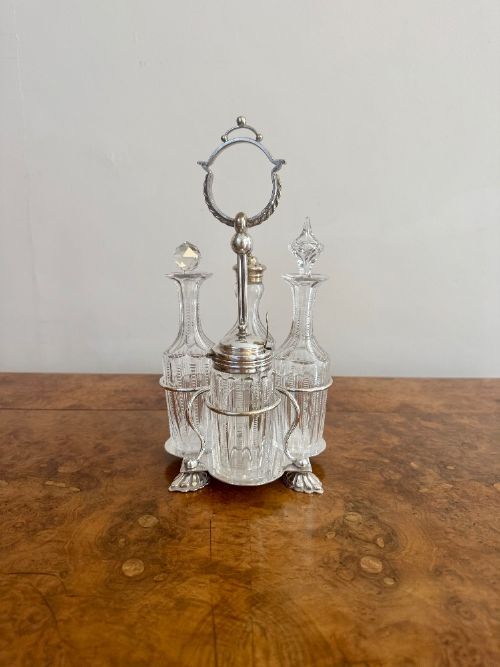
- A matched collection of small bottles, jars, or pots held in a stand for condiments, oil, vinegar, salt, and pepper. They frequently incorporate cut or cranberry glass.
- Biscuit barrel
- A covered container designed for storing dry biscuits or cakes, often combining a ceramic or glass body with silver-plated mounts and a swing handle.
Silver Plated Pot: Frequently Asked Questions
What is the difference between Old Sheffield plate and electroplate?
Old Sheffield plate involves physically fusing a sheet of silver onto copper, which often reveals a reddish copper line along high-wear edges. Electroplate uses an electrical current to bond a smooth coat of silver evenly over a nickel silver base.
Electroplating became widespread during the nineteenth century, largely replacing the older fusion method.
Can I still use these pots for serving food and drink?
Most pieces remain structurally sound for serving tea, coffee, or hot water if washed by hand with mild detergent after use. Inspect the interior surfaces to ensure the plating is intact before introducing food or liquids.
Many collectors prefer to use them for display rather than daily service to preserve the delicate plating and original mounts.
How do I date a silver plated pot?
Examine the style of the vessel, such as the neoclassical lines of Georgian coffee pots or the heavy ornamentation of Victorian tea sets and Edwardian cruet stands. Maker marks, registry numbers, and construction techniques also provide clear chronological markers.
Pieces utilising Old Sheffield plate generally point to the eighteenth or early nineteenth century, while electroplated items typically date from the mid-nineteenth century onwards.