

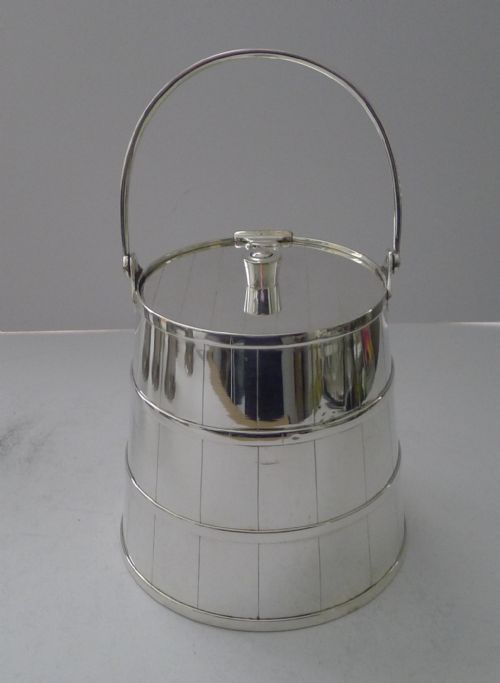


Silver Plated Handle Ice Bucket
A silver plated handle ice bucket brings functional elegance to any gathering, combining sturdy metalwork with practical insulating design.
Silver Plated Handle Ice Bucket
When you search for a silver plated handle ice bucket, you encounter pieces spanning the nineteenth century through the mid-twentieth century, including objects originally designated as wine coolers, champagne buckets, and novelty biscuit barrels. These vessels frequently manifest in distinctive design movements such as Art Deco, Late Victorian, and Maritime Edwardian, reflecting the social habits of their respective eras.
The versions most commonly met on this page range from plain utilitarian cooling vessels to decorative French and British creations. Forms vary from simple cylindrical bodies with robust carrying handles to more elaborate cut glass and metal combinations.
Construction and materials
Makers utilised silver plate over a base metal foundation, alongside traditional Old Sheffield plate techniques for earlier pieces. Glass and cut glass components often integrate directly with the metal mounts, creating dual-material vessels designed to hold ice securely.
Handles and mounts are securely attached to the main body, employing soldered joints or structural fixtures capable of supporting the weight of ice and bottles. The combination of reflective silver surfaces with clear glass provides both visual contrast and thermal containment.
Silver Plated Handle Ice Bucket Retail Price Guide 2026
Typical asking prices for silver plated handle ice bucket among the pieces listed under this phrase on Sellingantiques today, from the lower quarter to the upper quarter. They describe what is for sale here now, not the wider market.
An equestrian-themed champagne bucket from Paris brings a distinct racing pedigree directly to the cocktail hour.
Assessing quality and craftsmanship
The distinction between standard utility items and finer examples rests upon the weight of the metal, the crispness of any decorative chasing or engraving, and the integrity of the silver plating. Substantial gauge metal resists denting and maintains its structural form over decades of regular use.
Artisanal execution in the handle attachments and the clarity of the cut glass elements elevate certain pieces above mass-produced counterparts. Maker marks from established firms indicate higher standards of workshop production.
Christofle·Hermès Paris·James Dixon And Sons
The Silver Plated Handle Ice Bucket Glossary
- Silver Plate
- A thin layer of silver fused or electroplated onto a base metal such as copper, brass, or nickel silver. This technique offered the visual appeal of solid silver at a lower production cost.
- Old Sheffield Plate
- An early method of fusing a sheet of silver to a copper core by heat and pressure before rolling them together into thin sheets. This process produces a characteristic warm glow and distinct edge appearance.
- Art Deco
- A design style prevalent during the 1920s and 1930s characterised by sleek geometric shapes, streamlined forms, and stylised ornamentation. Pieces from this period often feature clean vertical lines.
- Cut Glass
- Glass decorated by grinding facets or patterns into the surface using a rotating wheel. It adds weight and sparkle to ice buckets and beverage coolers.
Silver Plated Handle Ice Bucket: Frequently Asked Questions
What is a silver plated handle ice bucket?
A silver plated handle ice bucket is a serving vessel designed to hold ice, featuring a metallic exterior with silver plating and at least one carrying handle. These pieces were historically utilised for entertaining and dining.
Over time, many similar vessels functioned interchangeably as wine coolers, champagne buckets, or novelty biscuit barrels depending on their size and internal fittings.
How do I clean a silver plated handle ice bucket?
Cleaning requires a soft cloth and a specialised silver polish formulated to protect thin metal platings from abrasive wear. Regular gentle wiping prevents tarnish buildup without stripping the underlying layer.
Harsh chemical dips and abrasive scourers should be avoided entirely, particularly around soldered handle joints and glass-to-metal seals where moisture might cause damage.
Were these buckets used for champagne?
Many vessels listed under this category served dual purposes for cooling wine, chilling champagne, or holding ice cubes for spirits. Larger scaled cylinders with twin handles were specifically manufactured for bottled beverages.
Smaller lidded versions often doubled as biscuit boxes or table ice containers during formal Victorian and Edwardian dining occasions.
How can I tell the period of a piece?
Stylistic indicators such as geometric Art Deco motifs or ornate Late Victorian engraving provide primary clues to a vessel's age. Maker marks stamped onto the base often allow precise historical attribution.
Material choices, such as early Old Sheffield plate versus later electroplated base metals, further help narrow down the manufacturing decade.