




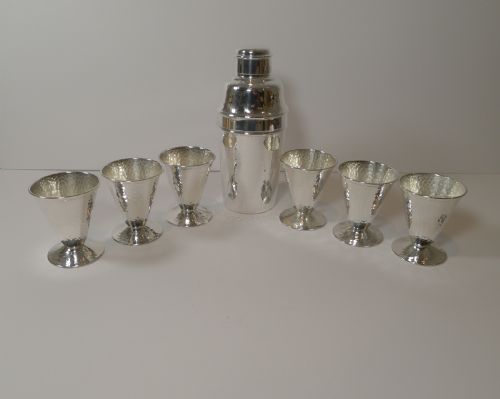

Silver Plated Drink Set
A silver plated drink set brings together polished metal, glass, and fitted wood for serving spirits, wine, and mixed cocktails with distinct period style.
Silver Plated Drink Set
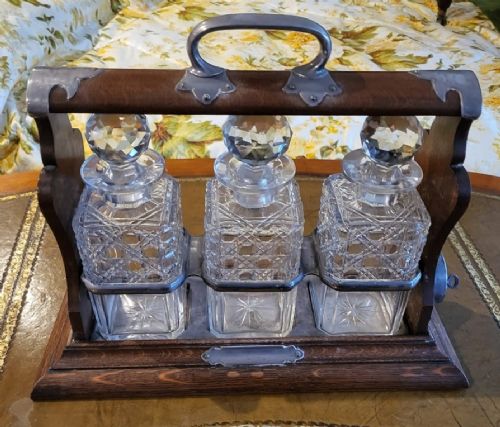
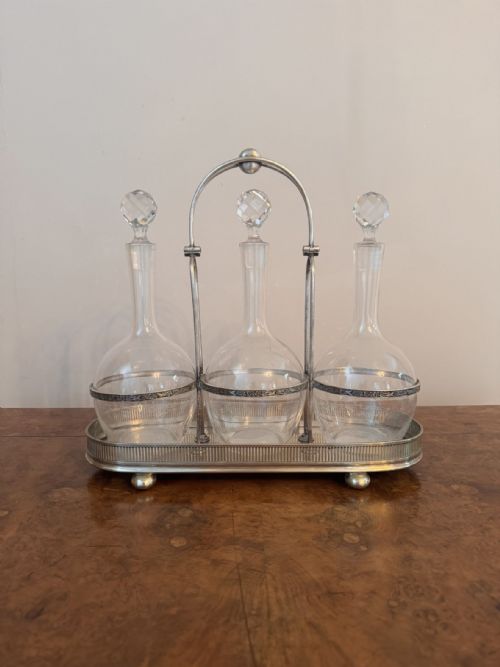
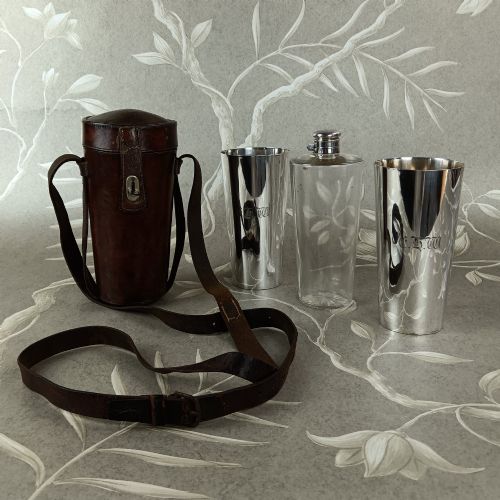
A silver plated drink set encompasses various entertaining containers and serving vessels, most frequently seen here as locking tantalus frames holding cut glass decanters, tiered liqueur stands, and fitted spirit services. These groupings originate from Victorian, Edwardian, and Art Deco periods, ranging from campaign spirit cases to elaborate table trays.
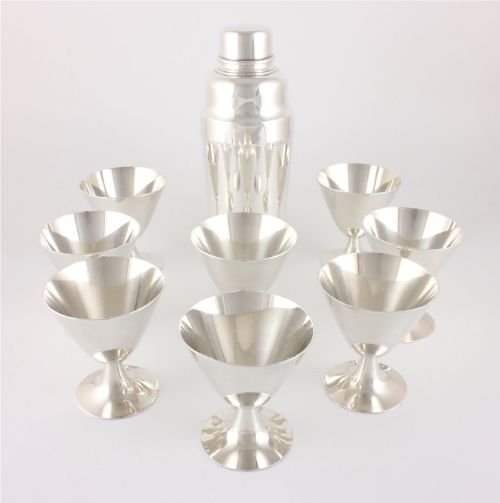
The version a buyer meets most often on this page is the three-bottle oak and silver plated tantalus, alongside standalone cocktail shakers from the 1930s. Oak frames fitted with lockable metal handle mechanisms dominate the nineteenth-century entries, while cylindrical shakers with engine-turned or hammered finishes represent the interwar decades.
Materials and construction
Makers fused silver onto base metals using traditional plating techniques, mounting the resulting metalwork onto solid or figured oak timbers and leather-lined bases. Cut glass, frosted crystal, and moulded glass form the bottles and barrels, while internal mechanisms utilise lockable metal bars.
Surface decoration relies heavily on mechanical processes such as engine-turning and hand-hammering on cocktail vessels, combined with precision cutting on decanter glass. Woodwork involves fitted compartments, dovetailed joints, and applied silver plated mounts to secure glassware.
Silver Plated Drink Set Retail Price Guide 2026
Typical asking prices for silver plated drink set among the pieces listed under this phrase on Sellingantiques today, from the lower quarter to the upper quarter. They describe what is for sale here now, not the wider market.
Listings feature oak, cut glass, and silver plate across Victorian, Edwardian, and Art Deco periods.
Distinctions in quality
Quality rests upon the weight and thickness of the silver plate over its base metal, alongside the clarity and depth of cut in the associated glassware. Thicker plating resists wear through decades of polishing, whereas thin plating reveals the base metal underneath.
The integrity of the timber framing and the precision of the locking mechanisms dictate the standing of a tantalus or spirit case. Substantial figured oak and smoothly operating locks separate standard utilitarian pieces from workshop productions bearing maker marks.
James Dixon & Sons·Elkington·Maison Barra·Mappin & Webb Keith Murray
The Silver Plated Drink Set Glossary
- Tantalus
- A locking drink stand that secures decanters within a metal and wood frame to prevent unauthorized access to the spirits inside. The locking bar must be unlocked with a key before any decanter can be lifted from the base.
- Old Sheffield Plate
- An early method of fusing a thin sheet of silver to a thicker copper core by heat and pressure. This technique predates modern electroplating and leaves a characteristic edge where the base metal shows.
- Engine-Turned
- A geometric surface decoration applied to metal using a specialised lathe that cuts precise, repeating patterns into the silver plate. This technique appears frequently on Art Deco cocktail shakers.
- Spirit Set
- A matched collection of bottles, stoppers, and glasses housed within a portable tray or caddy for serving alcoholic drinks. These sets often include designated spaces for whiskey, gin, and brandy.
- Tot Pail
- A small, bucket-shaped container included in nineteenth-century barware arrangements for holding ice or measures. They sit alongside barrel dispensers on silver plated stands.
Silver Plated Drink Set: Frequently Asked Questions
What is the difference between Old Sheffield Plate and silver plate?
Old Sheffield Plate involves physically fusing silver and copper sheets together through heat before rolling them into sheets for manufacturing. Standard silver plate uses an electrical current to deposit a thin layer of silver onto a base metal substrate.
Items made with Old Sheffield Plate often reveal a thin line of copper along the cut edges or high points where the outer silver layer has worn away through centuries of use.
How should I clean silver plated barware?
Maintenance requires a soft cloth and a gentle, non-abrasive silver polish formulated specifically for plated items. Vigorous rubbing must be avoided to prevent wearing through the thin silver layer down to the base metal.
Glass components should be washed separately in warm, soapy water without harsh detergents. Wooden frames benefit from occasional applications of furniture wax to nourish the oak.
How do I date an Art Deco cocktail shaker?
Dating relies on stylistic markers such as geometric engine-turned patterns, hammered finishes, and materials like Bakelite handles. These design traits point directly to the interwar period of the 1930s.
Maker marks stamped onto the base of the silver plate provide further confirmation. Comparing the stamp to known working dates of firms like Mappin & Webb helps narrow down the production year.