
Silver Plated Cut Glass
Silver plated cut glass combines heavy brilliant-cut vessels with plated mounts, creating functional dining table accessories that span the Victorian and Edwardian periods.
Silver Plated Cut Glass
Buyers exploring silver plated cut glass encounter dining and desk accessories produced primarily during the Victorian and Edwardian eras, alongside later twentieth-century interpretations. These objects combine heavy transparent vessels with metal mounts, hinges, or stands created through electroplating.
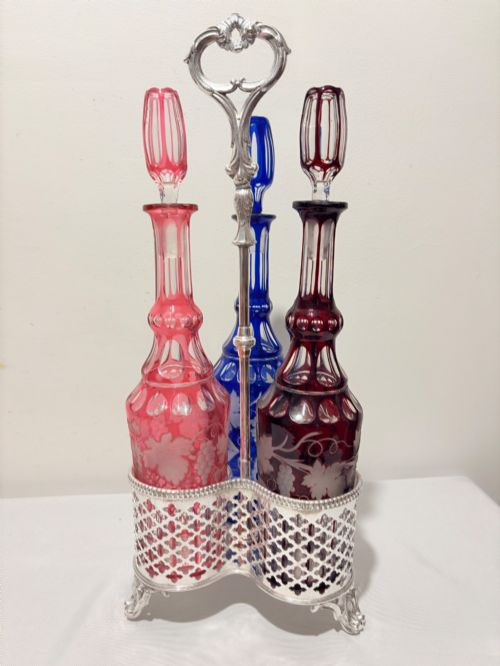
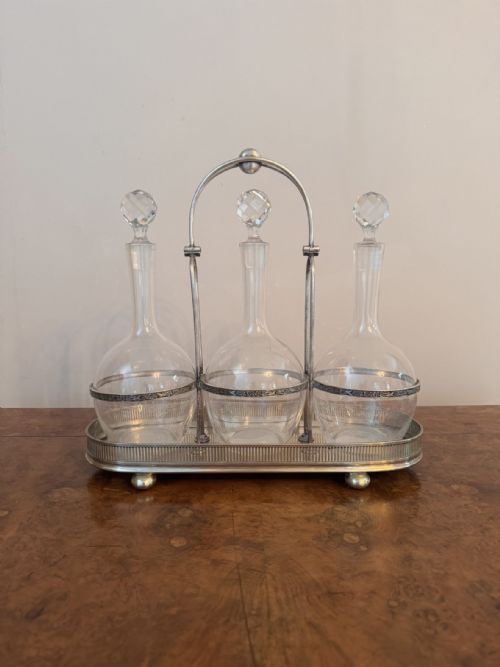
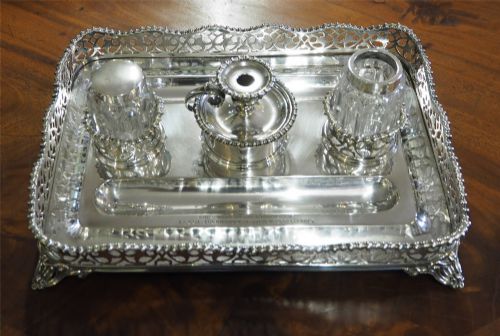
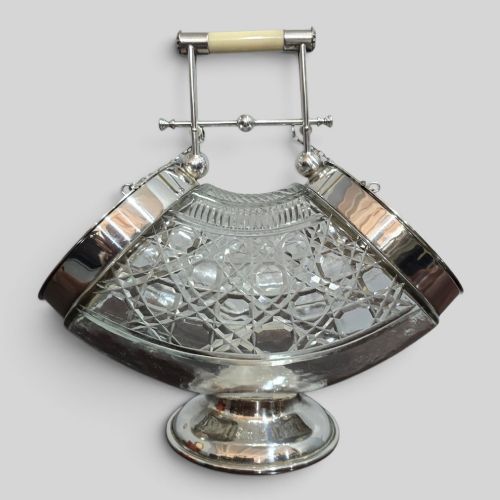
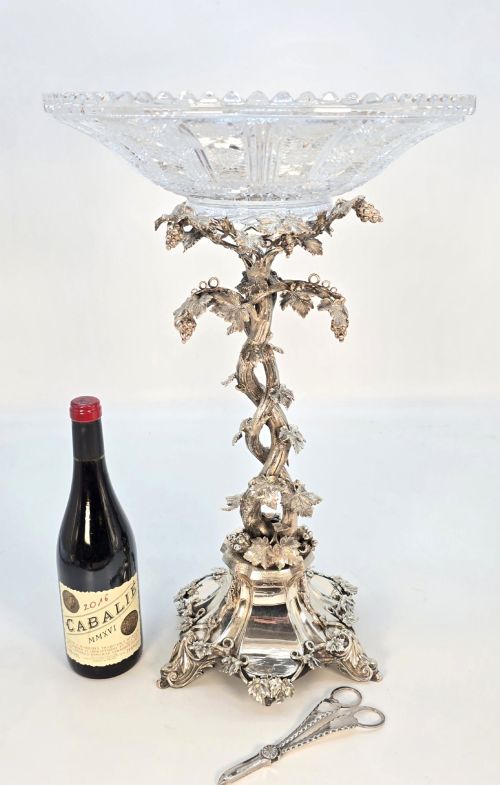
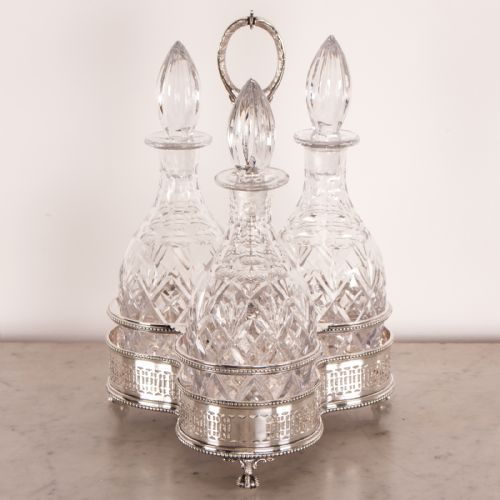
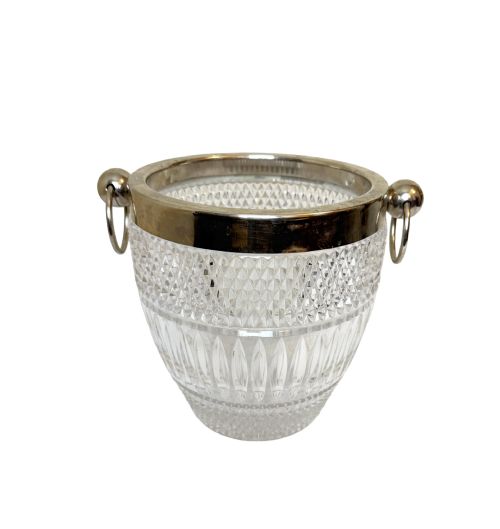
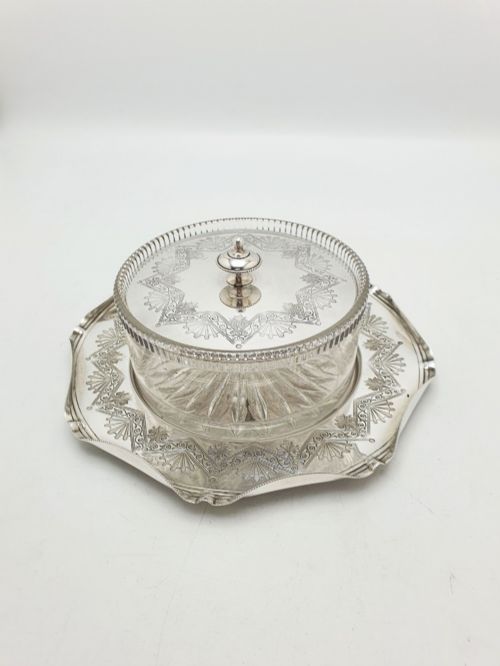
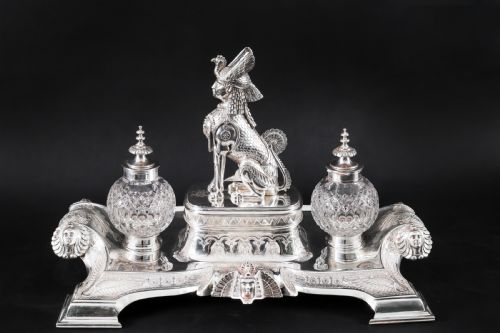
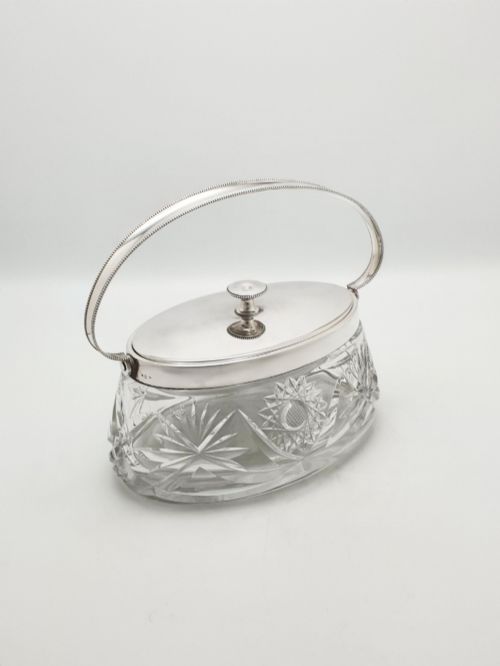
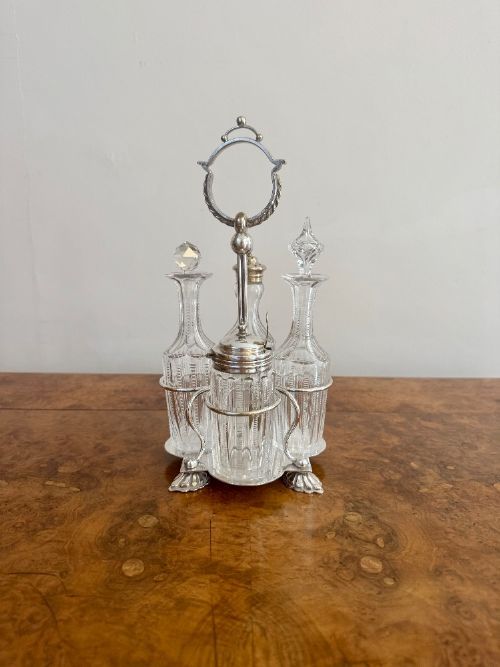
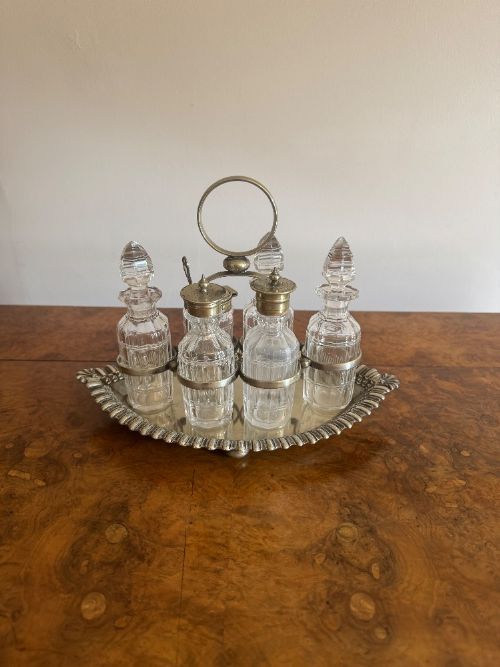
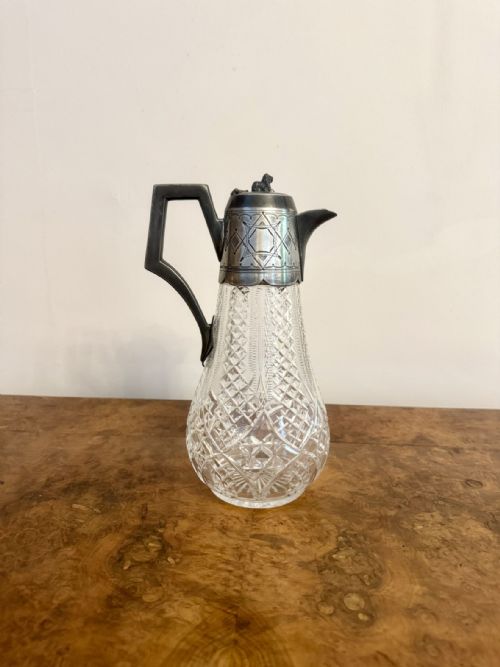
The selection centres heavily on claret jugs, biscuit barrels, and cruet sets, though ice buckets, butter dishes, and inkstands appear frequently. Edwardian and Victorian examples dominate the selection, often displaying hobnail or starburst wheel-cutting on the transparent body.
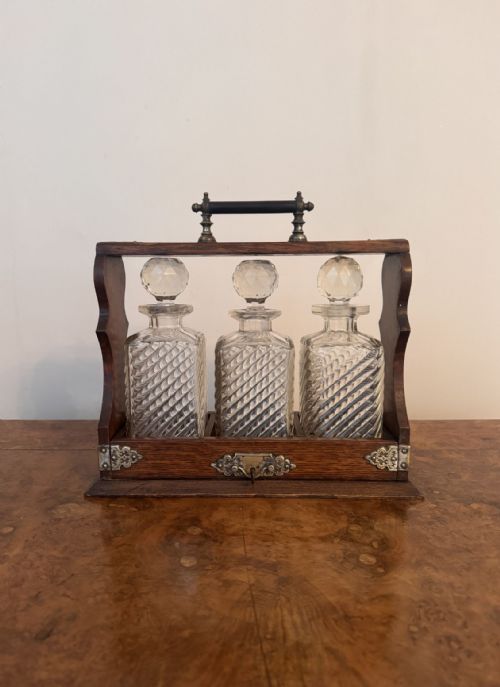
Makers utilised oak and cork as secondary components in items such as tantalus frames and spirit barrels. Functional table service remains the primary purpose across these surviving domestic pieces.
Materials and construction methods
The manufacturing process united heavy lead glass blanks with a deposited layer of silver over a base metal such as nickel silver or copper. Artisans shaped the glass by hand-blowing molten material into moulds before applying wheel-cut geometric patterns across the exterior surface.
Mounts, handles, and collars were cast or stamped separately before being secured to the glass body using plaster, cork, or mechanical fixings. Silver plating was achieved through electrodeposition, a commercial technique developed extensively in nineteenth-century Birmingham and Sheffield workshops.
Object forms range from standard cruet sets and claret jugs to specialised desk accessories, spirit barrels, and vintage car condiment sets.
Quality factors in manufacture and design
Quality rests upon the depth and crispness of the wheel-cut facets on the glass vessel, where sharper edges indicate superior hand-finishing. The thickness of the silver deposit over the base metal determines longevity, with heavier plating resisting wear through decades of polishing.
Balance and weight separate standard domestic wares from exceptional workshop productions. Superior examples integrate the metal mounts and glass body without movement, using robust hinges and secure collars that align precisely with the vessel's contours.
Elkington·Walker & Hall·Wilkinson & Co·WMF·Mappin Brothers·Mappin & Webb·Goldsmiths and Silversmiths Company·Cooper Bros of Sheffield·John Grinsell & Sons·Karl Palda
The Silver Plated Cut Glass Glossary
- Cruet set
- A matched collection of glass bottles fitted with silver plated mounts, held within a dedicated frame for condiments at the dining table. These sets frequently include mustard pots, oil cruets, and vinegar bottles.
- Tantalus
- A locked wooden or metal frame enclosing decanters to prevent unauthorized access to the contents. The framework secures the stoppers in place until the locking bar releases.
- Biscuit barrel
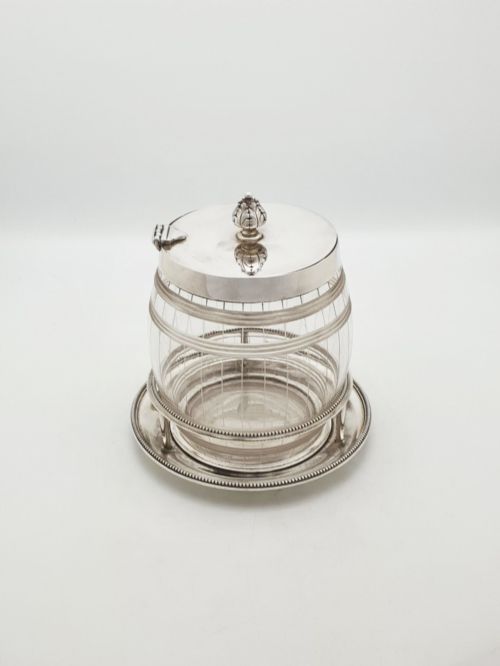
- A cylindrical lidded container designed for storing dry baked goods, combining a cut glass body with a hinged silver plated lid and swing handle. Production peaked during the late Victorian and Edwardian periods.
- Hobnail cut
- A raised, pointed geometric pattern wheel-cut into the exterior of glassware. This technique creates a tactile, diamond-point texture that catches ambient light.
- Claret jug
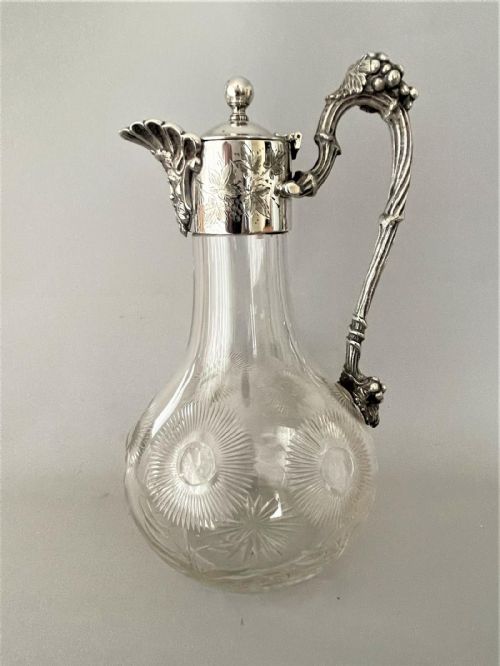
- A pouring vessel designed for wine, featuring a glass body fitted with a hinged silver plated lid, handle, and collar. Victorian examples often incorporate intricate naturalistic or classical cast ornament on the metal mounts.
Silver Plated Cut Glass: Frequently Asked Questions
How do I clean silver plated cut glass?
Cleaning requires washing the glass vessel in warm soapy water using a soft cloth to protect the polished surface. Harsh abrasives must be avoided on both the glass and the plated metal mounts.
Silver plated components benefit from gentle cleaning with specialised metal polish applied sparingly. Submersing pieces with fitted cork or wooden bases should be strictly avoided to prevent internal water damage.
How are Victorian pieces told apart from Edwardian ones?
Victorian examples often display heavier, more ornate casting on the metal mounts, frequently incorporating naturalistic foliage or eclectic revival styles. The cut glass patterns on mid-nineteenth-century items tend towards deep fluting and complex wheel-engraved motifs.
Edwardian items generally favour lighter geometric cutting, such as starbursts and hobnails, paired with more restrained neoclassical mounts. Proportions on Edwardian pieces frequently lean towards slender, symmetrical profiles.
Were these items used daily?
Domestic pieces such as cruet sets, biscuit barrels, and water jugs were produced for regular use in middle and upper-class households. They functioned as practical tableware during formal meals and casual gatherings alike.
Many surviving examples retain signs of careful domestic service balanced by periods of display. Their durable construction allowed them to withstand regular handling over generations.