
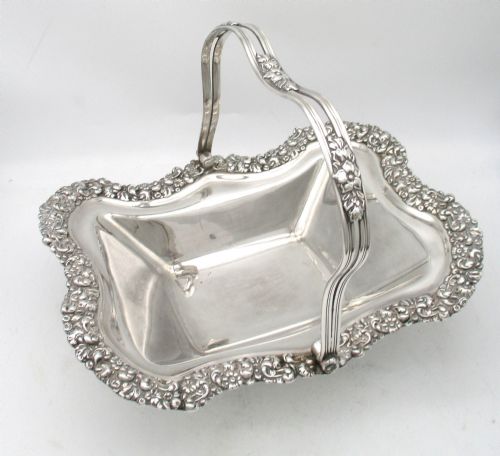
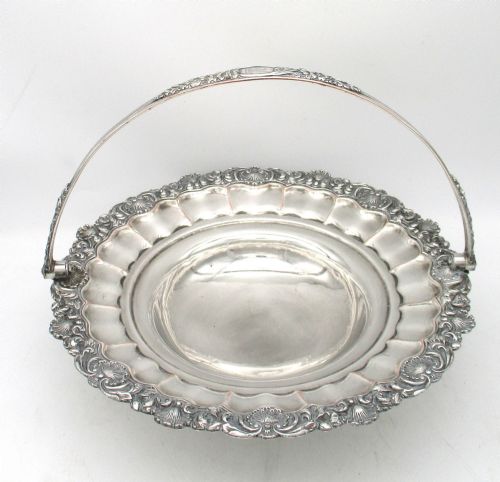


Silver Plated Centerpiece Bowl
These silver plated centerpiece bowl examples anchor a dining table with substantial nineteenth and twentieth century metalwork and glass.
Silver Plated Centerpiece Bowl
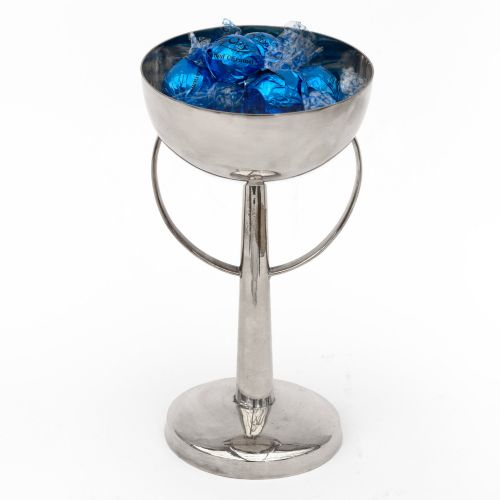
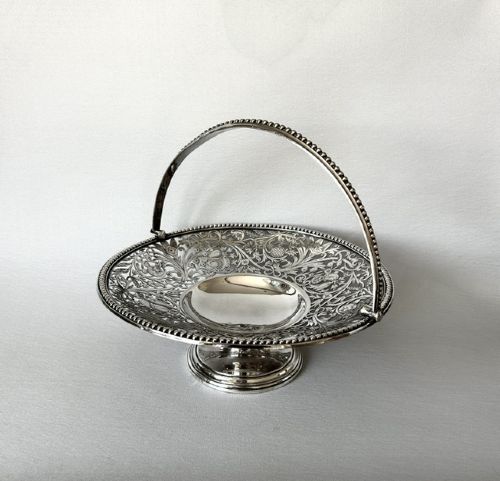
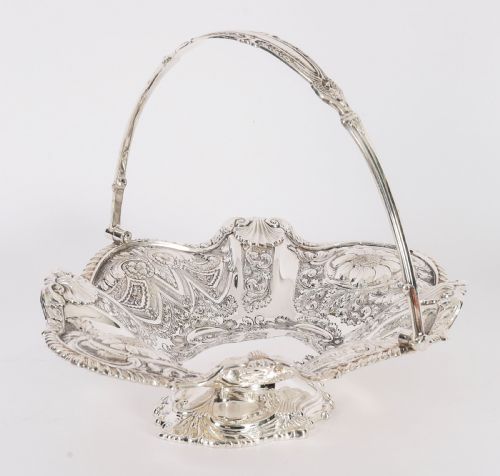
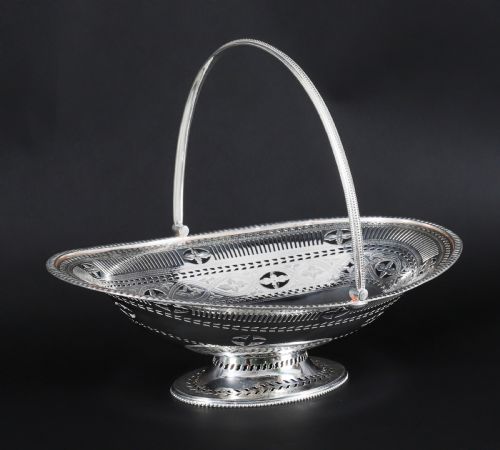
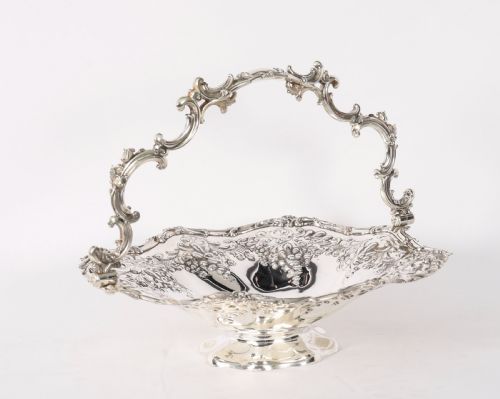
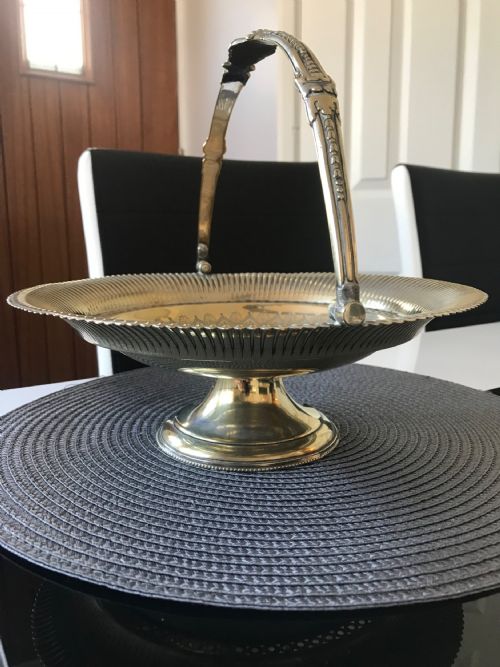
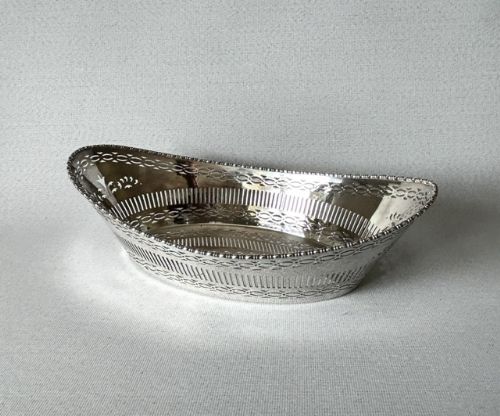
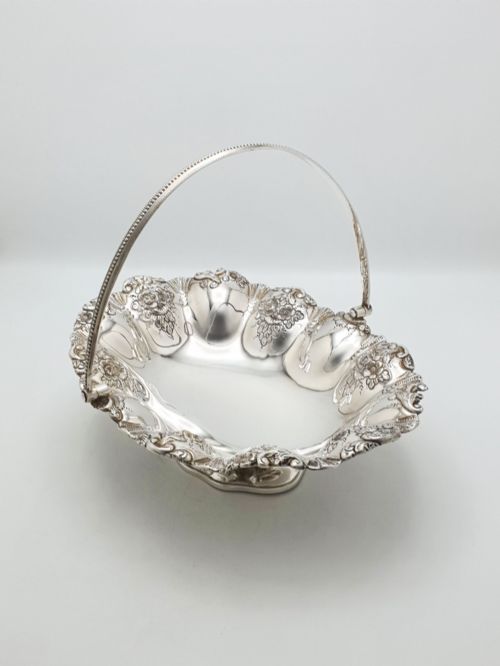
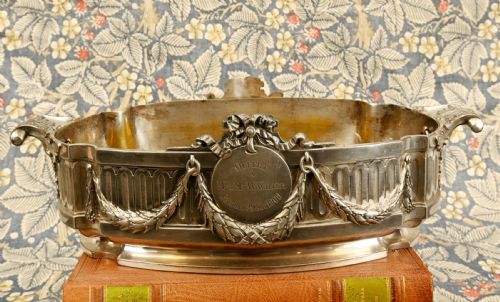
A silver plated centerpiece bowl serves as a major table decoration, often taking the form of a fruit basket, basket, or tureen. These items appear across Victorian, Edwardian, and Art Nouveau periods, frequently incorporating glass liners.
The selection includes specialised forms such as punch bowls, wine coolers, rose bowls, and bon bon dishes. Many pieces date from the nineteenth century, including Old Sheffield Plate examples from earlier decades.
Makers and workshops across England and France produced these items for domestic display and formal dining. The category bridges practical serveware and purely decorative table ornaments.
How They Were Made
Makers utilised silver plate, electroplated nickel silver, and Old Sheffield Plate over copper bases. Bronze and silvered bronze also appear in certain centrepieces and tazzas.
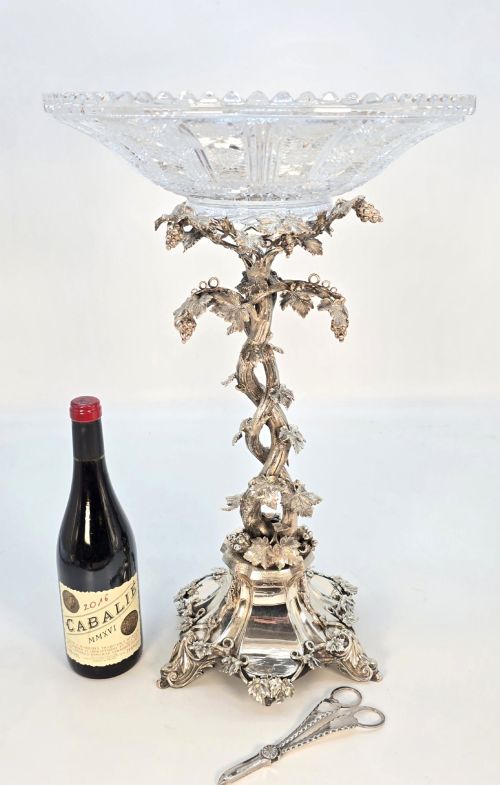
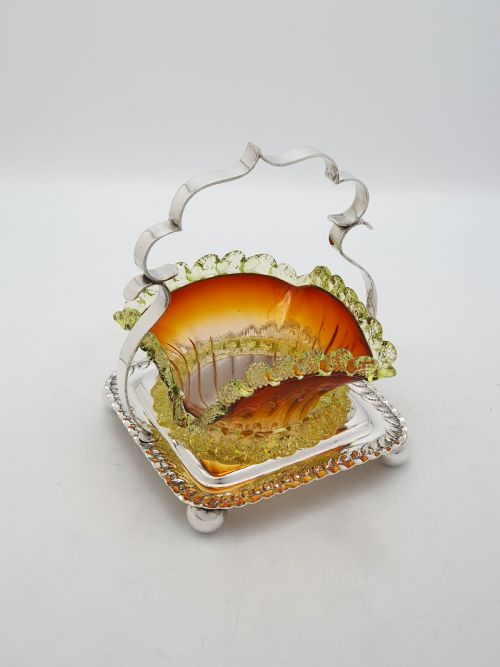
Craftsmen combined metalwork with cut glass, ruby glass, amber glass, and green vaseline glass inserts. Decoration relied on floral repoussé, pierced metal patterns, and floral engraving.
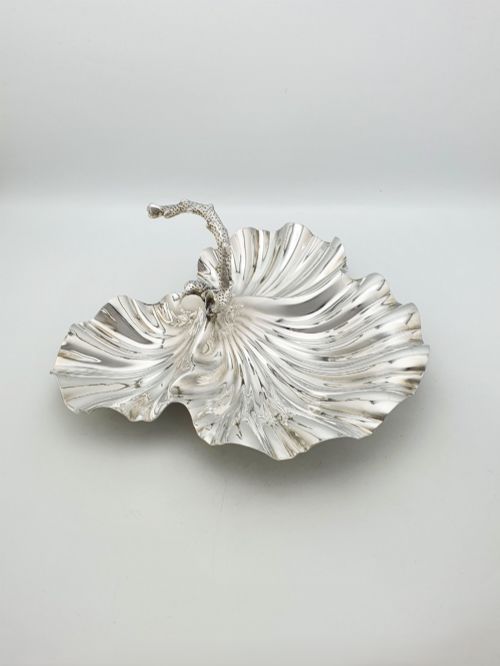
Several pieces feature stylised coral handles and swan figures, bringing marine life directly onto the Victorian dining table.
What Varies in Quality
The weight and thickness of the silver plating dictate longevity and durability across handling. Substantial casting and heavy gauge metal separate ordinary domestic items from finer showroom pieces.
The integration of glass components affects overall harmony, particularly where ruby, vaseline, or cut glass liners retain their original matching form. Crispness in repoussé work and piercing distinguishes skilled silversmithing from simpler production.
George W Scott And Sons Ltd·Mappin And Webb·Elkington And Co·Thomas Bradbury·Walker And Hall·Daniel And Arter·Barker Ellis·WMF
The Silver Plated Centerpiece Bowl Glossary
- Old Sheffield Plate
- An early fusing technique where a thin sheet of silver is fused to a thicker copper base before rolling. This method produces characteristic edge seams visible on older items.
- EPNS
- Electroplated Nickel Silver, a common base material introduced in the nineteenth century for plated tableware. It provides a stable foundation for silver deposition.
- Repoussé
- A metalworking technique where the design is hammered into relief from the reverse side. This creates raised floral and decorative motifs on bowls and baskets.
- Épergne
- A large table centerpiece featuring multiple branching dishes or baskets for fruit and sweetmeats. These often combine silver plate frames with coloured glass inserts.
- Vaseline Glass
- A type of glass coloured with uranium oxide, producing a distinctive yellow-green hue. It frequently accompanies Art Nouveau silver plated frames.
Silver Plated Centerpiece Bowl: Frequently Asked Questions
How do I clean a silver plated centerpiece bowl?
Wash the metal gently with warm soapy water and a soft cloth to avoid damaging the plating. Regular light polishing maintains the finish without wearing through to the base metal.
Remove glass liners before cleaning to protect both materials. Avoid harsh chemical dips that strip historical patina.
What is the difference between Old Sheffield Plate and EPNS?
Old Sheffield Plate uses a mechanical fusion of silver and copper sheets created through heat and rolling. This older method often reveals subtle copper lines at exposed edges.
EPNS relies on an electrical current to bond silver onto a nickel silver alloy. This later process replaced Old Sheffield Plate during the nineteenth century.
Can I use these bowls for serving food?
Most antique bowls and baskets function safely for dry foods such as fruit, bread, or confectionery. Items with removable glass liners accommodate moist foods without risking the metal surface.
Consider the condition of the interior plating before serving acidic items. Many collectors primarily utilise them for display rather than active dining.
How do I date a silver plated bowl?
Examine the decorative style, such as Neo Classical revival or Art Nouveau curves, which align with specific decades. Maker marks and manufacturing methods also provide chronological markers.
Heavy cast mounts and hand piercing often point to mid-nineteenth century production. Lighter electroplated items typically reflect Edwardian or later manufacturing.