
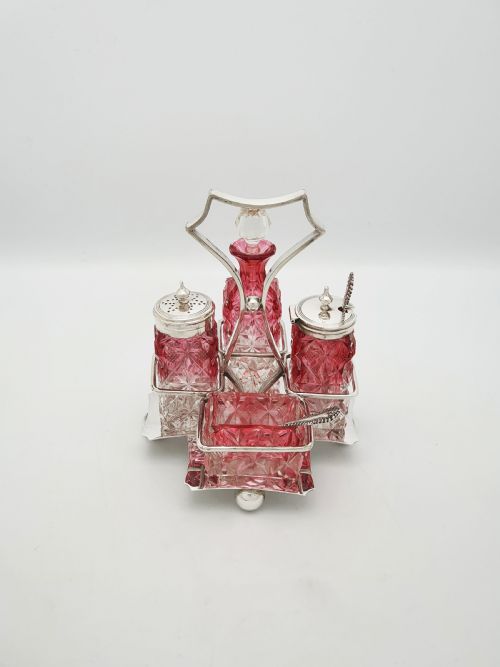


Silver Plate Glass Caddy
These silver plate glass caddy designs combine robust metal frames with tactile glass vessels for dining tables and sideboards.
Silver Plate Glass Caddy
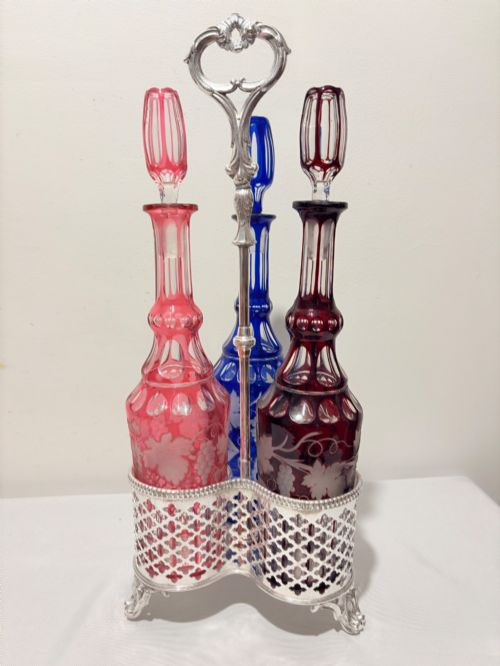
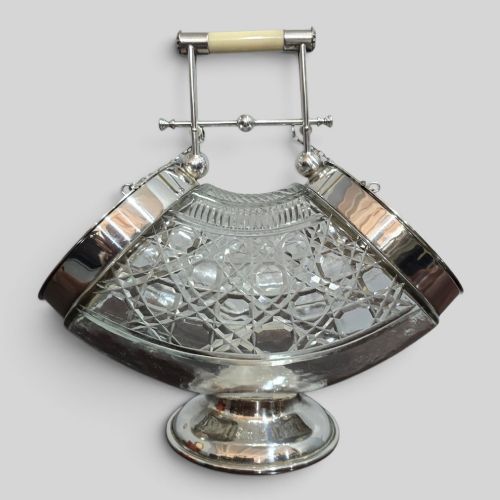
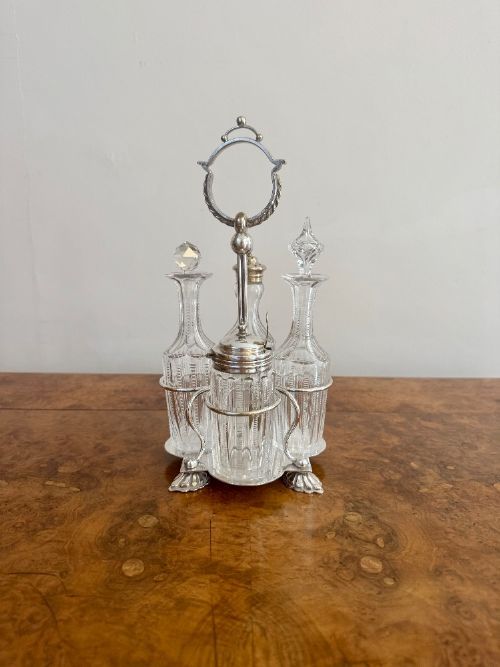
A silver plate glass caddy brings together metal framework and glass containers designed to hold condiments, biscuits, or drinks for guests. Buyers encounter a variety of forms here, ranging from multi-bottle cruet sets and condiment stands to biscuit barrels and tantalus decanters spanning the Victorian and Edwardian eras.
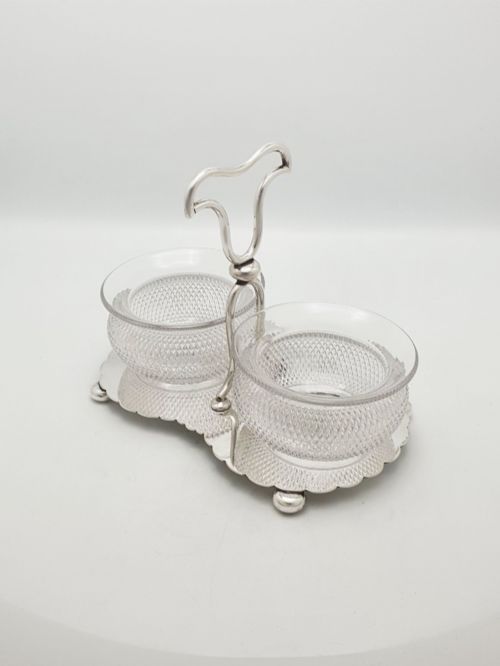
Cruet sets and condiment stands form the most frequent encounters in this selection, often equipped with glass bowls, bottles, or liners held within pierced or ornate metal frames. Alongside these, tabletop dispensers, relish caddies, and liqueur stands demonstrate the wide range of domestic vessels produced in silver plate and glass during the nineteenth and early twentieth centuries.
Materials and construction
Makers utilised a base metal plated with silver to provide the appearance and durability of solid silver without the prohibitive cost. Frames frequently incorporated cast or pierced components, supporting blown and moulded glass inserts.
Glass elements range from plain vessels to intricate hobnail cut glass, cranberry flashed glass, frosted crystal, and vaseline glass. Oak chassis appear in several tantalus designs, combining timber frames with secure metal locks and silver plated mounts.
Automated biscuit boxes and carriage cruet sets show that Victorian dining tables valued mechanical novelty just as much as fine seasoning.
Evaluating craftsmanship
Quality resides in the crispness of the casting on the metal frame and the precision of the glass cutting. Pieces with deeply faceted hobnail cutting or carefully pierced silver plate sit at a higher level than plain, mass-produced counterparts.
The integration between the glass vessel and its metal holder indicates the maker's attention to detail, where bespoke liners fit snugly within their respective mounts without excessive movement.
Mappin Brothers·Elkington·Wade Wingfield Wilkins
The Silver Plate Glass Caddy Glossary
- Cruet set
- A tabletop frame holding multiple glass bottles for condiments such as oil, vinegar, mustard, and pepper. These sets sat centrally on dining tables for easy access during meals.
- Tantalus
- A locking wooden or metal frame containing decanters of spirits to prevent unauthorised access by servants or guests. The frame secures the stoppers in place until the key is turned.
- Biscuit barrel
- A covered ceramic or glass jar housed in a metal frame, used for serving dry biscuits in the drawing room. Lids often hinged upwards to reveal the contents.
- Cranberry glass
- A rich red glass produced by adding gold chloride to the molten batch. It frequently appears in late nineteenth-century tableware and preserve dishes.
- Hobnail cut
- A sharp, geometric glass-cutting pattern resembling the hobnails on heavy boots. This technique catches the light across multiple facets on bowls and decanters.
Silver Plate Glass Caddy: Frequently Asked Questions
What is a silver plate glass caddy used for?
These pieces served practical functions in dining rooms and parlours by holding condiments, biscuits, or alcoholic beverages in organised containers. They kept tabletop accessories orderly and ready for family meals or entertaining guests.
Over time, their roles shifted from daily dining table essentials to decorative display items. Today, collectors use them on sideboards or drinks trolleys much as their original owners did.
How do I date a silver plate glass caddy?
Dating relies on stylistic clues, framing techniques, and glass types associated with specific manufacturing periods. Victorian examples often display heavier, ornate casting, while Edwardian pieces lean towards lighter, pierced silver plate.
Makers' marks stamped onto the metal base provide further chronological clues. Comparing the form with documented production years helps narrow down the decade of manufacture.
How should I clean silver plate?
Cleaning requires a soft cloth and a specialised silver polish formulated for plated items to avoid wearing through the thin silver layer. Gentle rubbing removes tarnish without disturbing any underlying base metal.
Glass components remove easily from their frames for washing in warm, soapy water. Keeping the metal dry after polishing prevents moisture from lodging in crevices and joints.
What is the difference between a cruet set and a tantalus?
A cruet set holds small condiment bottles and open salts for table seasoning during meals. These frames remain open and accessible for passing around the dining table.
A tantalus secures larger decanters of spirits within a lockable frame to protect expensive contents. The design prevents the removal of stoppers until the mechanism is unlocked with a key.