



Silver Plate Dining Set
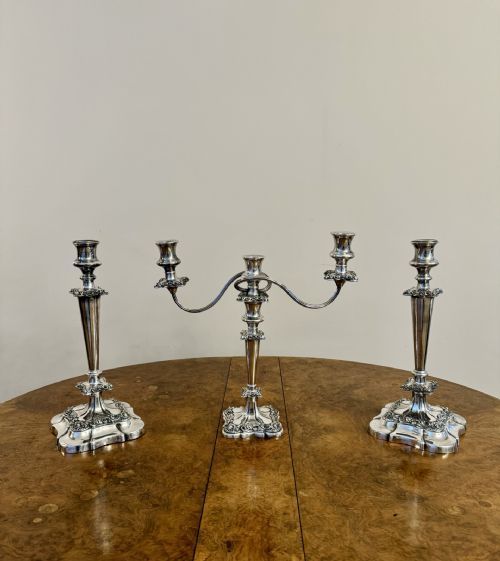
A silver plate dining set brings matching elegance to the table, uniting cruets, cutlery, and serving pieces from the Victorian, Edwardian, and Art Deco periods.
Silver Plate Dining Set
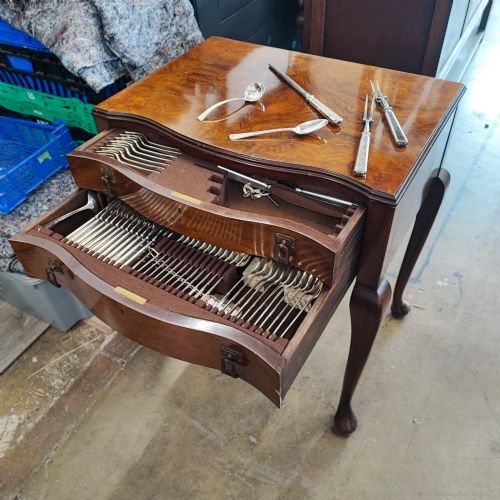
A silver plate dining set covers coordinated table services ranging from large canteens of cutlery to specialised condiment cruets and serving dishes. These groupings span from the mid-nineteenth century through the early twentieth century, reflecting shifting formal dining habits.
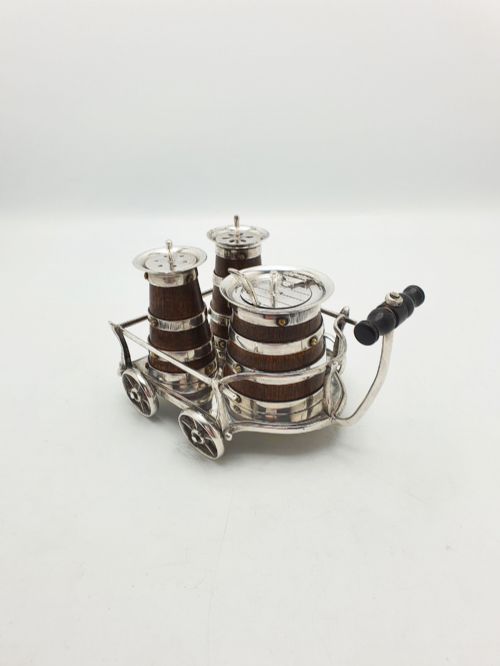
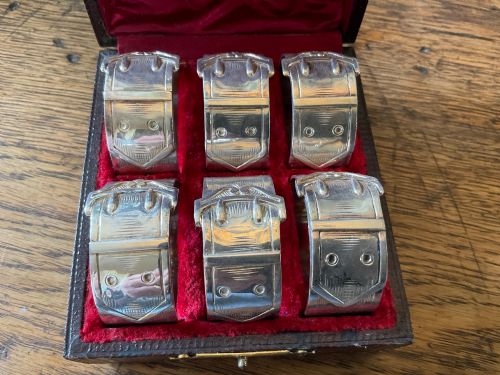
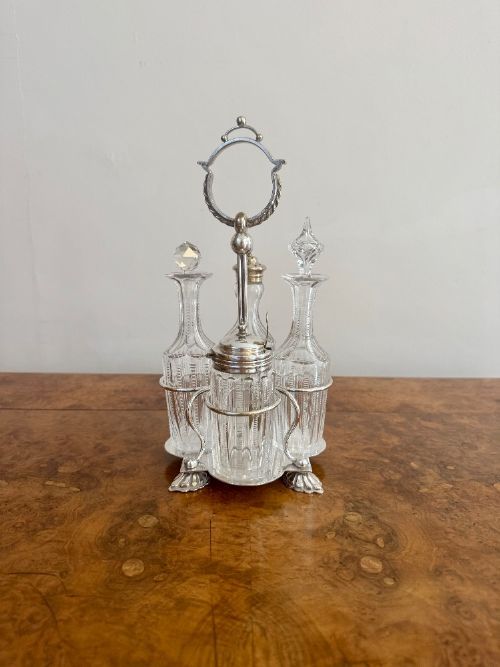
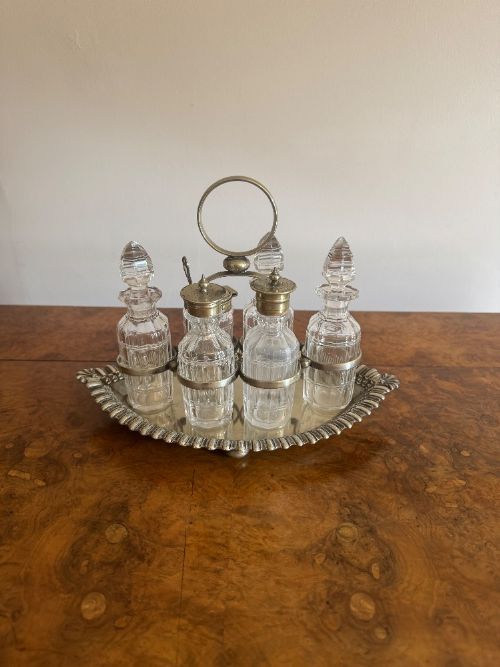
The most common configurations met here are multi-bottle cruet sets housed in oak or silver-plated frames, alongside boxed fish servers and napkin ring collections. Pieces often incorporate cut glass bottles, mother-of-pearl handles, or antler details alongside the plated metal.
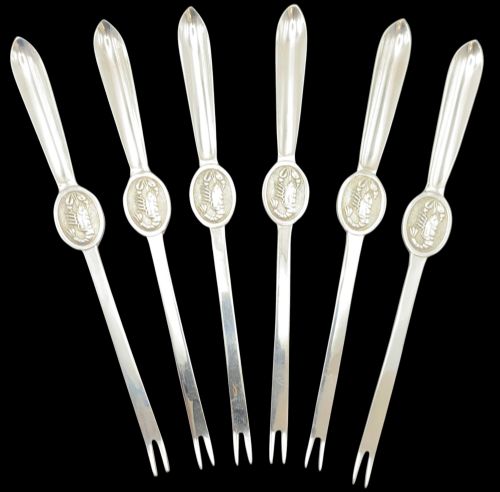
Design influences shift from ornate Victorian novelty pieces to clean-lined Art Deco flatware and Edwardian cruets. Buyers encounter matching sets designed for specific courses, including asparagus dishes, seafood picks, and meat domes.
Materials and construction methods
Base metals such as steel and copper form the structural core, finished with a durable silver plating process that created the appearance of solid silver at a lower cost. Early examples utilise Old Sheffield Plate techniques, fusing a thin sheet of silver to a copper base.
Handles and decorative accents introduce contrasting materials like oak, horn, mother-of-pearl, and velvet lining within presentation boxes. Glass components in cruet sets feature cut or moulded patterns designed to hold vinegars, oils, and sauces securely.
Listings incorporate items spanning the Victorian, Edwardian, and Art Deco eras, utilising silver plate, cut glass, oak, and mother-of-pearl.
Defining elements of quality
Quality rests in the crispness of the chasing, the retention of the silver plating over high-wear areas, and the completeness of fitted sets in their original cases. Maker marks from established silversmiths indicate higher standards of production and heavier gauge metal bases.
The integration of secondary materials like genuine antler handles, undamaged cut glass bottles, and well-preserved oak cabinetry separates standard utilitarian items from finer dining suites produced for formal households.
Smith and Sissons·Wade Wingfield Wilkins·Walker and Hall·Christofle Marly·Durand Paris
The Silver Plate Dining Set Glossary
- Old Sheffield Plate
- An early method of fusing a thin layer of silver to a thicker copper ingot before rolling them into sheets. This technique predates electroplating and often reveals thin lines of copper along exposed edges.
- Canteen
- A fitted wooden box or case designed to securely store a complete service of cutlery and flatware. Interior slots and linings keep individual forks, knives, and spoons organised.
- Novelty piece
- An item designed with a playful or unusual figurative shape, such as stirrup napkin rings, belt buckles, or horse head place holders. These pieces reflect Victorian and Edwardian whimsy in dining accessories.
Silver Plate Dining Set: Frequently Asked Questions
How do I clean antique silver plate?
Clean silver plate gently using specialised non-abrasive silver dips or foams formulated to protect thin plated layers from wearing down to the base metal.
Avoid scrubbing engraved details or using harsh chemical agents that can damage horn handles, velvet linings, or vulnerable cut glass inserts.
What is Old Sheffield Plate?
Old Sheffield Plate is an early dual-metal material created by fusing silver onto a copper core through heat and pressure before shaping.
This technique produces a warm tone, and sharp inspection may reveal faint copper lines where the underlying metal shows through wear.
Are these sets complete for modern dining?
Many surviving sets serve modern dining needs well, though older canteens reflect historical courses like fish, asparagus, or specific dessert services.
Buyers often mix specialised servers, such as lobster forks or meat domes, with contemporary table settings for formal meals.
How should I store fitted cutlery canteens?
Keep wooden canteens in stable indoor environments away from direct sunlight and extreme humidity changes that warp wood and tarnish metal.
Using anti-tarnish cloth wraps inside the original presentation boxes helps maintain the polished finish of the flatware between uses.