


Silver Pebble Pin
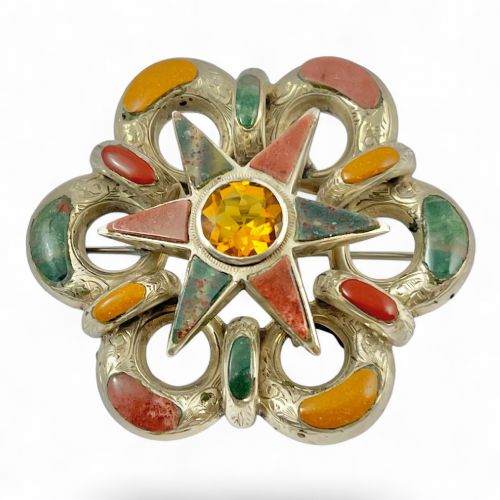
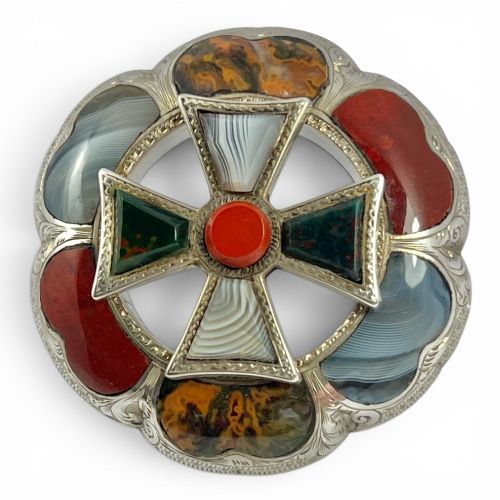
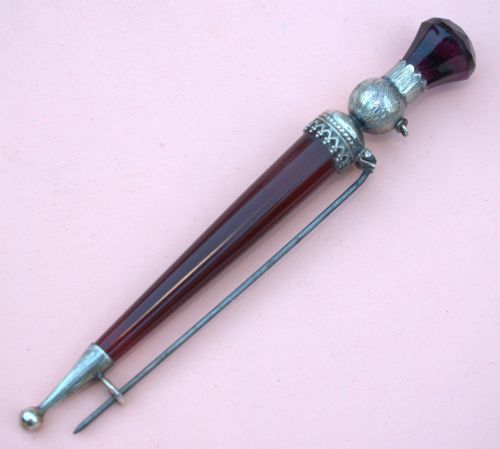
These silver pebble pin pieces are Victorian Scottish Revival brooches and kilt pins set with hardstones, offering a distinct piece of highland heritage to wear today.
Silver Pebble Pin
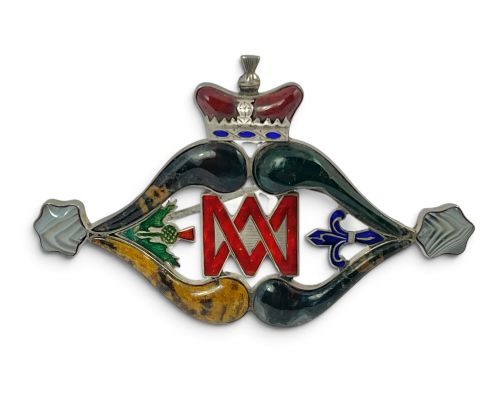
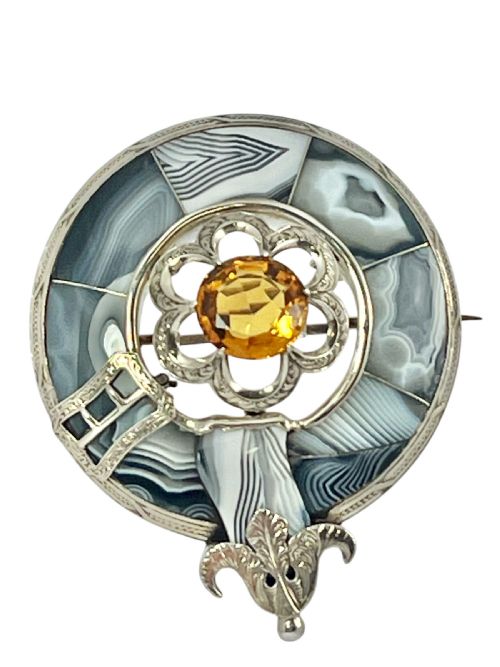
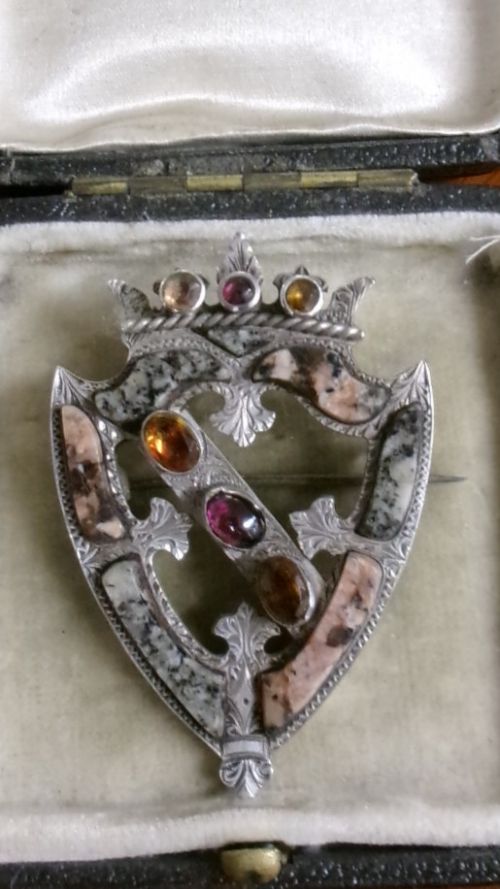
A silver pebble pin is typically a Victorian Scottish Revival brooch or kilt pin designed to fasten tartan and plaid garments. You will most frequently encounter shield, dirk, broadsword, bow, and knot forms dating from the nineteenth century, particularly the middle and later decades.
The aesthetic draws heavily on traditional Scottish weaponry and Highland dress, translating broadswords, dirks, and basket-hilted swords into wearable metalwork. These pieces served both a functional role in highland attire and a decorative purpose popularised during the Victorian era.
Origins cluster around the nineteenth century, ranging from early provincial work in places like Inverness to later Victorian productions. The pieces combine native hardstones with sterling silver mounts, creating varied geometric and naturalistic designs.
How they were made
Silversmiths constructed the mounts using sterling silver, shaping the metal into intricate forms such as dirks, broadswords, shields, bows, and knots. These silver elements provide the structural framework that securely holds the various hardstones in place.
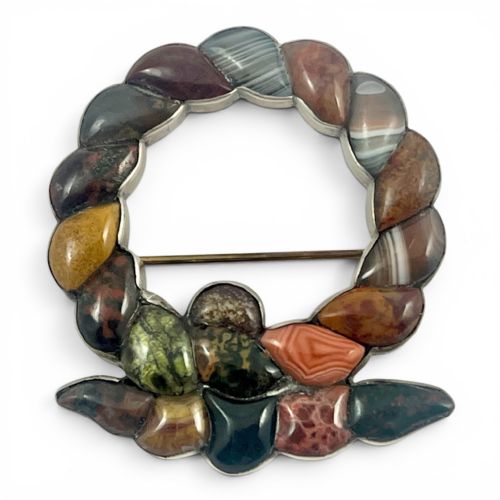
Stones including agate, Montrose agate, jasper, bloodstone, citrine, granite, and malachite were cut, polished, and meticulously fitted into the silver bezels. The stones are frequently arranged in geometric patterns or specimen displays that highlight the natural banding and colour variations of the minerals.
Some Victorian highlanders evidently felt that nothing says peace and hospitality quite like fastening your plaid with a miniature broadsword.
What varies in quality
The standard of lapidary work dictates much of the distinction between examples, particularly the precision of the stone cutting and the harmony of the hardstone selections. Superior pieces display tightly fitted stones with balanced colour palettes, whereas simpler work relies on more straightforward bezel settings.
The complexity of the silver metalwork also differentiates the range, from plain shield mounts to elaborate basket-hilted broadswords featuring fine chasing and braided detailing. Heavier gauge silver and intricate dimensional forms generally indicate a higher grade of Victorian craftsmanship.
The Silver Pebble Pin Glossary
- Hardstone
- A semi-precious stone such as agate, jasper, or bloodstone that is hard enough to be carved and polished. These stones form the colourful focal points of nineteenth-century Scottish jewellery.
- Dirk
- A traditional long dagger worn by Scottish Highlanders, which inspired the shape of many nineteenth-century kilt pins and brooches. These decorative pins mimic the blade and hilt structure in miniature.
- Specimen brooch
- A piece designed to showcase a collection of distinct mineral samples, often sourced from specific local regions. Each stone is individually set to display its natural geological characteristics.
- Montrose agate
- A specific variety of banded chalcedony associated with the Scottish coastal town of Montrose. It is prized by collectors for its particular colouration and distinct internal patterns.
Silver Pebble Pin: Frequently Asked Questions
How do I wear a silver pebble pin?
These pieces function traditionally as plaid brooches or kilt pins, designed to fasten heavy woollen tartans and garments securely.
Today, they work equally well pinned to heavy coats, scarves, or tailored jackets as statement fastening accessories.
Are these pins genuine Victorian items?
The available selection consists primarily of nineteenth-century pieces spanning the Victorian period, particularly the 1850s through to the 1900s.
Characteristics such as pin construction, silver hallmarks where present, and traditional stone settings help confirm their period origin.
What stones are typically found in these pieces?
Common minerals include various types of Scottish agate, Montrose agate, jasper, bloodstone, granite, and citrine.
Some examples also incorporate malachite or tartan mosaic arrangements set directly into the sterling silver mounts.
How do I care for antique silver and hardstone?
Keep the pieces away from harsh chemical dips and ultrasonic cleaners, as these can damage softer minerals and disrupt historic settings.
Gentle cleaning with a soft cloth for the silver and avoiding moisture exposure will help preserve the stones and metal over time.