




Silver Pearl Jewellery
Silver pearl jewellery brings together lustrous organic gems and gleaming metal across periods from the Victorian era to the mid-century.
Silver Pearl Jewellery
Silver pearl jewellery encompasses pendants, necklaces, earrings, brooches, bracelets and rings that combine silver settings with pearls. These pieces emerge from periods such as the Victorian era, Edwardian period, Art Nouveau, Arts and Crafts, Art Deco and the mid-century.
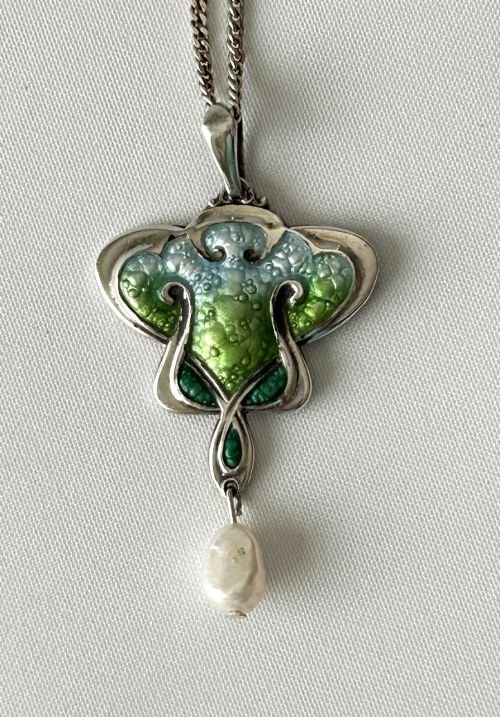
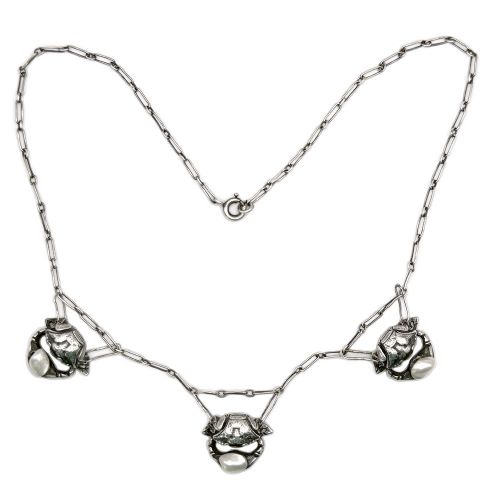
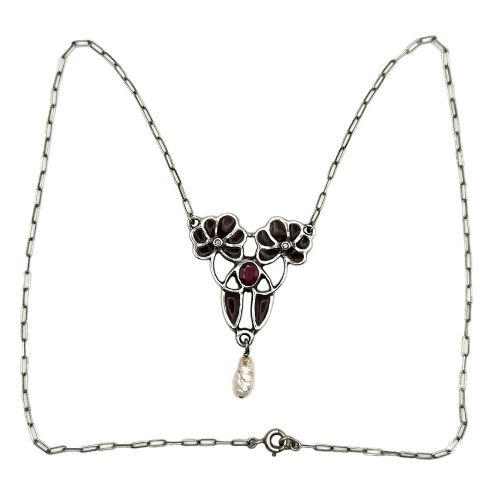
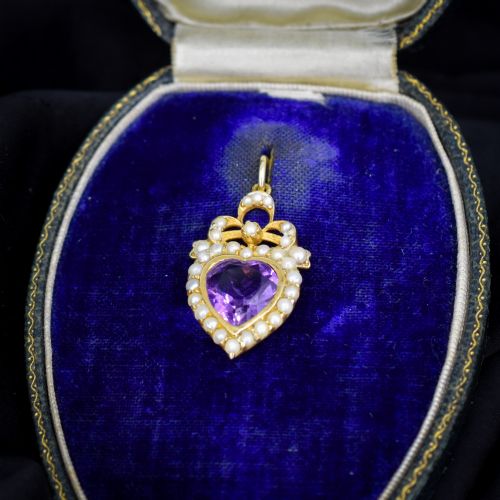
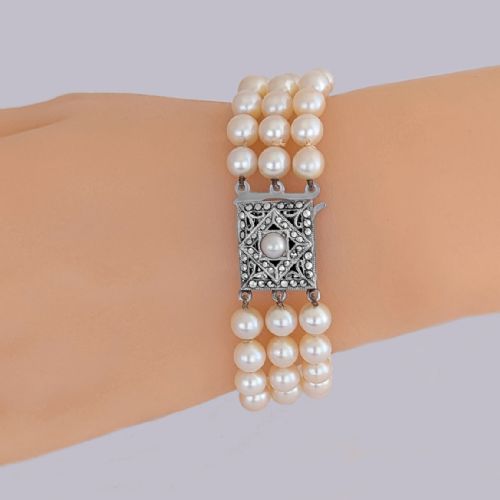
The version most commonly encountered on this page is the pendant or necklace, frequently paired with enamel, marcasite or coloured stones. Makers often set river pearls, blister pearls, seed pearls or cultured pearls into silver, silver gilt or gold-on-silver mounts.
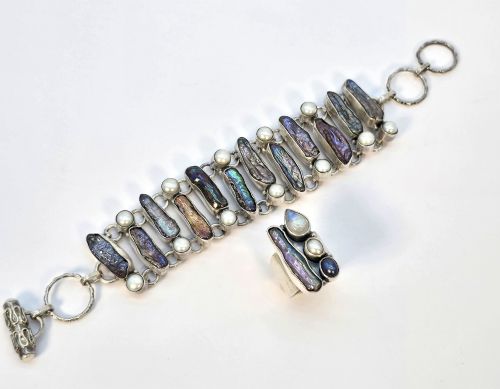
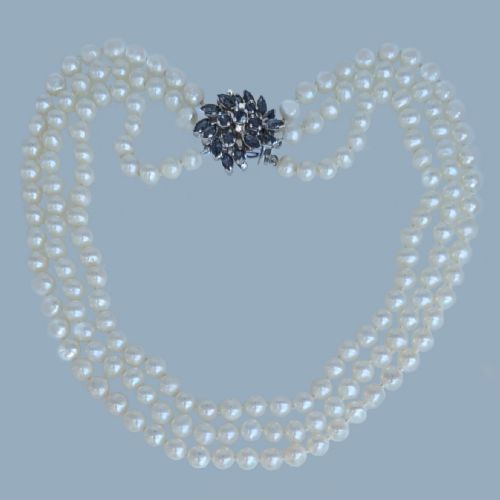
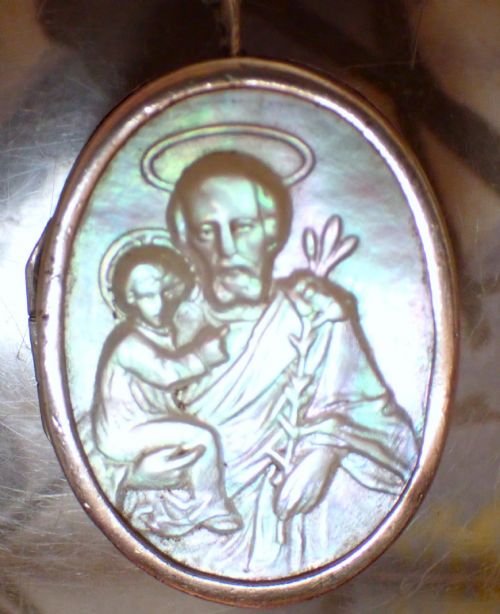
Art Nouveau and Arts and Crafts examples frequently display natural or blister pearls within flowing organic silver work, while mid-century selections often utilise cultured pearls paired with clean silver clasps.
Materials and construction
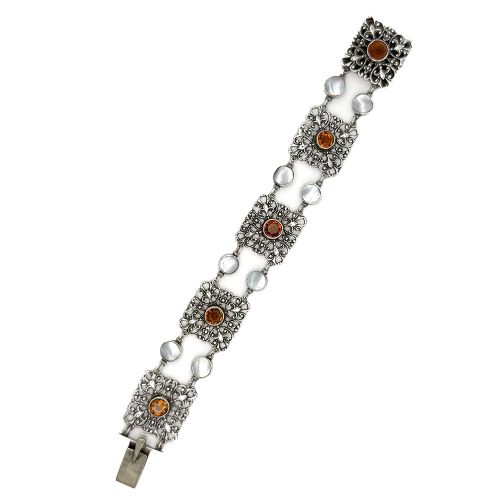
Maker techniques rely heavily on silver work combined with organic gems, including river pearls, blister pearls, seed pearls and cultured pearls. Settings frequently incorporate additional materials such as enamel, plique-a-jour enamel, marcasite, paste stones, diamonds, rubies, amethysts and citrine.
Craftsmen utilised various mounts, ranging from solid silver and silver gilt to gold-on-silver and platinum settings. Construction methods span filigree work, hinge assembly, stone setting and enamelling techniques like plique-a-jour to achieve translucent colour behind or around the pearl focal points.
Silver Pearl Jewellery Retail Price Guide 2026
Typical asking prices for silver pearl jewellery among the pieces listed under this phrase on Sellingantiques today, from the lower quarter to the upper quarter. They describe what is for sale here now, not the wider market.
Listings feature items from the 19th Century, Victorian, Edwardian and mid-century periods, incorporating materials such as silver, enamel, diamond, gold, seed pearl and cultured pearl.
What separates the finest examples
Quality rests upon the harmony between the silver mount and the pearl itself, alongside the sophistication of any accompanying enamel or gemstone work. Pieces that integrate complex techniques like plique-a-jour enamel or delicate filigree demonstrate superior handling of the medium.
The distinction also lies in the integrity of the design and attribution, where identifiable workshop hands or maker marks elevate the piece. The selection of pearl type, from natural river pearls and blister pearls to uniform cultured pearls, dictates the character and refinement of the finished item.
Henry Miault·Amy Sandheim·Archibald Knox·Liberty and Co·Murrle Bennett·Levinger and Bissinger·Wilhelm Fuhner·George Hunt·Mikimoto
The Silver Pearl Jewellery Glossary
- Blister pearl
- A pearl that forms attached to the inner shell of the mollusc rather than entirely within the tissue, resulting in a domed shape with a flat back. These often appear in Arts and Crafts and Art Nouveau pendants.
- Plique-a-jour
- An enamelling technique where enamel is applied in cells without a backing, allowing light to shine through the transparent or translucent colour. This method frequently accompanies pearls in Art Nouveau and Jugendstil designs.
- Seed pearl
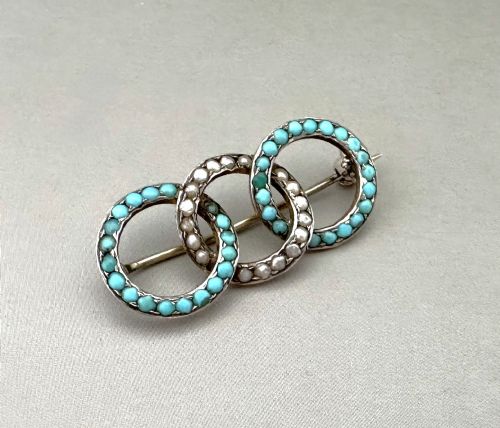
- A very small natural pearl, often pierced and threaded or set closely together in clusters. Victorian and Edwardian jewellers utilised these tiny gems to create delicate floral and geometric motifs.
- Silver gilt
- Silver that has been coated with a thin layer of gold on its surface. This treatment provides the warm tone of gold while utilising a silver base metal beneath.
- Marcasite
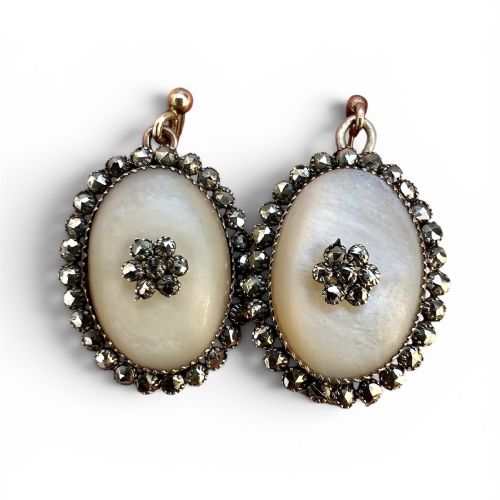
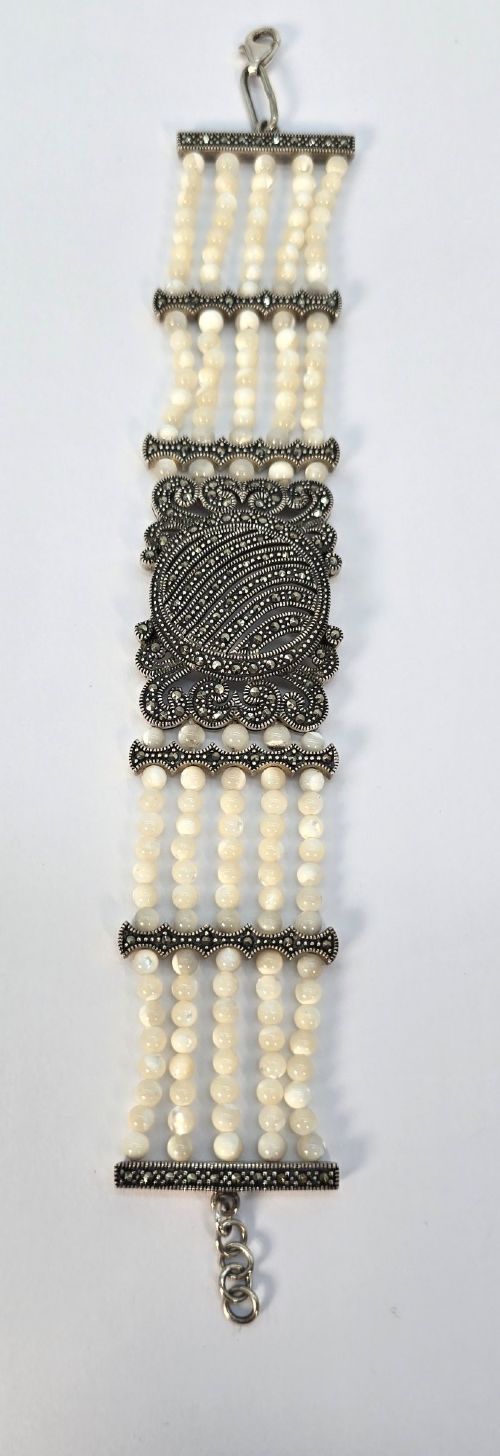
- Small faceted pieces of iron pyrite polished and set closely into silver mounts to resemble sparkling gemstones. This material frequently appears in Art Deco and vintage silver clasps and bracelets.
Silver Pearl Jewellery: Frequently Asked Questions
What periods do these pieces span?
The listings encompass items from the 19th Century, Victorian era, Georgian period, Edwardian years, Art Nouveau movement, Art Deco period and the 1950s and 1960s.
Each era brings distinct aesthetic choices, moving from ornate Victorian styles through flowing organic Arts and Crafts designs to mid-century cultured pearl strands.
How do I care for silver pearl jewellery?
Pearls are organic and soft gems that require gentle handling, avoiding harsh chemical dips or ultrasonic cleaners that can damage both the pearl nacre and the silver setting. Store them separately from harder gemstones to prevent scratching the pearl surface.
Silver mounts can be polished carefully with a soft cloth while avoiding direct contact with the pearls themselves.
Are the pearls natural or cultured?
The pieces utilise a variety of pearl types depending on the period, including river pearls, blister pearls, seed pearls and cultured pearls. Earlier antique items tend to feature natural river or blister pearls, while mid-century strands often incorporate cultured pearls.
Checking individual listings provides specific details on the pearl variety used in each item.
What metals are used alongside the silver?
While silver forms the primary metal for these pieces, various items incorporate silver gilt, gold-on-silver, 14ct gold, 15ct gold or platinum accents. Clasps and mounts may combine these metals with decorative elements like marcasite or enamel.
This variety reflects the changing metalworking preferences across the different design periods represented.