





Silver Overlaid Bottle
A silver overlaid bottle combines metalwork and glass to create a tactile vessel, most commonly found in scent and perfume forms from the Victorian and Edwardian periods.
Silver Overlaid Bottle
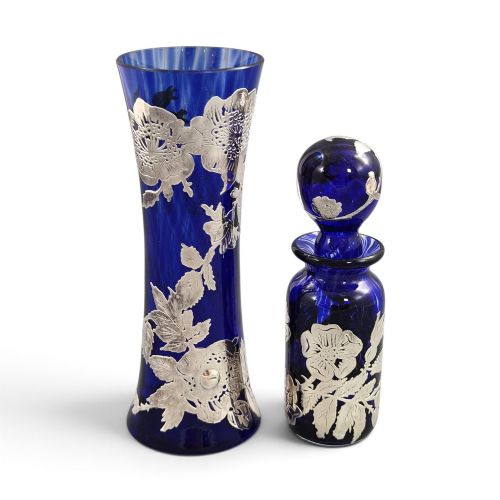
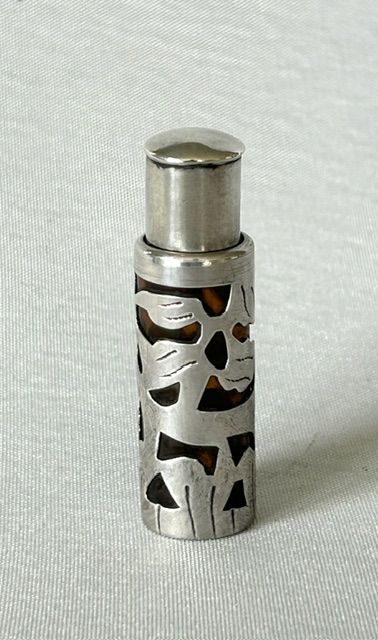
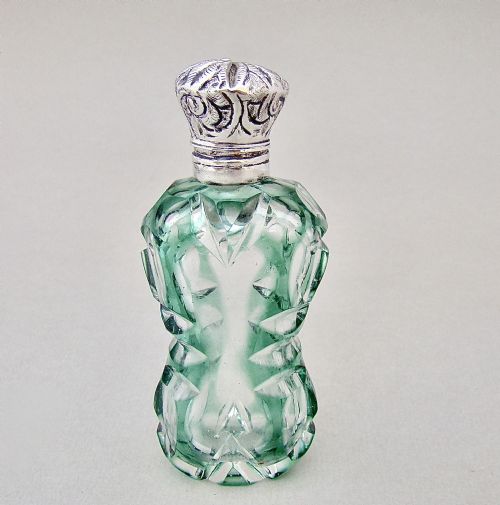
A silver overlaid bottle represents a union of glassmaking and metalsmithing, designed to hold fragrances, spirits, or water on dressing tables and in pocket chatelaines. When you search for a silver overlaid bottle, you encounter pieces that span the nineteenth and twentieth centuries, produced in England, France, and Bohemia. These objects range from miniature scent flasks to full-sized decanters and vanity ensembles.
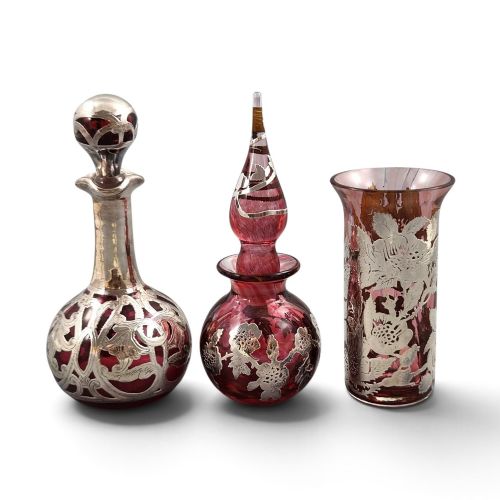
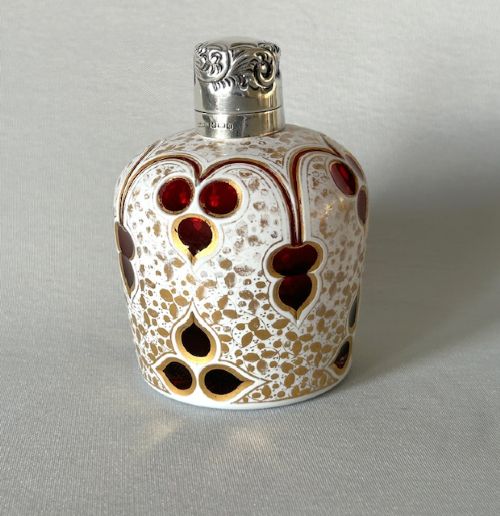
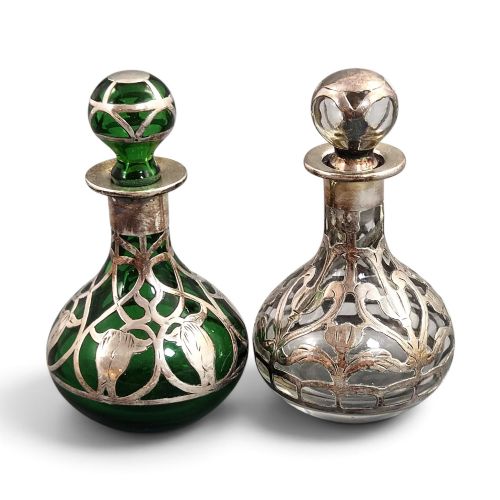
The version you are most likely to meet on this page is the scent or perfume bottle from the Victorian or Edwardian eras. These pieces typically feature clear, green, ruby, cranberry, amber, or cobalt glass encased in sterling silver or silver plate. Makers applied floral, abstract, or organic motifs directly to the glass surface, drawing heavily from Art Nouveau aesthetics.
Materials and Techniques
Glass bodies were formed by blowing molten glass into moulds or gathering it freehand, producing clear, cut, or coloured variants such as mercury glass and triple overlay glass. Artisans selected rich hues like amethyst, cobalt, and ruby to contrast sharply with the metallic sheen of the casing.
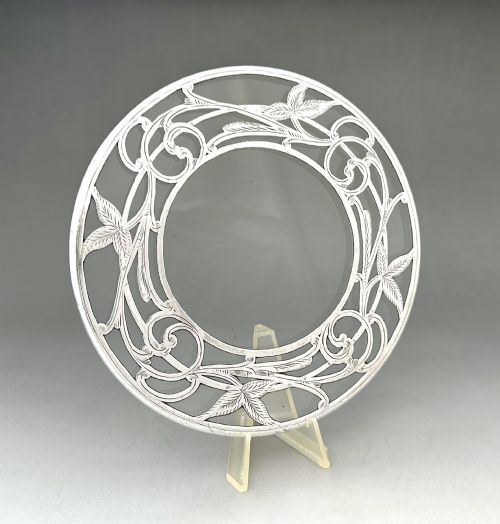
Silver work was applied using electroplating or direct mounting techniques, where sterling silver sheets were pierced, chased, and secured to the glass contours. The metal design often wraps around the neck, body, or stopper, requiring precise thermal and mechanical fitting between the two contrasting materials.
Silver Overlaid Bottle Retail Price Guide 2026
Typical asking prices for silver overlaid bottle among the pieces listed under this phrase on Sellingantiques today, from the lower quarter to the upper quarter. They describe what is for sale here now, not the wider market.
Several bottles are small enough to dangle entirely from a belt, proving that Victorian pockets took their aromatics very seriously indeed.
Evaluating Quality
Quality in these vessels rests upon the depth of the metalwork and the clarity of the glass beneath. Superior examples display intricate, hand-chased silver leaf or floral patterns that adhere securely to the underlying contours without lifting or shifting.
The weight and cut of the glass further distinguish finer pieces, particularly where layered coloured glass or mercury glass is utilised. Original matching stoppers and hallmarked sterling silver mounts elevate an item above simpler plated counterparts.
Gorham·Laugharne Glass
The Silver Overlaid Bottle Glossary
- Silver overlay
- A technique where silver is bonded or deposited onto a non-metallic surface such as glass or porcelain. This creates a decorative metallic lattice over the primary material.
- Chatelaine scent bottle
- A small portable container suspended from a belt hook designed for holding perfume. These miniature vessels often include integrated rings for chain attachment.
- Mercury glass
- A blown double-walled glass filled with a silvering liquid and sealed at the pontil. This produces a reflective, mirror-like finish beneath silver mounts.
- Triple overlay glass
- Glass composed of three distinct fused layers of differing colours. Cutting through these layers reveals contrasting chromatic depths.
- Sterling silver
- An alloy consisting of ninety-two point five percent silver and seven point five percent other metals, typically copper. This standard composition provides durability for detailed chasing.
Silver Overlaid Bottle: Frequently Asked Questions
What is a silver overlaid bottle?
A silver overlaid bottle is a glass vessel decorated with a thin layer of silver applied to the exterior surface in floral, geometric, or abstract designs. These pieces were primarily produced as luxury vanity items during the Victorian and Edwardian periods.
They serve as decorative containers for perfumes, salts, or spirits, combining the refractive qualities of coloured glass with the reflective gleam of worked silver.
How do I date a silver overlaid bottle?
Dating relies on examining hallmarks stamped on the silver mounts, stylistic indicators such as Art Nouveau curves, and the manufacturing techniques used on the glass body. Victorian examples often feature deep amethyst or green glass with dense floral chasing.
Later twentieth-century pieces, including studio glass productions, exhibit distinct contemporary forms and modern hallmarks or maker signatures. Comparing the stopper to the neck helps confirm whether the components are original to one another.
Were these bottles used for perfume?
Many of these vessels functioned specifically as scent or perfume bottles, designed to hold volatile oils and fragrances on dressing tables or inside fitted travel cases. Miniature versions were also attached to chatelaines for personal use throughout the day.
Larger scaled variants served as spirit decanters or water bottles, though their decorative metal exteriors meant they remained primarily display objects in domestic interiors.
How should I clean a silver overlaid bottle?
Cleaning requires separating the care of the glass from the care of the silver overlay to avoid damaging the bond between them. Gentle wiping with a soft, dry cloth removes dust without disturbing the metalwork.
Harsh chemical dips should be avoided, as liquid cleaners can seep beneath the silver casing and discolour the glass or weaken the adhesive properties holding the materials together.