





Silver Oil Cruet
A silver oil cruet brings functional elegance to the dining table, combining precious metal mounts with cut glass bottles for dressing service.
Silver Oil Cruet
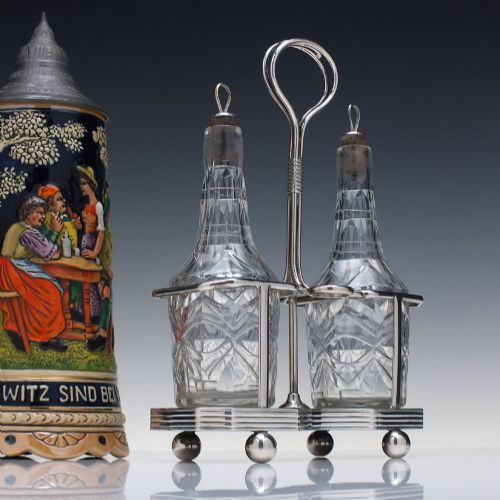
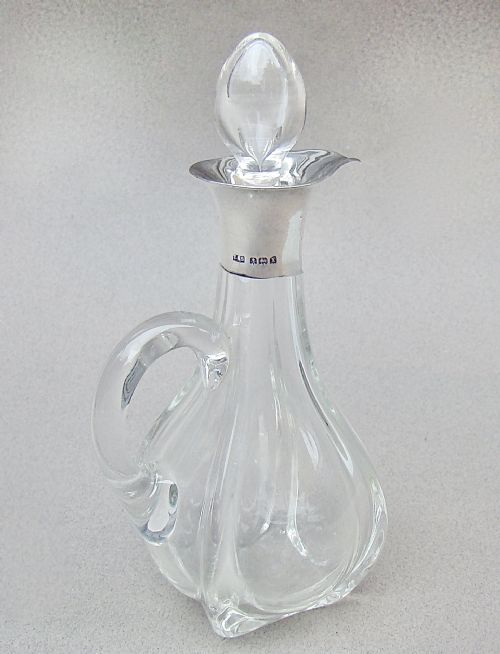
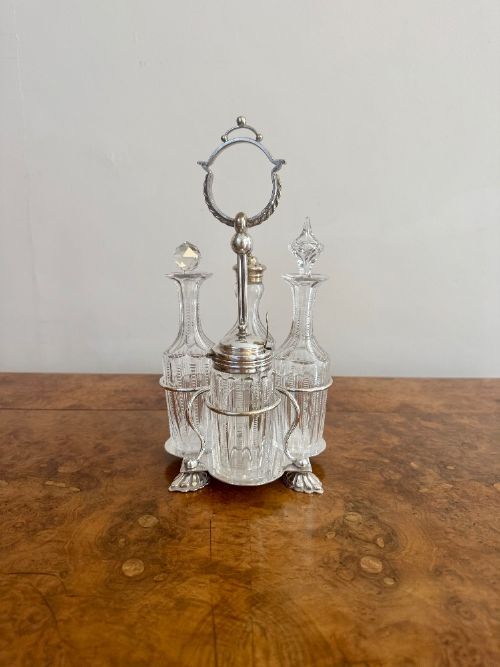
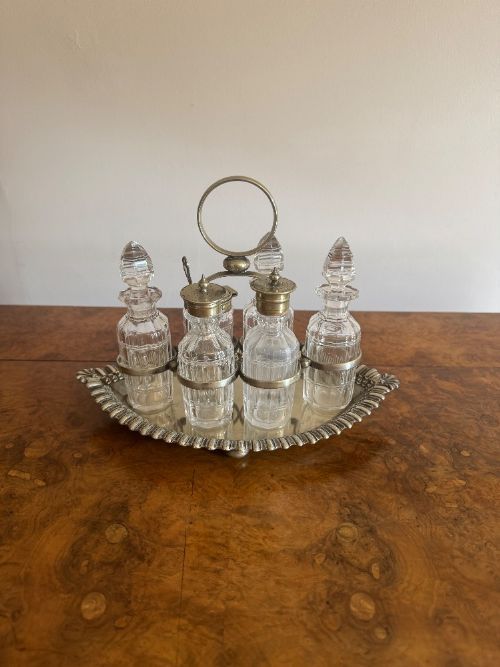
A silver oil cruet is designed to hold and dispense culinary oils and vinegars at the table, appearing on this page across Georgian, Victorian, Edwardian, and Art Deco periods. These pieces take the form of individual mounted bottles, paired vessels, or larger multi-bottle cruet sets housed on dedicated stands.
The most common variations on this page are Edwardian silver plated multi-bottle sets and Victorian silver mounted single or paired oil and vinegar bottles. Origins range from Georgian master silversmiths to early twentieth century Birmingham workshops.
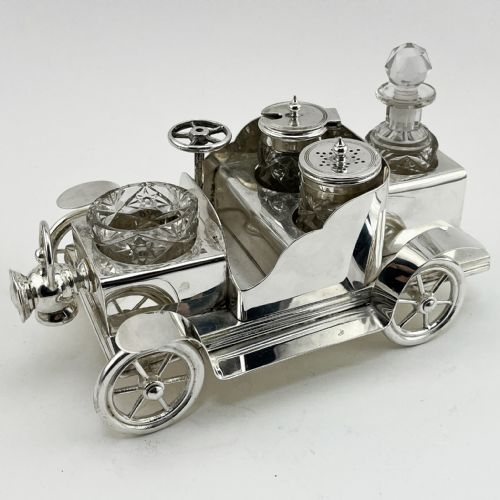
Makers utilised various configurations, from simple bachelor sets holding a few condiments to grand seven-bottle frameworks designed for elaborate dining arrangements. The fundamental purpose remains the presentation of table liquids within decorative frames.
Materials and construction methods
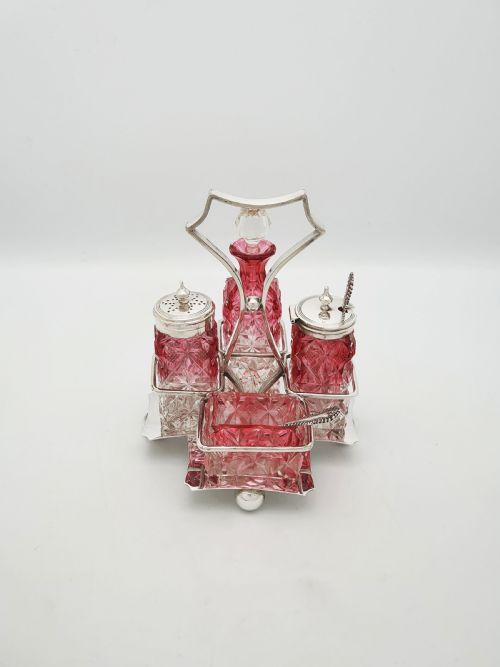
Makers constructed these cruets using sterling silver or silver plate over a base metal, paired with transparent, cut, or cranberry flashed glass bottles. Metal mounts, collars, and hinged caps were shaped to fit the necks and bases of the glass vessels securely.
Stands and frames frequently incorporated cast or stamped metal work, sometimes resting on ebonised wood bases or fitted with handle loops for carrying. Glass bottles featured deep wheel-cut patterns or faceted sides to catch the light alongside polished silver surfaces.
Silver Oil Cruet Retail Price Guide 2026
Typical asking prices for silver oil cruet among the pieces listed under this phrase on Sellingantiques today, from the lower quarter to the upper quarter. They describe what is for sale here now, not the wider market.
Defining characteristics of construction and design
Quality in a silver oil cruet rests upon the crispness of the glass cutting, the weight and thickness of the silver or silver plate, and the structural integrity of the frame. Superior pieces display intricate detailing in the metal mounts and well-fitted stoppers that sit flush within the bottle necks.
Artisanal execution distinguishes finer examples, where maker marks remain clear and the alignment of the stand ensures each bottle rests without wobble. The harmony between the glass body and the silver collar indicates the original pairing of the components.
Levi & Salaman·Mappin Brothers·Walker & Hall·Charles Thomas Fox·Elkington & Co·Hester Bateman·Wade Wingfield Wilkins·William Hutton & Sons
The Silver Oil Cruet Glossary
- Cruet set
- A matched collection of bottles and jars for holding table condiments, mounted together on a fitted stand or tray. These frameworks often include central carrying handles.
- Cranberry glass
- A rich red glass created by adding gold chloride to the molten batch, frequently seen in Victorian and Edwardian cruet bottles. The colour ranges from pale pink to deep ruby.
- Silver plate
- A process where a thin layer of silver is bonded to a base metal such as copper or Britannia metal, widely utilised for Victorian and Edwardian cruet frames. It provided the appearance of solid silver at a lower cost.
- Cut glass
- Glassware shaped and patterned by holding it against rotating abrasive wheels, producing sharp geometric or floral motifs. This technique adds brilliance and texture to cruet bottles.
- Sterling silver
- An alloy consisting of silver and other metals, usually copper, conforming to a strict purity standard of proportion. It forms the primary metal for high-grade Georgian and Victorian mounts and stands.
Silver Oil Cruet: Frequently Asked Questions
What is a silver oil cruet?
A silver oil cruet is a table vessel or set of vessels featuring silver mounts, frames, or stoppers designed for holding and pouring oil and vinegar. They combine glass bodies with precious metal components for dining utility.
These pieces range from single standalone bottles to multi-bottle sets housed on metal frames with carrying handles.
How do I date a cruet set?
Dating relies upon examining hallmarks stamped on the silver components, stylistic cues of the frame, and the manufacturing technique of the glass. Georgian pieces often display different proportions and mount styles compared to later Victorian or Edwardian examples.
Maker marks and registration numbers stamped into the metal provide specific clues to the exact decade of manufacture.
Were these sets used daily?
These cruets served practical functions during formal dining and everyday meals to dispense oils, vinegars, and sauces at the table. Their construction in durable glass and silver plate allowed them to withstand regular handling.
Over time, many transitioned from active dining service to decorative display items within cabinet collections.
What glass types are common?
Common glass types include clear cut glass with deep geometric facets, flashed cranberry glass, and plain blown glass. Cut glass was favoured for its ability to reflect light alongside polished silver mounts.
Coloured glass variants added vibrant visual contrast to the silver frames on Victorian dining tables.