


Silver Novelty Barrel
These silver novelty barrel pieces are clever domestic items shaped for display, combining Victorian utility with playful design.
Silver Novelty Barrel
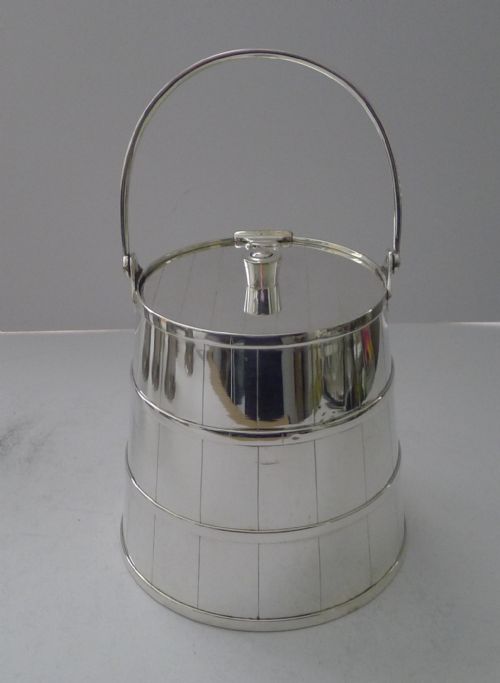
When you search for a silver novelty barrel, you are examining whimsical containers shaped like casks, staves, and tubs. These domestic items primarily function as biscuit boxes, condiment sets, spirit dispensers, and inkwells.
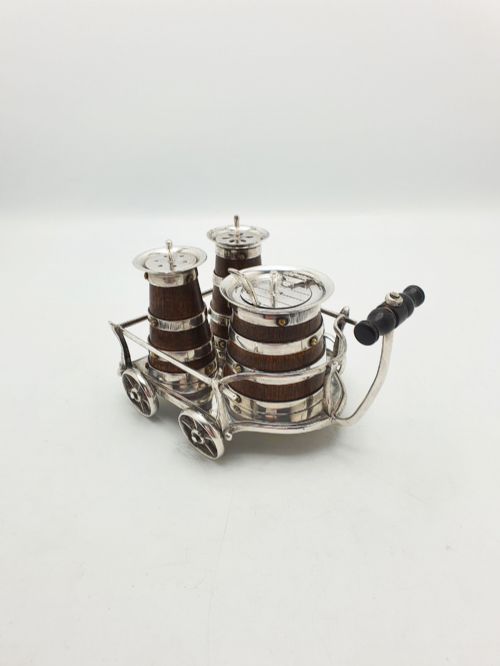
The versions you meet most frequently on this page date from the Victorian and Edwardian eras, spanning the late nineteenth and early twentieth centuries. They combine functional drinking vessels and storage forms with humorous or architectural details like miniature carriages.
Makers adapted the barrel form into unexpected objects, including weights and quaichs, while maintaining the characteristic wooden staves or metal plating. Pieces range from single biscuit containers to triple spirit barrel assemblies mounted on stands.
Materials and construction techniques
Craftsmen built these novelty pieces using solid oak, wood, and base metals coated with silver plate, alongside sterling silver. Frosted crystal appears in dispenser sets, providing contrast to the surrounding metal mountings.
Moulders and silversmiths utilised applied metal bands to simulate wooden staves, often mounting the barrels on wheeled carriages or frames. The combination of turned wood with heavy silver plating gave these novelty items both structural weight and a polished finish.
Victorian makers could not resist turning everything into a cask, offering spirit barrels mounted on miniature four-wheeled carriages.
Distinctions in execution and form
Quality rests in the precision of the simulation, where superior examples exhibit detailed wood grain, crisp metal banding, and well-fitted lids. Lesser pieces rely on simpler stamping without the convincing textures of staves and hoops.
The complexity of the mechanism and mountings also separates the range, as multi-barrel spirit sets on carriages demand intricate engineering compared to single biscuit boxes. Engraving clarity and the weight of the silver plate further define the upper tier.
Mackay & Chisholm
The Silver Novelty Barrel Glossary
- Silver Plate
- A layer of silver fused to a base metal core such as copper or nickel brass. This technique allowed manufacturers to produce large decorative items at a lower cost than solid sterling silver.
- Biscuit Box
- A covered container designed to keep baked goods dry on the dining table. Victorian examples often adopted novelty barrel or drum shapes.
- Quaich
- A traditional Scottish two-handled drinking vessel. Novelty variants sometimes adapted this shallow bowl form to resemble a barrel.
- Frosted Crystal
- Glass treated to produce a matte, translucent surface. It appears in drinks dispensers and cruet sets to diffuse light and obscure contents.
Silver Novelty Barrel: Frequently Asked Questions
What were silver novelty barrels used for?
These vessels served practical functions in nineteenth-century dining rooms and studies, holding biscuits, spirits, condiments, or ink.
Owners kept them on sideboards and desks where their humorous shapes could entertain guests during social gatherings.
How do I date a silver novelty barrel?
Dating relies on stylistic clues, registration marks, and the combination of materials like oak and silver plate. Victorian pieces often feature heavy ornamentation and patent stamps from the mid-to-late nineteenth century.
Later Edwardian items tend toward simpler execution while retaining the characteristic cask silhouette.
Are these barrels made of solid silver?
Most pieces on this page utilise silver plate over base metal or incorporate natural wood such as oak. Sterling silver examples occur less frequently but are recorded in specific small items.
Makers combined materials to achieve the necessary structural rigidity for functional items like carriages and dispensers.
How should I display a barrel piece at home?
These items suit placement on sideboards, drinks trolleys, or open shelving where their detailed staves and mountings remain visible. Keeping them away from direct heat sources protects any internal wooden components.
Regular dusting with a soft cloth maintains the finish of the silver plate without abrasive cleaning.