

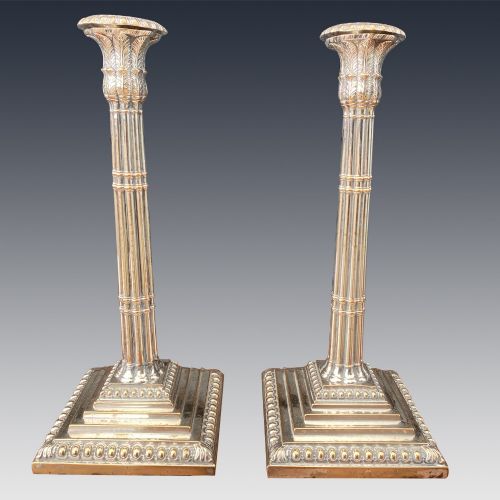
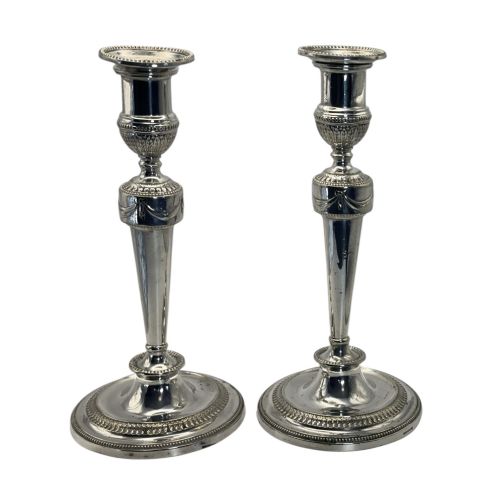
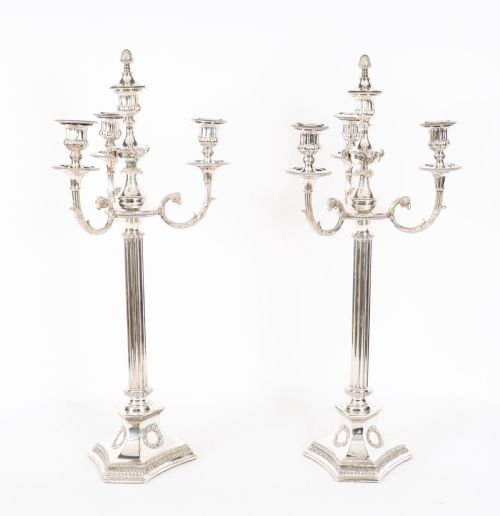
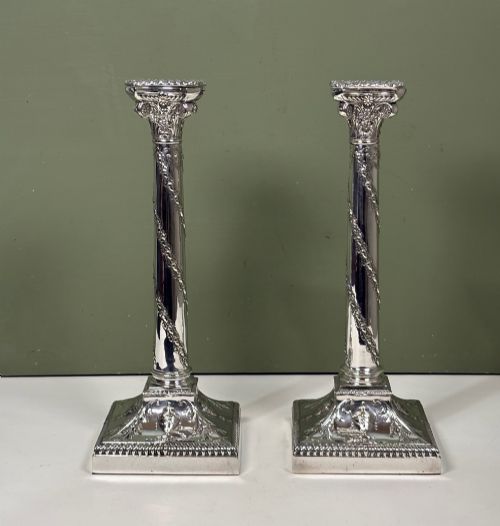

Silver Neoclassical Candle Holders
Silver neoclassical candle holders bring balanced proportion and classical columns to a dining table or mantelpiece.
Silver Neoclassical Candle Holders
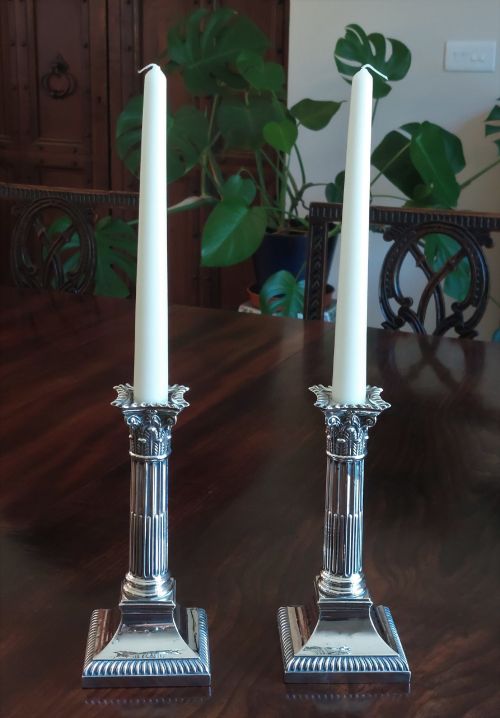
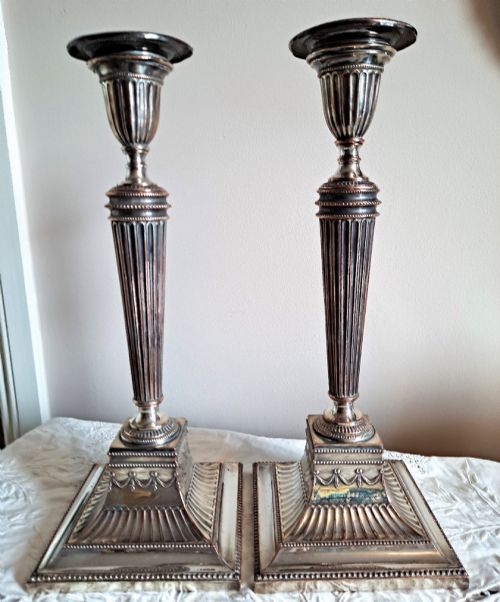
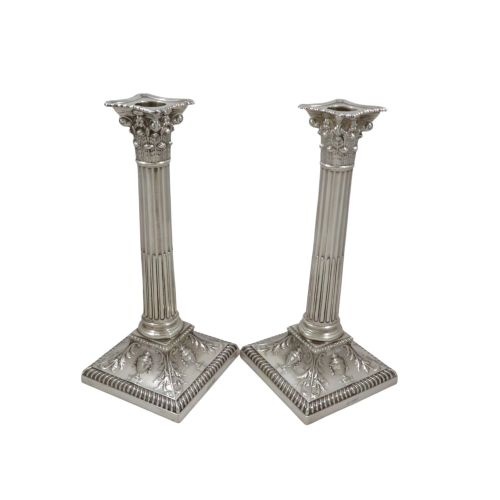
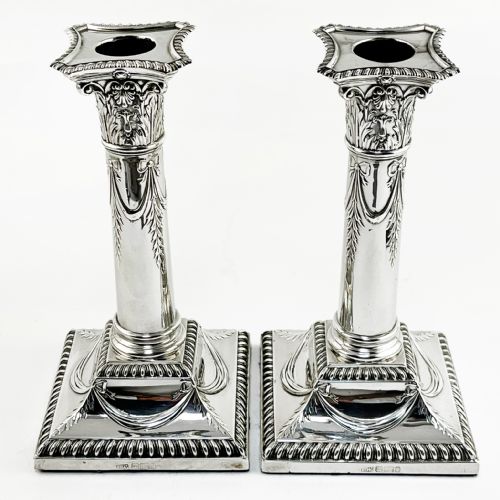
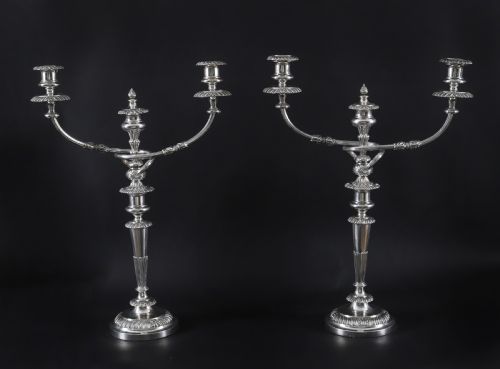
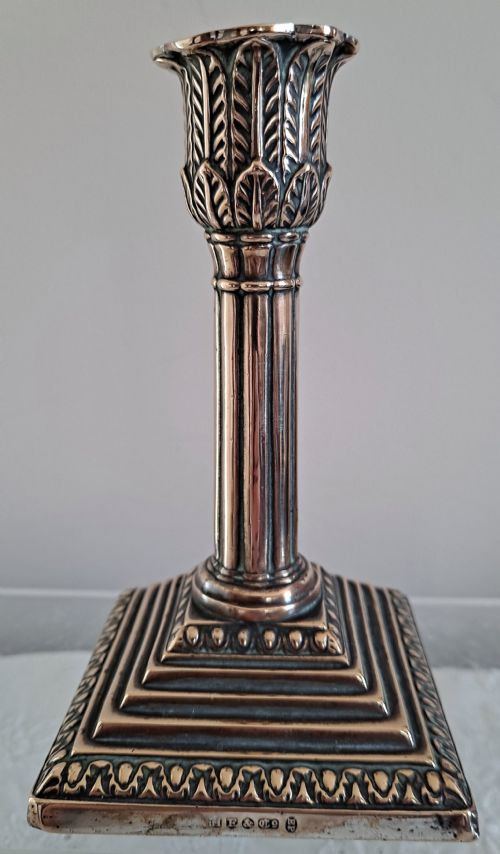
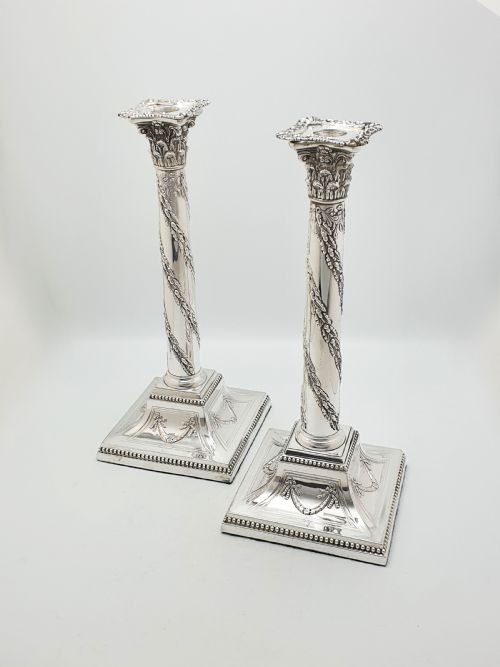
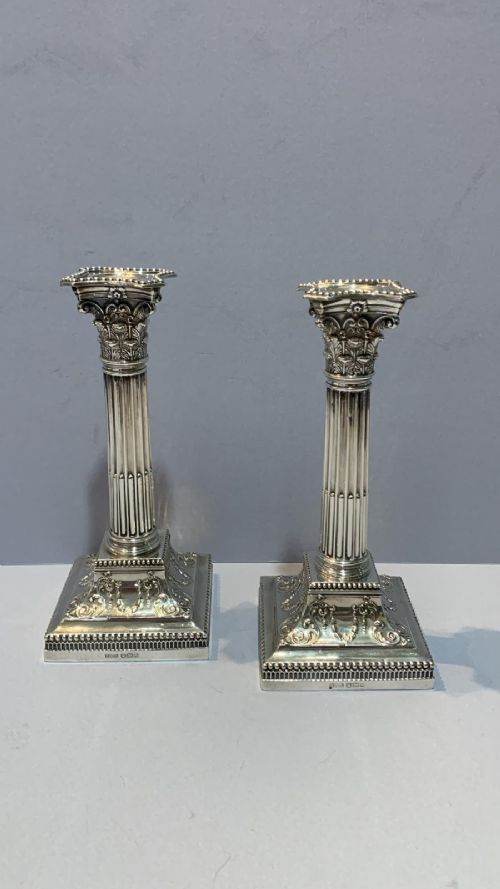
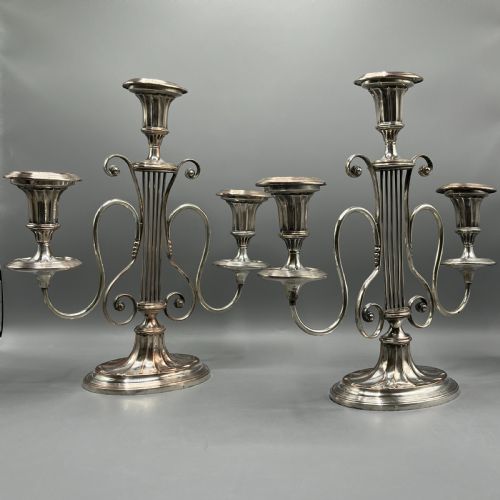
Silver neoclassical candle holders draw on classical motifs like columns, urns and fluting to organise light in a room. Buyers searching for silver neoclassical candle holders encounter pairs of candlesticks and multi-light candelabra spanning the Georgian, Victorian and Edwardian periods.
The pieces on this page appear predominantly as matched pairs or sets of four, ranging from compact desk candlesticks to large multi-arm candelabra. Styles extend from George III originals through to Victorian and Edwardian revivals of classical forms.
How they were made
Makers constructed these pieces using sterling silver, Old Sheffield plate and various forms of silver plating over copper, brass or metal bases. Cast elements provided weight and structural rigidity, particularly in column and figural designs.
Techniques evolved from 18th-century fusing methods in Old Sheffield plate to later electroplating on base metals, while solid sterling silver pieces utilised traditional casting, spinning and hallmarking.
Silver Neoclassical Candle Holders Retail Price Guide 2026
Typical asking prices for silver neoclassical candle holders among the pieces listed under this phrase on Sellingantiques today, from the lower quarter to the upper quarter. They describe what is for sale here now, not the wider market.
Materials represented include sterling silver, silver plate, Old Sheffield plate, copper, brass, wood and glass.
What varies in quality
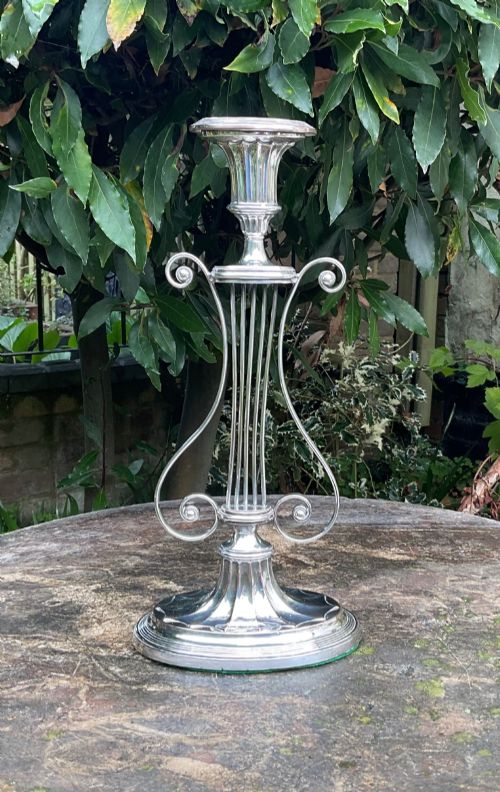
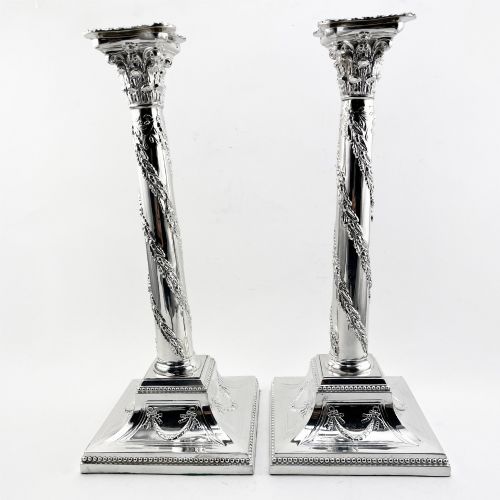
Quality rests in the crispness of the cast classical ornament, from fluting on a Corinthian column to the detail on a lyre or cherub motif. Sharply defined chasing and balanced proportions separate better workshop output from simpler commercial production.
The integrity of the plated surface or the thickness of the sterling silver dictates longevity, while original removable sconces and matching hallmarks complete a more desirable example.
Matthew Boulton·Mappin & Webb·Barker Ellis·Thomas Bradbury & Sons Ltd·Goldsmiths & Silversmiths Co·Ferdinand Barbedienne
The Silver Neoclassical Candle Holders Glossary
- Old Sheffield plate
- A composite material made by fusing a thin sheet of silver to a copper core. This technique predates modern electroplating and produces a warm tone as the base copper shows through wear.
- Candelabra
- A branched lighting fixture holding multiple candles on a central stem. These often feature removable arms to convert the piece into a standard pair of candlesticks.
- Sconce
- The detachable tray or nozzle at the top of a candlestick that catches dripping wax. Original matching sconces add significantly to the completeness of an antique piece.
- Corinthian column
- A classical architectural column form featuring ornate acanthus leaves on the capital. This motif appears frequently on 19th-century revival candlesticks.
- Hallmark
- An official stamp applied to precious metals indicating purity, maker and assay office. British pieces typically show standard marks that help date the manufacture precisely.
Silver Neoclassical Candle Holders: Frequently Asked Questions
How do I clean antique silver candlesticks?
Use a soft cloth and a gentle, non-abrasive silver polish formulated for antiques. Avoid aggressive rubbing that can wear through thin silver plate or Old Sheffield plate.
Take care around weighted bases and felted bottoms to prevent moisture damage during cleaning.
What is the difference between Old Sheffield plate and silver plate?
Old Sheffield plate involves mechanically fusing silver to a copper ingot before rolling it into sheets. This method creates a sandwich of metals with a distinctive edge.
Standard silver plate uses an electrical process to deposit a thin layer of silver over a base metal such as brass, copper or white metal.
How can I tell a Georgian piece from a Victorian revival?
Georgian pieces generally show hand-finished details and specific construction traits associated with 18th-century workshops. Hallmarks, where present, provide exact date letters.
Victorian revivals often copy these earlier classical styles but display 19th-century manufacturing methods and different standard hallmarks.