



Silver Mustard Servers
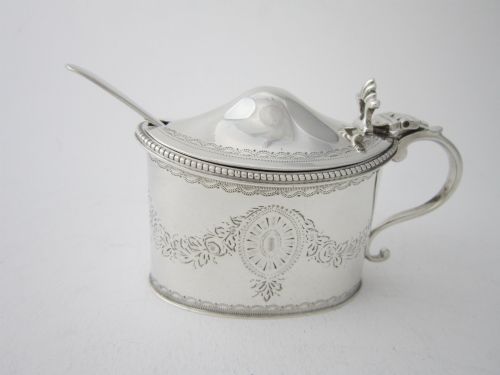
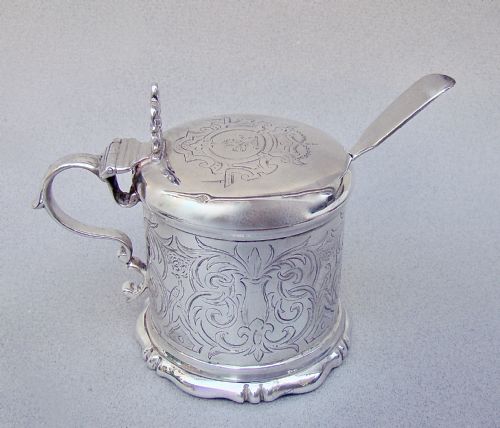
These silver mustard servers bring precise period form to the table, offering the collector functional silver alongside coloured glass liners.
Silver Mustard Servers
When you search for silver mustard servers, you encounter small condiment vessels, pots, and spoons designed for the dining table. These pieces emerge from Georgian, Victorian, and Edwardian periods, stretching into the nineteen-twenties.
The most common versions on this page are mustard pots paired with glass liners and matched condiment spoons. You will find drum shapes, pierced bodies, and unusual designs like pagoda forms originating from London, Birmingham, and Scottish provincial makers.
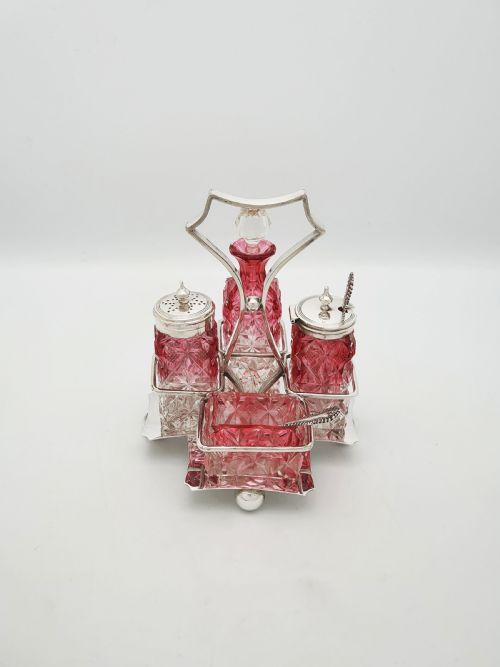
Cruet sets and condiment vessels also appear within this group, housing inserts of cranberry glass, cobalt blue glass, or clear cut glass. Each object serves the specific purpose of holding and serving prepared mustard during formal meals.
Materials and construction
Makers shaped these servers using solid sterling silver, silver plate, and blown or cut glass. Metal components were cast, pierced, or hammered into traditional drum and revivalist shapes, then fitted with hinged lids and scroll handles.
The glass elements are either plain, flashed, or deeply coloured in cranberry and cobalt tones, often designed to slide neatly inside pierced silver bodies. Matching spoons were struck from silver or plate to accompany the pots.
One exceptional piece takes the shape of an oriental pagoda, proving that even nineteenth-century condiment vessels could harbour architectural ambitions.
Assessing quality
Quality rests on the crispness of the metalwork, particularly in pierced decorations and chased Victorian Rococo Revival details. Superior examples retain their original matching glass liners and carry clear hallmarks for makers such as Charles and George Fox or Robert Hennell.
Weight, balance, and the structural integrity of the hinged lid separate ordinary condiment pots from exceptional pieces. The integration between the silver mount and the coloured glass insert also signals the standard of manufacture.
Charles and George Fox·Charles Fox II·Robert Hennell I·Elkington and Company
The Silver Mustard Servers Glossary
- Pierced silver
- Metalwork perforated with decorative patterns such as lattices or geometric shapes. This technique lightens the visual weight of the condiment vessel.
- Cranberry glass
- A rich red glass produced by adding gold chloride to the molten batch. It provides a striking contrast when paired with polished sterling silver.
- Cruet set
- A collection of condiment vessels held together in a frame or stand. These sets frequently include mustard pots alongside oil and vinegar bottles.
- Scottish provincial
- Silver manufactured outside the major assay offices of Edinburgh and Glasgow. Pieces bearing provincial marks from towns like Arbroath carry distinct regional characteristics.
Silver Mustard Servers: Frequently Asked Questions
What is a mustard pot?
A mustard pot is a small lidded vessel designed to hold prepared mustard on the dining table. It typically includes a small cutout in the lid to accommodate a matching condiment spoon.
These pieces form part of larger table settings and are usually lined with blue, cranberry, or clear glass to protect the silver from vinegar and mustard acids.
How do I date a silver mustard pot?
Dating relies heavily on the hallmarks stamped into the silver, which indicate the assay office, date letter, and maker's mark. Stylistic clues such as Georgian drum shapes or Victorian Rococo Revival ornamentation also point to specific decades.
Changes in glass colour preferences, moving from clear cut glass to vibrant cranberry and cobalt tones in the nineteenth century, help narrow down the period of manufacture.
Are glass liners original?
Original glass liners fit snugly inside the silver body and match the interior dimensions of the pot. Many pieces survive with period replacement glass due to the fragile nature of the material.
Examining the rim and base of the glass can reveal signs of age that correspond with the wear on the surrounding silver mount.
How do I clean silver mustard servers?
Cleaning requires a soft cloth and a reputable silver polish applied gently to avoid wearing down hallmarks or engraved details. Glass liners should be removed and washed separately in warm soapy water.
Harsh chemical dips must be avoided, particularly on pieces with fitted glass or delicate pierced work, to preserve the finish of the metal.