

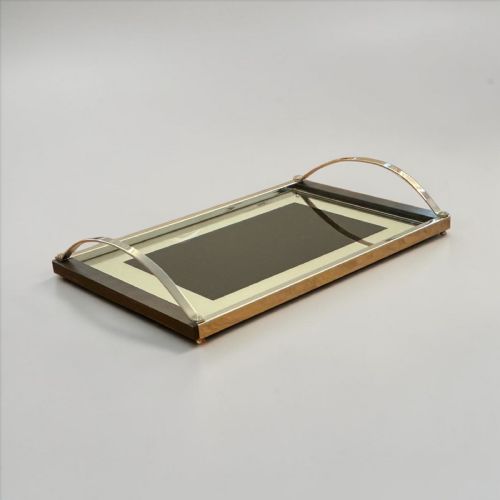
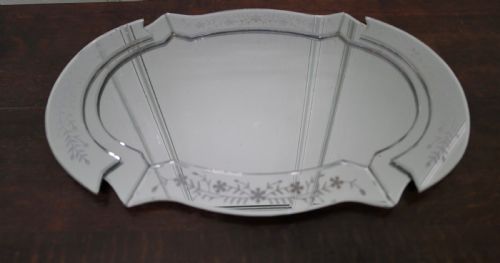


Silver Mirror Tray
A silver mirror tray sits on the surface, catching the light and holding wine glasses or centrepieces with quiet authority.
Silver Mirror Tray
A silver mirror tray brings reflective depth to a tabletop, acting as a functional plateau for glassware or a decorative centrepiece in its own right. These pieces serve to elevate bottles, decanters, or small ornaments while protecting the polished wood beneath them from rings and spills.
Buyers browsing for a silver mirror tray will most frequently encounter silver-plated and mirrored glass examples originating from the Victorian, Edwardian, and Art Deco periods. Forms range from French Napoleon III plateaus to small octagonal display stands and etched Venetian wine trays.
The materials span from traditional silver plate and wood to chrome, metal, and heavy cut glass, reflecting the shift in interior tastes from ornate nineteenth-century dining tables to geometric twentieth-century sideboards.
Materials and construction
Makers constructed the primary framework using silver plate, silvered metal, or chrome, mounting these durable metals over sturdy wooden bases to support heavy decanters and glassware. The reflective surface consists of heavy mirror plate or mirrored glass, often secured tightly within a raised gallery border.
Decoration relied on hand-etching the glass panels or casting intricate metal mounts in Victorian, Edwardian, and Art Deco styles. Some pieces incorporated cut glass or contrasting coloured glass inserts, such as cobalt blue, to enhance the visual impact of the tray.
Silver Mirror Tray Retail Price Guide 2026
Typical asking prices for silver mirror tray among the pieces listed under this phrase on Sellingantiques today, from the lower quarter to the upper quarter. They describe what is for sale here now, not the wider market.
Some jewellers used small mirrored plateaus as shop displays, meaning your tray might have spent its youth showing off pocket watches.
Distinctions in quality
Quality rests in the crispness of the metal casting and the depth of the silver plating over the base frame. Superior examples display sharply defined galleries and robust wooden foundations that prevent the heavy mirror plate from warping or flexing under pressure.
The clarity and execution of the glass work separate standard items from finer examples, particularly where hand-etching or Venetian cutting techniques are applied. Well-preserved original mirror plates with minimal foxing or silver loss maintain the visual integrity of the tray.
The Silver Mirror Tray Glossary
- Silver plate
- A thin layer of silver fused or electroplated to a base metal such as copper, brass, or Britannia metal. This technique provided the lustrous appearance of solid silver at a lower production cost.
- Surtout de table
- A large ornamental plateau or centrepiece placed in the middle of a dining table to hold candelabras, vases, or service pieces. These French dining accessories often featured mirrored glass surfaces.
- Table plateau
- A flat, low-standing platform designed to sit on a dining table or sideboard, typically featuring a mirrored surface to reflect candlelight or table silver. They protect fine furniture finishes while displaying decorative objects.
- Foxing
- Age-related brown spots and discolouration that develop within the silver backing of older mirror glass. This chemical oxidation occurs gradually as air penetrates the protective seal behind the reflective coating.
- Gallery
- A raised ornamental border surrounding the edge of a tray or plateau. This metal railing prevents glassware and decanters from sliding off the mirrored surface.
Silver Mirror Tray: Frequently Asked Questions
What is a silver mirror tray used for?
These trays served primarily on dining tables and sideboards to display decanters, wine glasses, and silver centrepieces. The reflective glass surface amplified the candlelight or natural light in the room.
Today, they function well on dressing tables for perfume bottles or on living room surfaces to organise glassware and small decorative objects.
How do I clean an antique mirror tray?
Clean the mirrored glass gently with a soft microfibre cloth and a mild glass cleaner sprayed onto the cloth rather than directly onto the glass. This prevents moisture from seeping behind the plate and causing further silver damage.
Polish the silver-plated or metal frame sparingly using a dedicated, non-abrasive metal polish, taking care to avoid contact with the glass edges.
How do I date a silver mirror tray?
Dating relies heavily on the stylistic details of the frame, such as the geometric lines of Art Deco pieces versus the ornate casting found on Victorian and French Napoleon III examples. The materials used, including chrome or early silver plate, also provide clues to the decade of manufacture.
Examine the construction of the wooden base and the backing materials, as older pieces often feature hand-cut joinery and older types of mirror glass manufacture.
Can I use these trays for serving drinks?
Most antique trays handle light serving duties, but heavily weighted decanters and bottles are best kept stationary on the plateau to protect the fragile antique glass. The original wooden bases and older silver-plated frames were designed more for static display than daily transit.
Ensure the tray is lifted by its frame rather than the decorative gallery edges to prevent structural strain on older joints.