

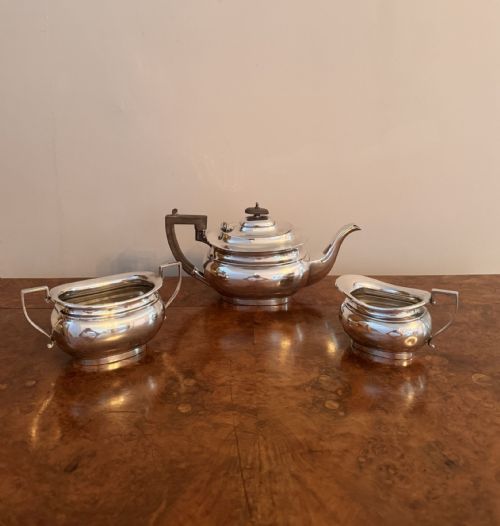


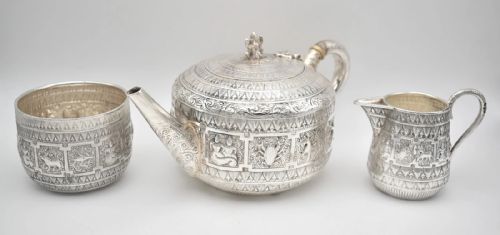
Silver Milk Jug and Bowl
A silver milk jug and bowl brings enduring English craftsmanship to the table, pairing polished metal with traditional teaware design.
Silver Milk Jug and Bowl
A silver milk jug and bowl set comprises matching vessels for serving milk and sugar, appearing frequently within broader tea and coffee services or as standalone pairs. These matching sets span multiple eras, encompassing Georgian, Victorian, and Edwardian periods.
The pieces often emerge alongside larger tea services, though independent pairs survive from makers such as Robert Hennel and George Fox. Buyers encounter both sterling silver examples and silver plate variations dating from the nineteenth and early twentieth centuries.
Forms range from simple domestic tableware to ornate Edwardian Rococo Revival pieces featuring detailed ornamentation. The physical evidence shows these sets function as core elements of traditional teaware collections.
Materials and construction methods
Silversmiths utilised sterling silver and various forms of silver plate, including electroplated nickel silver and Sheffield plating, to construct these vessels. Selected pieces incorporate subsidiary materials such as ebony handles and internal gold gilt finishes.
Metals were shaped and decorated using traditional techniques, resulting in robust tableware designed for daily domestic use. Ornate versions display intricate embossing and applied grapevine detailing characteristic of Victorian and Edwardian manufacturing standards.
Silver Milk Jug and Bowl Retail Price Guide 2026
Typical asking prices for silver milk jug and bowl among the pieces listed under this phrase on Sellingantiques today, from the lower quarter to the upper quarter. They describe what is for sale here now, not the wider market.
Some Victorian sets display energetic Zodiac Indianesque motifs, proving our ancestors enjoyed celestial dinner table conversation.
Assessing quality in silver sets
Quality separates standard plated domestic wares from solid sterling silver creations bearing full hallmarks for London silversmiths. The crispness of chased decoration, such as Zodiac motifs and grapevine detailing, indicates the level of artisan skill involved.
The weight of the metal and the integrity of internal gilt or ebony components dictate the durability and tactile appeal of each jug and bowl. Sets that retain their matching configuration and display balanced proportions command greater interest.
George Fox·Robert Hennel·Goldsmiths & Silversmiths·Liberty
The Silver Milk Jug and Bowl Glossary
- Silver Plate
- A base metal coated with a thin layer of silver, offering the appearance of solid silver at a lower manufacturing cost.
- Sterling Silver
- An alloy containing a high proportion of pure silver combined with other metals to ensure structural strength for tableware.
- Gold Gilt
- A microscopic or thin layer of gold applied to the interior surface of a silver bowl or jug for decorative contrast and protection.
- Electroplated Nickel Silver
- A durable base metal alloy coated with silver through an electrical process, widely utilised in nineteenth-century production.
- Rococo Revival
- A design style popular during the Victorian period characterised by asymmetrical scrollwork, floral motifs, and ornate surface relief.
Silver Milk Jug and Bowl: Frequently Asked Questions
How do I clean an antique silver jug and bowl safely?
Use a soft microfiber cloth with a specialised silver cleaner to remove tarnish without damaging the underlying metal or plating. Avoid harsh abrasive compounds that can wear away delicate surface details.
Wash the pieces in warm soapy water and dry them thoroughly immediately afterwards to prevent water spots and preserve the finish.
Can I use these antique sets for daily tea service?
Many solid silver and sturdy plated sets remain structurally sound for regular use during tea service. Care should be taken with delicate gilding or historic ebony fittings.
Modern dishwashers must be avoided entirely to protect the antique metal surfaces from chemical and thermal damage.
How can I tell sterling silver from silver plate?
Examine the pieces closely for official hallmarks, which indicate solid sterling silver assay office marks. Silver plate items often display maker marks indicating the plating method.
Weight and wear patterns also provide clues, as worn plate may reveal the base metal underneath.
What periods do these silver sets typically represent?
The available pieces originate primarily from the Georgian, Victorian, and Edwardian eras. Stylistic indicators like Rococo Revival ornamentation help assign specific decades.
Exact dating often relies on stamped hallmarks or documented registry marks found on the base of the vessel.