

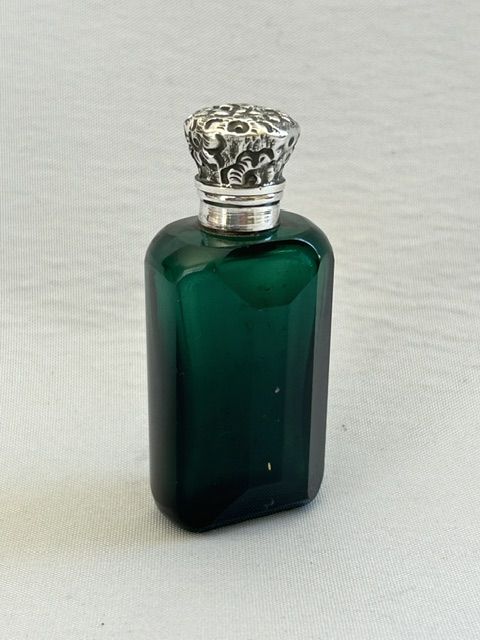


Silver Lidded Glass Bottle
These silver lidded glass bottle pieces bring together cut glass and precious metal for the dressing table or desk.
Silver Lidded Glass Bottle
A silver lidded glass bottle combines functional glassware with precious metal mounts, serving roles from personal scent containers to desk accessories. When you examine a silver lidded glass bottle on this page, you encounter forms that span the Victorian, Edwardian, and Georgian periods alongside later twentieth-century examples.
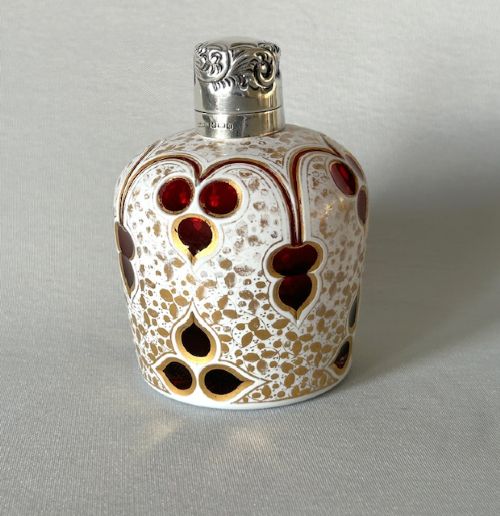
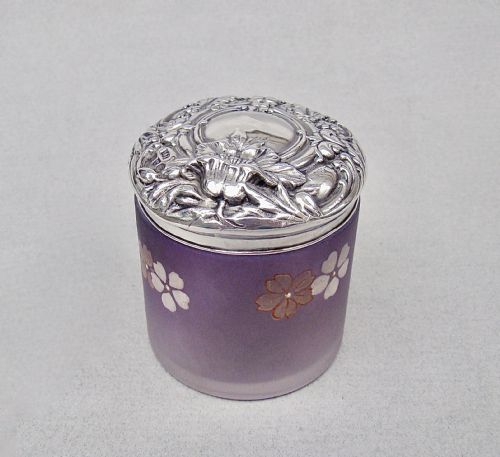
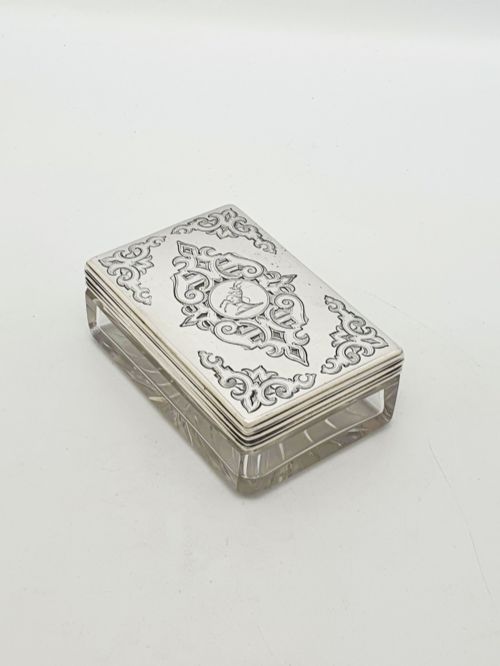
The selection ranges from scent and perfume bottles to dressing table jars, vanity jars, and inkwells. Coloured glass varieties such as Bristol Green and Bohemian glass appear frequently alongside cut glass and frosted glass.
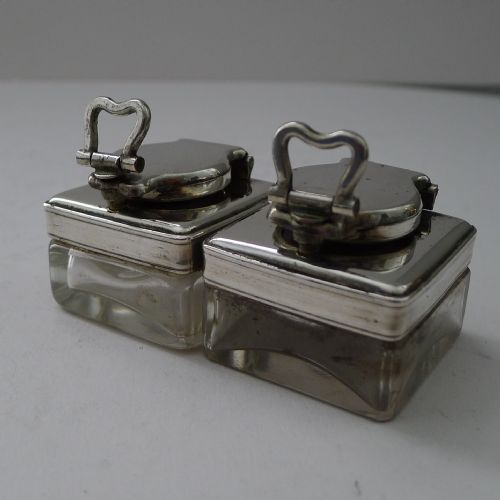
Travel inkwells and gentlemen's cologne bottles represent the more utilitarian end of the scale, while enamel and tortoiseshell lids indicate pieces designed for prominent display on a dressing table.
Materials and construction methods
Makers utilised heavy cut crystal, moulded glass, and coloured glass bodies paired with sterling silver or silver plate mounts. Glass vessels were blown or moulded, often featuring deep hand-cut facets or wheel-engraved patterns to catch the light.
Silver lids and collars were shaped by stamping or spinning, then hallmarked in major British assay offices such as London, Chester, and Sheffield. Decorative techniques on the metal components include guilloche enamel and inlaid tortoiseshell panels.
Silver Lidded Glass Bottle Retail Price Guide 2026
Typical asking prices for silver lidded glass bottle among the pieces listed under this phrase on Sellingantiques today, from the lower quarter to the upper quarter. They describe what is for sale here now, not the wider market.
Listings feature items from the Victorian, Edwardian, and Georgian periods, incorporating materials like Bohemian glass, tortoiseshell, and sterling silver.
Distinctions in quality and execution
Quality rests in the weight and clarity of the glass vessel, the thickness of the silver lid, and the crispness of any cutting or chasing. Superior examples feature heavy lead crystal with sharp, clean facets and solid sterling silver mounts that fit the glass neck precisely without movement.
The refinement of decorative details, such as hand-applied guilloche enamel or carefully fitted tortoiseshell insets, separates standard production pieces from finer studio and retail items.
Goldsmith's and Silversmith's Co.·Kate Greenaway
The Silver Lidded Glass Bottle Glossary
- Sterling silver
- A silver alloy containing 92.5 percent pure silver and 7.5 percent other metals, usually copper, ensuring durability for lids and mounts. Most British pieces carry hallmarks confirming this standard.
- Guilloche enamel
- A decorative technique where precise patterns are machined into a metal surface before transparent enamel is applied over the top. This creates a shimmering, patterned colour effect.
- Bristol green
- A deep, vibrant green glass traditionally produced in the Bristol area during the eighteenth and nineteenth centuries. It was frequently used for scent bottles and glassware.
- Cut glass
- Glassware shaped and patterned by holding the vessel against a rotating abrasive wheel. Deeper cuts indicate higher skill and time invested in the manufacture.
- Tortoiseshell
- The mottled brown and amber shell of the hawksbill turtle, utilised historically as an inlaid veneer on silver lids and vanity items.
Silver Lidded Glass Bottle: Frequently Asked Questions
How do I clean the silver lid?
Use a soft cloth and a gentle silver polish, taking care to avoid getting polish onto the glass body or any enamel panels.
Keep polish away from the interior lining and hinges to preserve the original material condition.
Were these bottles meant for travel?
Some variations, specifically travel inkwells and cologne bottles, featured secure screw caps or locking mechanisms designed for transit.
Dressing table jars and scent bottles were primarily stationary items intended for static display on a surface.
How can I tell the date?
British silver mounts generally bear clear hallmarks including a date letter, assay office mark, and maker's mark.
Comparing the style of the glass cutting and the silhouette of the piece helps narrow down the period when hallmarks are rubbed.
Can I store perfume inside them?
Most antique scent bottles retain their original ground glass stoppers beneath the silver lid to prevent evaporation.
Check the stopper fit before filling, as older stoppers were individually ground to fit one specific neck.