


Silver Lidded Dressing Pot
A silver lidded dressing pot is a vanity table essential combining a precious metal top with glass or crystal, prized for holding cosmetics and small trinkets.
Silver Lidded Dressing Pot
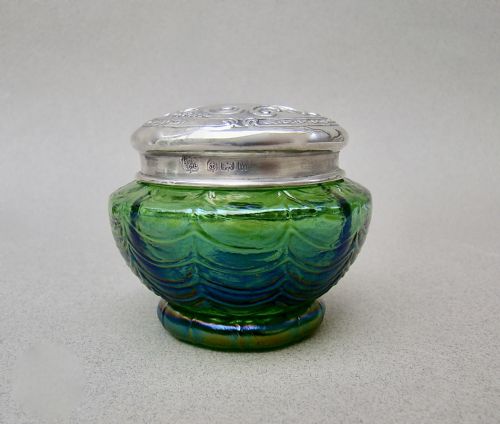
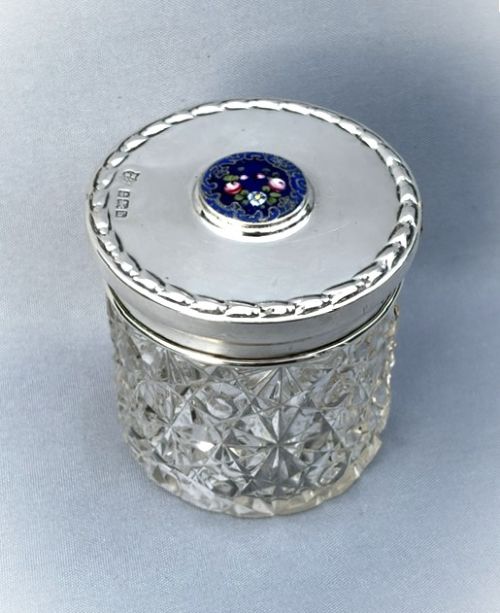
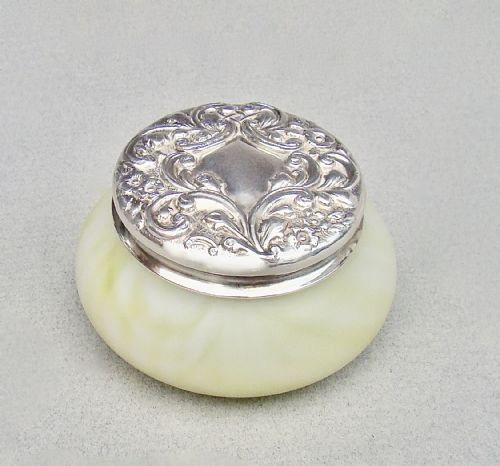
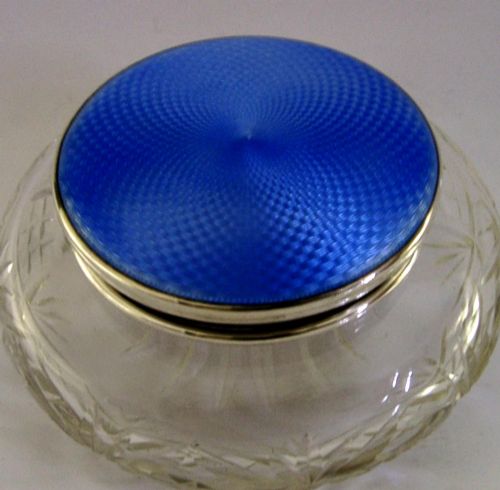
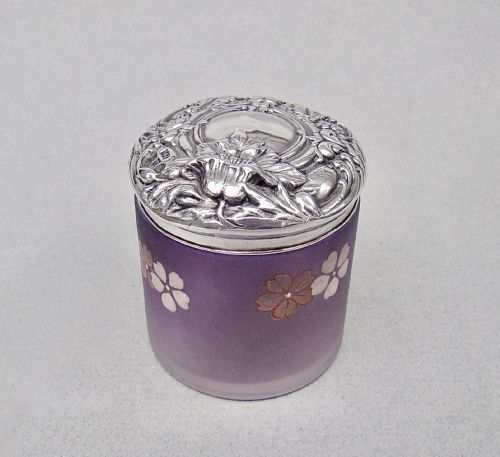
A silver lidded dressing pot sits upon the dressing table or vanity, designed to hold powders, creams, pins, or small trinkets. These pieces bring together a fitted metal lid with a glass, crystal, or tortoiseshell body.
The versions most commonly met across these periods span from the Victorian era through Edwardian and Art Deco years up to mid-century examples. They appear in forms such as vanity jars, trinket boxes, and rouge pots.
Origins stretch from English workshops in Birmingham, Sheffield, and Chester to nineteenth-century French makers. The glass components range from simple cut crystal to coloured, satin, frosted, and Kralik types.
What varies in quality
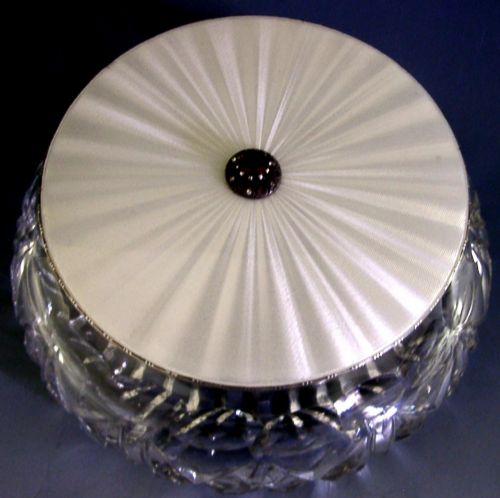
The distinction between standard examples and finer pieces lies in the weight of the silver lid, the crispness of the chasing or hallmarks, and the complexity of the glass body. Heavy cut crystal and thick silver mounts indicate superior craftsmanship.
Surface details like hand-applied enamel work, tortoiseshell inlay, or specialised glass types such as Clichy glass and Kralik glass elevate certain pots above straightforward utilitarian jars. The integration between the silver mount and the glass rim also reflects the skill involved in assembly.
Some Victorian soap jars were built heavy enough to survive a direct drop on a tiled dressing room floor without chipping the glass.
A. J. Pepper & Co·A. Bromet & Co
The Silver Lidded Dressing Pot Glossary
- Sterling silver
- A silver alloy containing 92.5 percent pure silver and 7.5 percent other metals, typically copper. This standard is marked by the lion passant on British pieces.
- Hallmark
- An official stamp applied by an assay office to indicate the metal purity, maker, and year of manufacture. British pieces commonly show town marks such as anchors for Birmingham or crowns for Sheffield.
- Cut glass
- Glass that has been shaped and patterned by cutting facets or motifs onto the surface using a wheel. This technique creates high refraction and weight in vanity jars.
- Tortoiseshell
- A material sourced from the shell of certain sea turtles, used in antique pieces as an ornamental veneer on silver box lids. It displays mottled amber and brown tones.
- Enamel
- A glassy substance fused to the surface of metal through firing to provide colour and decoration. Blue enamel is frequently found on twentieth-century vanity pieces.
Silver Lidded Dressing Pot: Frequently Asked Questions
What is a silver lidded dressing pot used for?
These pots were kept on dressing tables to store small cosmetic preparations, hairpins, rouge, or powder. Their decorative lids kept contents covered while adding a refined element to the vanity.
Today they function well on dressing tables or bathrooms for holding small jewellery pieces or daily accessories.
How do I date a silver dressing pot?
Dating relies primarily on the hallmarks stamped into the silver lid, which indicate the exact assay year and office. Stylistic clues such as Art Deco geometric lines or Edwardian curves also help place the piece in its era.
Matching the glass style and decorative motifs like enamel work further narrows down the period of manufacture.
What glass types are found on these pots?
Listings feature a variety of glass bodies including heavy cut crystal, coloured cranberry glass, and amethyst overlay. Other examples incorporate satin glass, frosted glass, or specialised types like Clichy glass and Kralik glass.
The glass was selected to match the decorative style of the period, from Victorian cut designs to Art Deco coloured glass.
Are tortoiseshell lids common?
Tortoiseshell panels appear inset into silver lids on pieces dating from the early twentieth century. This organic material provides a dark, mottled contrast to the bright sterling silver mount.
Pots featuring tortoiseshell are collected alongside enamel and cut glass variations.