
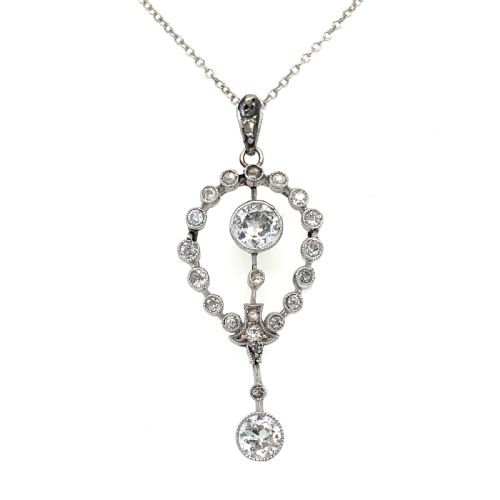


Silver Lavalier Pendant
These silver lavalier pendant pieces combine delicate drops with period stones, offering timeless charm for the discerning wearer.
Silver Lavalier Pendant
A silver lavalier pendant represents a distinctive style of drop necklace originating from the late nineteenth and early twentieth centuries. When searching for a silver lavalier pendant, buyers typically encounter delicate Edwardian, Victorian, and Art Nouveau designs featuring suspended gemstone drops.
The pieces listed on this page span several decades, reaching from late nineteenth-century Victorian examples through Edwardian creations up to the nineteen-thirties. You will regularly find forms incorporating amethyst, paste glass, opal, and pearl suspended from silver chains.
Origins stretch across the Victorian, Edwardian, and Art Nouveau eras, demonstrating stylistic shifts from heavy floral motifs to flowing, organic lines. The most common survivals on this page balance silver settings with central coloured stones or sparkling old cut diamonds.
How they were made
Craftsmen utilised sterling silver alongside gold and platinum accents to construct the delicate frames and chains for these pendants. Stones including amethyst, citrine, opal, and diamond were carefully hand-set into mounting bezels or claw settings.
Techniques relied on meticulous hand-piercing of the silver sheet to create openwork floral, geometric, or flowing Art Nouveau motifs. Jewellers added suspended drop elements designed to sway gracefully with the wearer's movement.
The listings here demonstrate periods spanning from nineteenth-century Victorian through Edwardian up to nineteen-thirty, using silver, platinum, gold, and various gemstones.
What varies in quality
Quality rests upon the fineness of the metalwork and the originality of the accompanying chain and stone settings. Superior examples display crisp hand-pierced detailing and harmonious proportions between the main drop and the subsidiary stones.
The choice of materials shifts the character of the piece entirely, moving from modest paste glass and marcasite to substantial opals, diamonds, and natural pearls. Greater artistry in the Art Nouveau or Edwardian design distinguishes the finest workshops from standard production.
The Silver Lavalier Pendant Glossary
- Lavalier
- A style of necklace featuring a pendant with one or more suspended drops hanging below the main setting. This design gained immense popularity during the Edwardian and Art Nouveau periods.
- Paste glass
- Hand-cut and polished glass utilised to imitate precious gemstones in antique jewellery. High quality paste exhibits strong refractive brilliance.
- Old cut
- A traditional diamond cutting style characterised by a small table, high crown, and large culet. These stones were shaped by hand before modern brilliant cutting standards were established.
- Marcasite
- Small faceted pyrite stones polished and set closely together to provide a metallic, sparkling border. This material frequently appears in Edwardian silver jewellery.
- Citrine
- A yellow variety of quartz utilised extensively in antique pendant designs for its warm, transparent colour. It pairs particularly well with bright silver settings.
Silver Lavalier Pendant: Frequently Asked Questions
How do I date a silver lavalier pendant?
Dating relies on examining the stylistic motifs, such as the flowing organic lines of Art Nouveau or the symmetrical floral sprays of the Edwardian period. Materials and cut of the stones also provide firm chronological indicators.
Victorian pieces often display heavier mounts and darker stones, while Edwardian and nineteen-twenties examples favour lighter openwork silver settings and brighter gems like diamonds and citrines.
Were these pendants worn every day?
Original owners wore these pieces primarily for evening events and formal daytime occasions during the late nineteenth and early twentieth centuries. The delicate nature of the drop elements suited social gatherings rather than heavy labour.
Today, modern wearers choose them for special events or daily adornment, provided the delicate silver chains and stone settings receive appropriate care.
What stones are common in these pendants?
Common stones include amethyst, citrine, opal, and diamond, alongside decorative materials like paste glass and marcasite. Jewellers selected these minerals to contrast sharply against polished sterling silver.
Pearls also appear frequently, either as seed pearls accenting the silver frame or as components of the original accompanying chain.