




Silver Handled Serving Knife
These silver handled serving knife examples offer practical elegance for table service, spanning Victorian craftsmanship to mid-century modern design.
Silver Handled Serving Knife
A silver handled serving knife is an implement designed for portioning specific foods at the dining table, encompassing cake knives, fish servers, fruit knives, sardine servers, and general carving sets. When buyers search for this phrase, they find pieces intended for specialised culinary tasks rather than everyday dining.
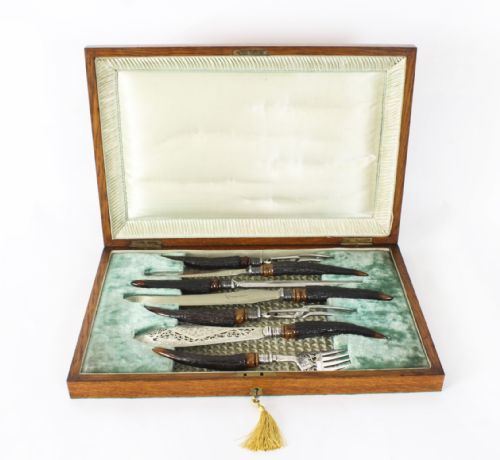
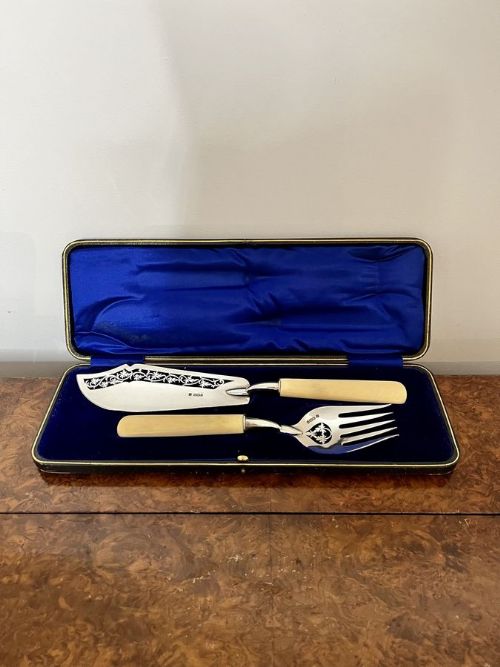
The most common version met on this page is the Victorian or Edwardian fish server, often accompanied by a matching fork and housed in a fitted case. These items frequently feature handles made of bone, antler horn, mother of pearl, or wood paired with sterling silver or silver-plated blades.
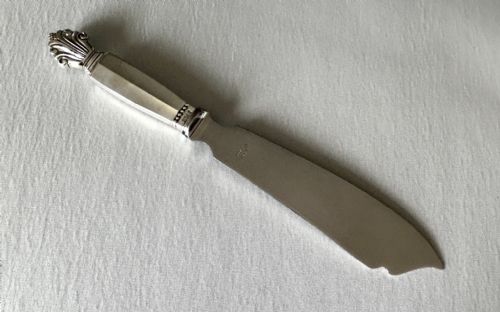
Other variations appearing in the inventory include mid-century modern slices and French sardine servers dating from the nineteenth century. These tools reflect diverse dining customs across different periods, ranging from formal nineteenth-century fish courses to twentieth-century celebrations.
How they were made
Many examples incorporate decorative techniques including hand engraving, such as hunting or dog motifs on fish servers. Fitted cases lined with velvet provide storage, while metal components are stamped or cast to achieve specific styles like French Restoration or Mid-Century Modern.
What varies in quality
The division between standard and superior pieces rests on the integrity of the materials and the refinement of the craftsmanship. Sterling silver blades and handles command greater attention than silver-plated alternatives, while organic handle materials like mother of pearl or well-matched antler show distinct degrees of natural selection and carving depth.
Cased sets complete with original fitted presentation boxes and matching forks indicate higher original commissioning standards. Additionally, crispness in engraved details, such as animal motifs or floral patterns, separates routine production from work by prominent makers like Georg Jensen.
Georg Jensen
The Silver Handled Serving Knife Glossary
- Sterling silver
- A silver alloy containing 92.5 percent pure silver and 7.5 percent other metals, usually copper. This standard ensures durability while maintaining precious metal quality.
- Silver plate
- A base metal object coated with a thin layer of pure silver through electroplating or chemical processes. This technique provided a bright finish at a lower cost than solid silver.
- Fish server
- A large knife or slice specifically shaped for lifting and portioning fish at the table. These utensils often feature pierced blades decorated with engraved aquatic or scroll motifs.
- Carving set
- A matched pairing of a knife and fork used for cutting roasted meats and poultry. Handles on these sets frequently utilise sturdy materials like bone or antler to withstand pressure.
Silver Handled Serving Knife: Frequently Asked Questions
What foods were these serving knives used for?
These implements served specific dining functions, ranging from slicing cakes and fruit to portioning fish and sardines at formal meals. Each tool was shaped for the physical demands of its specific dish.
Specialised cutlery ensured that hosts could present and distribute portions neatly without damaging delicate foods like fish flesh or pastry layers.
How do I identify a Victorian serving knife?
Victorian pieces often display ornate engraved decoration, floral motifs, or animal scenes on the blade, paired with handles of bone, horn, or mother of pearl. Hallmarks stamped into the metal provide precise assay office and date letter information.
Stylistic cues such as heavy ornamentation and fitted velvet-lined presentation cases point directly to nineteenth-century manufacturing traditions.
Can I use these knives for daily dining?
While structurally sound, antique and vintage serving pieces require careful handling due to their age and delicate handle materials like mother of pearl or bone. Hand washing is essential to preserve organic components and silver surfaces.
Many collectors prefer to reserve these items for special occasions or display them within fitted presentation boxes to protect their condition.
What does silver-plated mean on these knives?
Silver plating involves bonding a thin layer of pure silver onto a base metal core, making the piece more accessible while retaining a bright silver appearance. This technique was widespread throughout the nineteenth and twentieth centuries.
Plated items offer the visual appeal of solid silver without the higher material cost associated with sterling silver production.