


Silver Handled Centerpiece
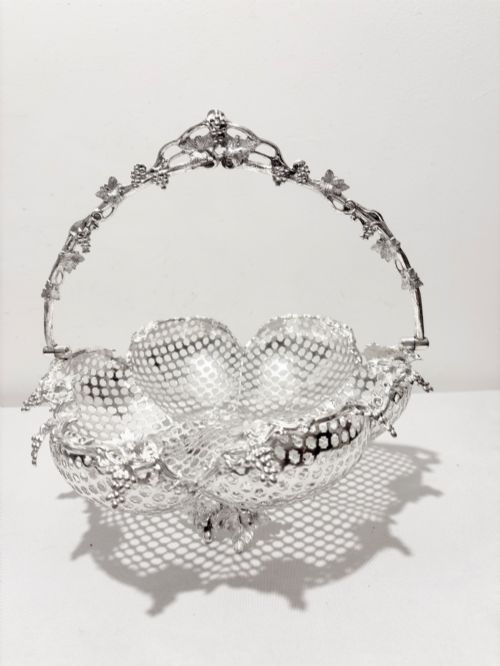
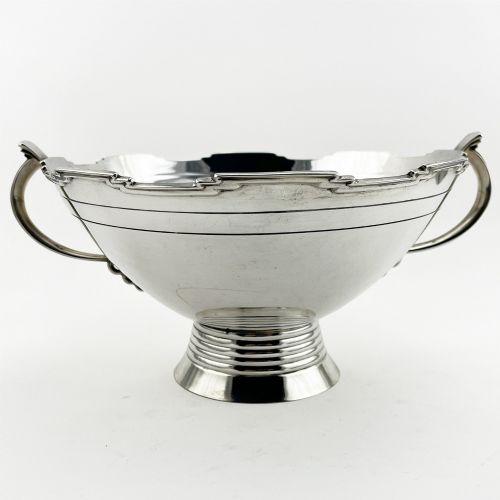
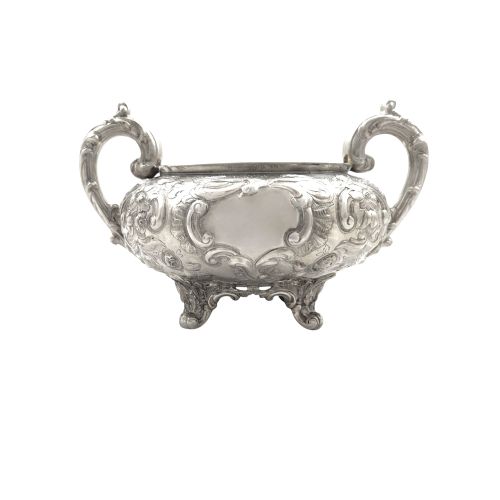
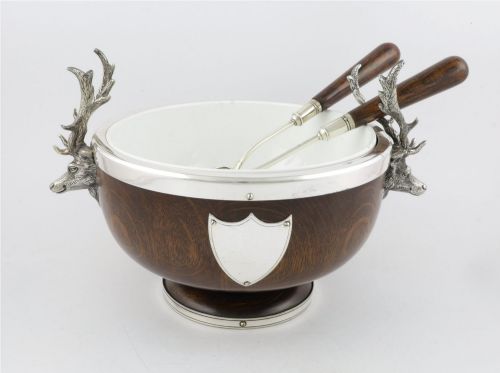
A silver handled centerpiece gathers fruit, flowers or bread on a dining table with weight and grace.
Silver Handled Centerpiece
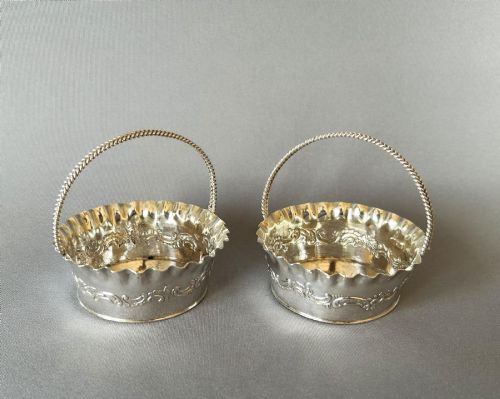
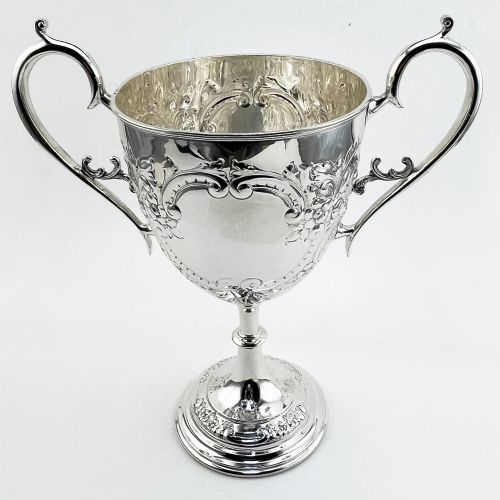
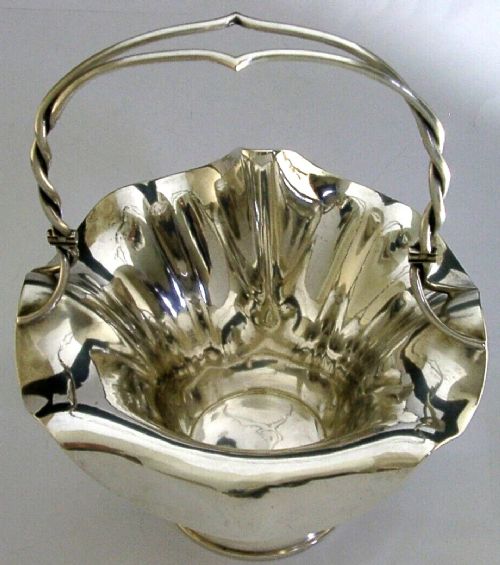
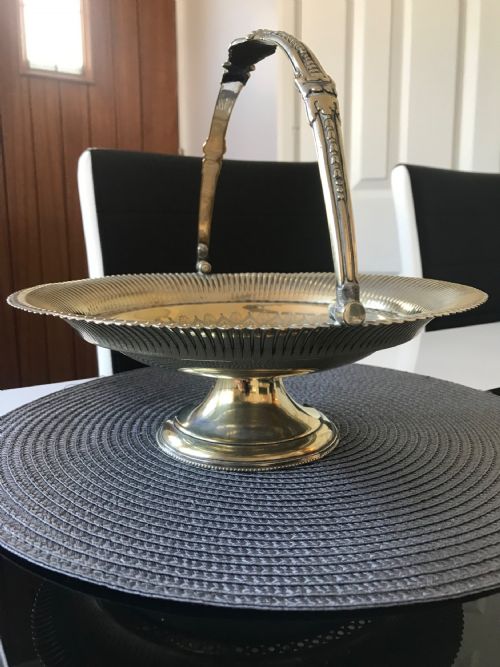
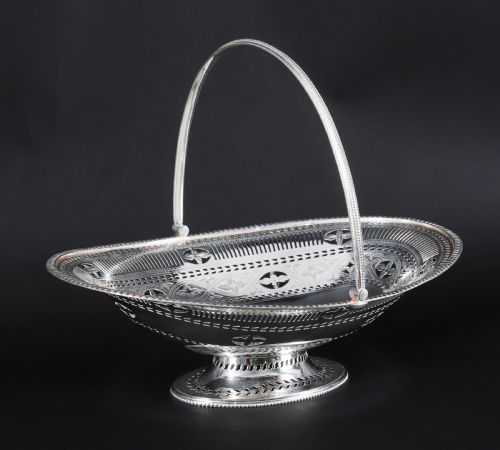
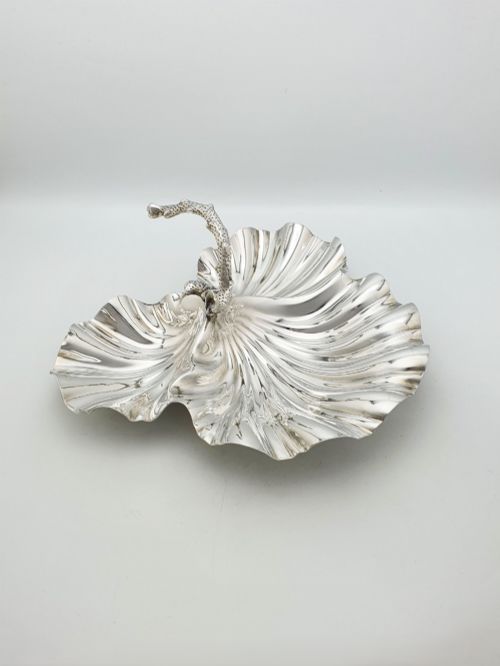
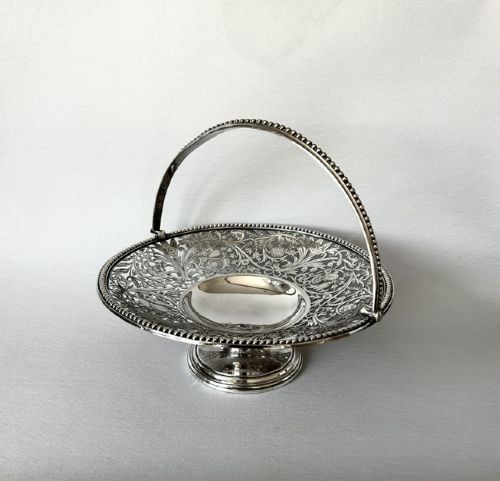
A silver handled centerpiece takes the form of a fruit basket, sugar basket, bread basket or decorative bowl designed to sit in the middle of a table. The pieces found here span from the Georgian period through the Victorian and Edwardian eras, reaching into the early twentieth century. Most examples rely on a swing handle or fixed loop handle above a pierced, repoussé or wirework body.
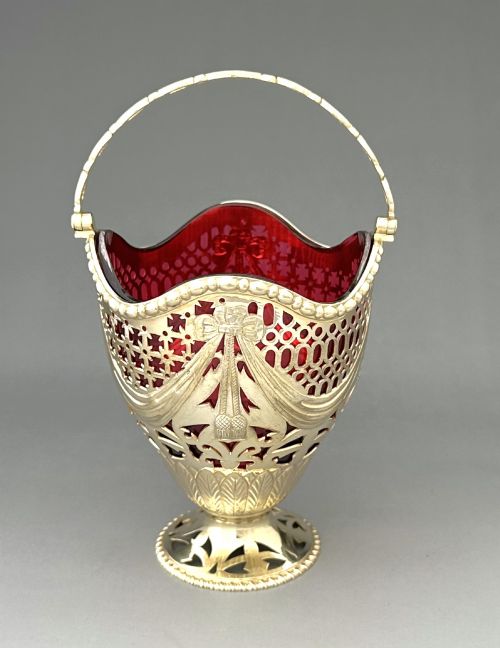
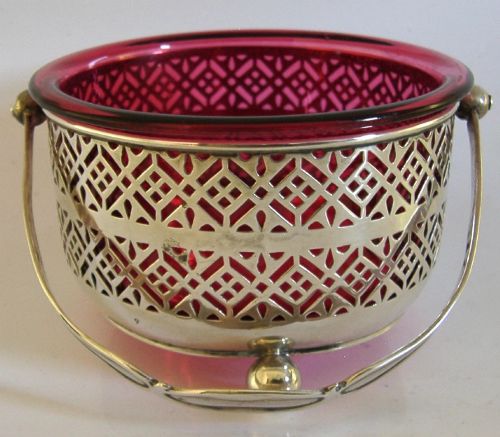
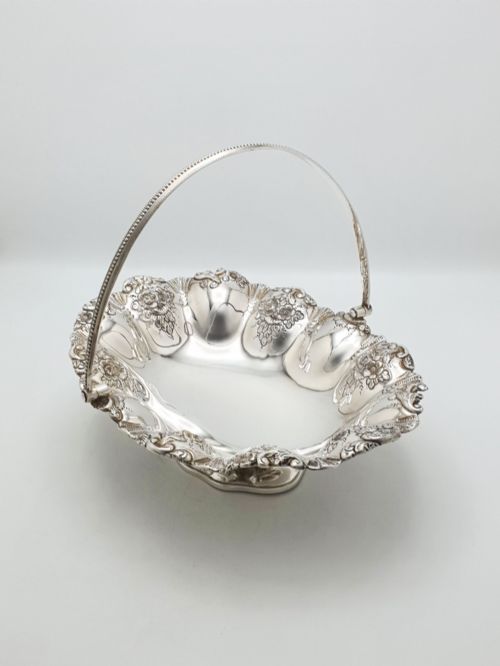
Victorian and Edwardian silver plated baskets dominate the selection, often featuring elaborate floral rims or swing handles. Alongside these plated forms, sterling silver examples appear from makers working in London, Sheffield and Chester. Glass liners in ruby or cranberry tones frequently accompany the metal frameworks, adding colour to the table setting.
How they were made
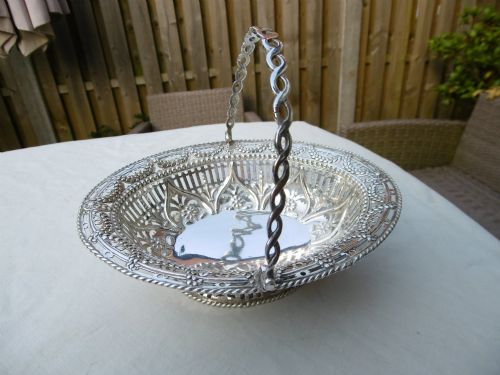
Silversmiths shaped sterling silver and silver plate through techniques such as piercing, fretwork, repoussé embossing and wirework construction. Pierced and fretwork designs required steady hand-sawing to create intricate geometric or floral patterns in the metal body. Repoussé work involved hammering the reverse of the silver to push decorative flora and motifs into relief on the front.
Early nineteenth-century examples often utilise Old Sheffield Plate, fusing a layer of silver onto a copper base before shaping and soldering the components. Glass liners were blown and fitted to match the contours of wirework or pierced baskets, providing a stable insert for fruit or sweetmeats.
Silver Handled Centerpiece Retail Price Guide 2026
Typical asking prices for silver handled centerpiece among the pieces listed under this phrase on Sellingantiques today, from the lower quarter to the upper quarter. They describe what is for sale here now, not the wider market.
Several pieces arrive complete with cranberry glass liners, ensuring your table catches the eye even when empty.
What varies in quality
The crispness of the chasing and the depth of the repoussé detailing separate standard production pieces from finer work. Hand-pierced fretwork shows precision and regularity in the apertures, whereas lesser items rely on simpler stamped patterns. The weight of the metal and the balance of the swing handle also indicate the standard of manufacture.
Makers who invested time in integrated hallmarks, heavy gauge silver, and well-fitted coloured glass liners produced superior centrepieces. The transition from plain wirework to complex floral rims demonstrates the breadth of skill across different workshops.
Edward Souter Barnsley·George W. Scott And Sons Ltd·John Hunt·Hammond Creake And Co·James Deakin And Sons·William Hutton And Sons·James Dixon And Sons Ltd
The Silver Handled Centerpiece Glossary
- Swing handle
- A movable arched handle attached to pivots on opposite sides of a basket, allowing it to drop to the side when resting.
- Old Sheffield Plate
- An early composite material made by fusing a thin sheet of silver to a thick copper core, used before electroplating.
- Repoussé
- A metalworking technique where the artisan hammers the design from the reverse side to raise floral or figural motifs in relief.
- Piercing
- The method of cutting shapes and patterns out of a sheet of metal to lighten the structure and create ornamental openwork.
- Silver gilt
- Silver that has been coated with a thin layer of gold on its surface, giving it a warm, golden sheen.
Silver Handled Centerpiece: Frequently Asked Questions
What were silver handled centerpieces used for?
These vessels held fruit, bread, sugar or sweetmeats at formal dining tables, serving as both utility items and decorative focal points.
Their openwork or glass-lined bowls allowed hosts to present seasonal produce and confections during extended dining courses.
How do I identify an Edwardian centerpiece?
Edwardian examples often feature light fretwork, garland motifs and delicate floral repoussé borders typical of the early 1900s.
Assay office marks and date letters stamped on sterling silver pieces provide precise confirmation of their year of manufacture.
Are glass liners original to the baskets?
Original liners fit snugly into the wirework or pierced metal frames, often rendered in cranberry or ruby glass.
Their presence complements openwork designs by holding loose contents securely while displaying the contrasting glass colour.
How should I care for a silver basket?
Gentle dusting and occasional use of non-abrasive silver polish preserve the surface details without thinning the metal plating.
Glass liners can be removed and washed separately in warm soapy water before being placed back into the dried frame.