


Silver Glass Smelling Salts
These silver glass smelling salts and scent bottles combine cut glass and sterling silver mounts for carrying personal fragrance.
Silver Glass Smelling Salts
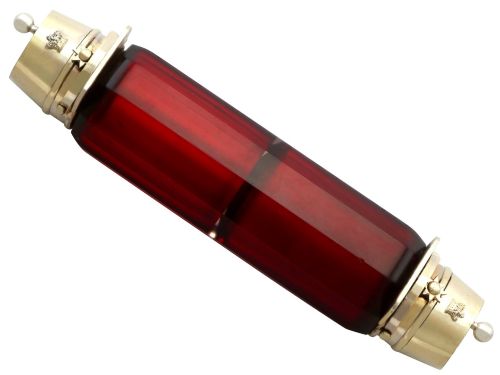
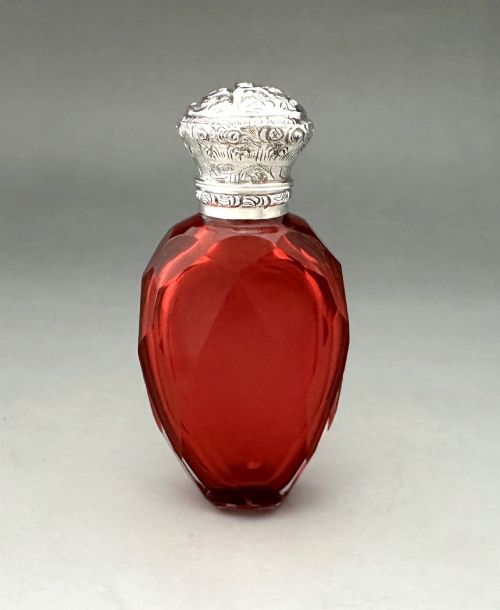
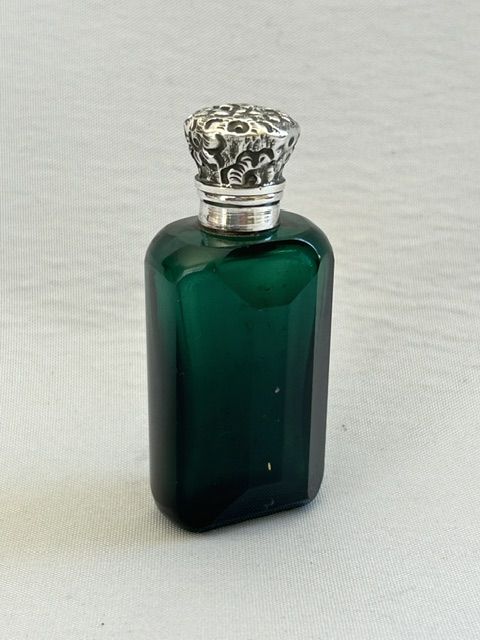
Silver glass smelling salts pieces are primarily Victorian and Edwardian scent bottles, vinaigrettes, and double ended flasks designed for pocket or purse use. Buyers seeking silver glass smelling salts will find pieces featuring coloured, opaline, ruby, amethyst, or cut glass bodies fitted with hallmarked silver tops and mounts.
The form spans the nineteenth and early twentieth centuries, encompassing compact miniature bottles alongside larger double ended examples. Most items date from the Victorian era, particularly the later decades around eighteen ninety, with occasional Edwardian pieces representing the continuation of the style.
How they were made
The glass components utilise techniques such as hobnail cutting, etching, and overlay work to create textured or coloured bodies in shades of green, ruby, amethyst, blue, and opaline. Molten glass was blown or moulded before being finished by hand.
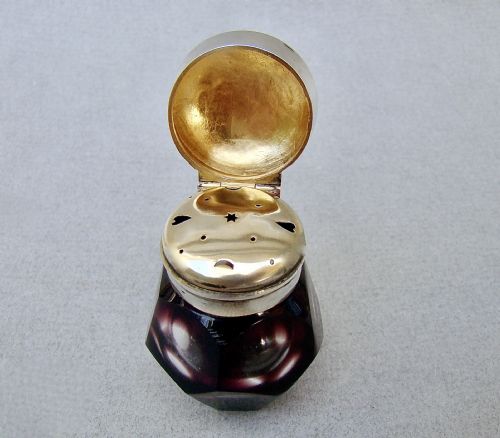
Sterling silver mounts, collars, and hinged caps were fabricated separately, often featuring engraved or chased detail, and fitted securely to the glass necks. Silver-gilt interiors appear on specific vinaigrette and double ended variants.
What varies in quality
Quality separates standard production from exceptional execution through the depth and precision of the glass cutting and the intricacy of the silver engraving. Maker attribution, such as the involvement of recognised silversmiths, elevates certain pieces above standard anonymous items.
The choice and intensity of the coloured glass, from deep ruby and Bristol green to layered opaline and turquoise cabochon adornments, determine the visual impact of the individual bottle.
Sampson Mordan·S. Morden and Co
The Silver Glass Smelling Salts Glossary
- Vinaigrette
- A small ornamental box or bottle with a pierced inner grille, originally used to hold a sponge soaked in aromatic vinegar. These are frequently found paired with silver mounts and glass bodies.
- Double Ended
- A scent bottle design featuring a cap at both ends, allowing two different compartments or liquids to be accessed. This form often combines cut glass with hinged silver caps.
- Opaline Glass
- An opaque or translucent glass developed in various pastel shades during the nineteenth century. It provides a smooth, milky surface beneath silver collars.
- Silver-Gilt
- Sterling silver that has been coated with a thin layer of gold on the interior surfaces. This technique protected the metal from the corrosive properties of active salts and vinegars.
Silver Glass Smelling Salts: Frequently Asked Questions
What is the difference between a scent bottle and a vinaigrette?
Scent bottles hold liquid perfumes via a stopper or hinged cap. Vinaigrettes contain a perforated internal grille intended for aromatics soaked in vinegar.
Both items frequently utilise silver mounts and glass bodies but serve distinct historical functions.
How do I date a silver mounted glass scent bottle?
Dating relies on Birmingham or London hallmarks stamped onto the silver mounts, alongside stylistic indicators like glass colour and cutting depth. Victorian examples often show distinct hobnail patterns or coloured opaline glass.
Twentieth century pieces from the Edwardian period transition into simpler profiles and alternate hallmark dates.
Can I still use these bottles for perfume?
Many double ended and single scent bottles retain functional hinged caps and internal stoppers suitable for holding modern oils. Cork or glass stoppers inside the silver cap prevent leakage during handling.
Careful inspection of the collar and hinge ensures the bottle seals properly before filling.
What does double ended mean on these bottles?
Double ended bottles provide two separate compartments accessed from opposite ends of a cylindrical or faceted glass body. One end typically held smelling salts while the other contained liquid scent.
These pieces require hinged silver caps at both extremities.