


Silver Glass Oil Set
A silver glass oil set brings domestic dining history to the table, combining functional condiment vessels with decorative metalwork.

Silver Glass Oil Set
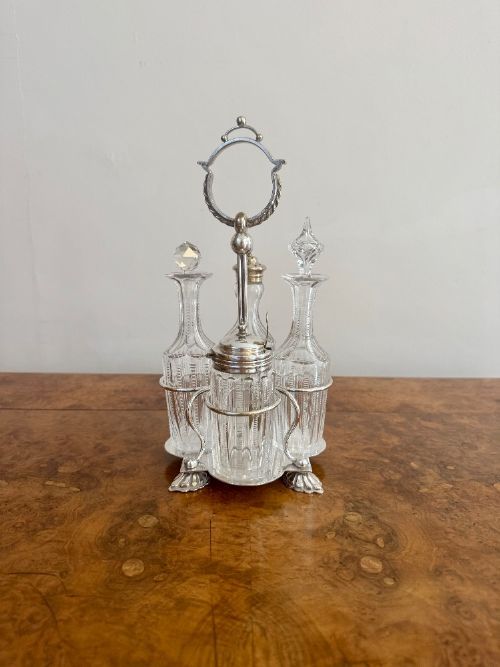
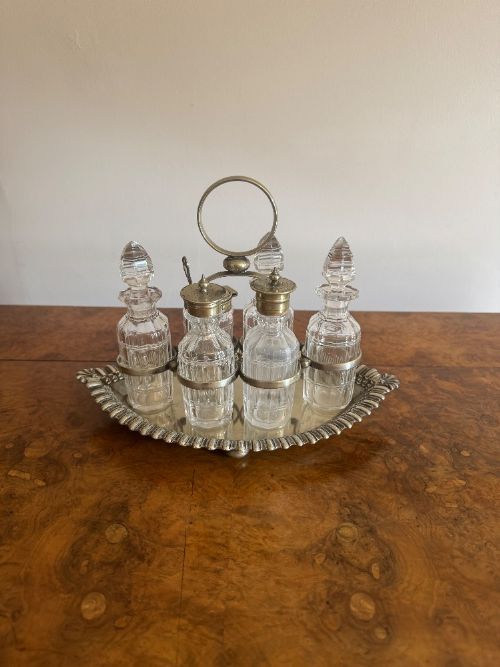
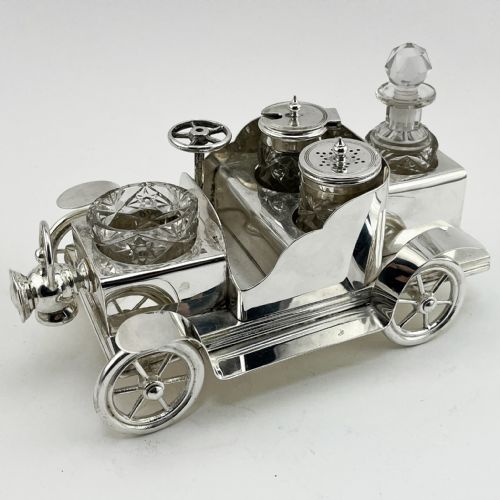
A silver glass oil set encompasses cruet stands, condiment sets, and oil and vinegar bottles spanning from the Georgian and Victorian eras into the Edwardian period and Art Deco years. The selection on this page relies heavily on Edwardian silver plate and cut glass cruet sets, alongside Georgian sterling silver stands and Victorian novelty pieces.
Buyers encounter standalone pairs of silver-mounted oil and vinegar bottles as well as multi-bottle frames holding up to eight pieces. These configurations serve the dining table by keeping oils, vinegars, and condiments contained within designated glass bottles held by silver or silver plated stands.
Materials and construction
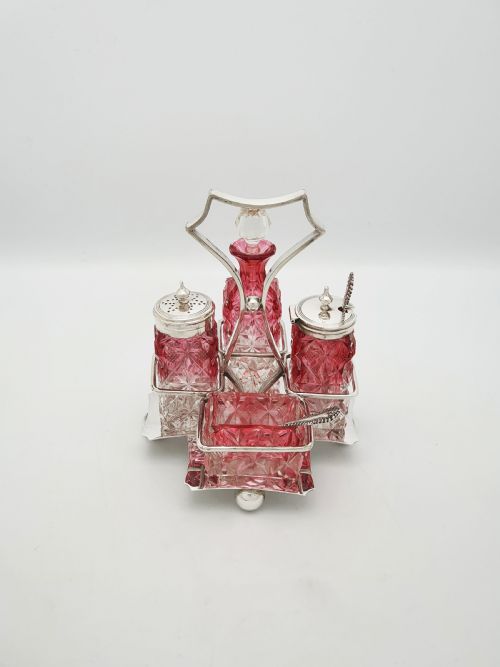
The construction brings together cut glass, cranberry glass, and clear glass vessels fitted with sterling silver mounts or silver plate frames. Makers utilise ebonised wood for certain structural stands, incorporating cast and chased metal components to secure the glass bottles.
Glass bottles undergo cutting or flashing techniques to achieve decorative faceted finishes, while silver elements receive hallmarks or plate layers. Stands integrate carry handles and bottle rings shaped to fit specific cruet bottles securely.
Materials span cut glass, cranberry glass, sterling silver, silver plate, and ebonised wood across various cruet stand configurations.
Craftsmanship and completeness
Quality separates through the integrity of the glass bottles and the weight of the metal stand. Complete sets retaining their original matched cut glass bottles and matching casters command attention above assembled groupings with replacement vessels.
The crispness of the cutting on the glass and the thickness of the silver plating or sterling silver gauge define the grade of the piece. Finer examples display detailed chasing on the stands and unblemished glass rims without chips.
Mappin Brothers·Walker & Hall·Charles Thomas Fox·Elkington & Co·Hester Bateman·Wade Wingfield Wilkins·William Hutton & Sons
The Silver Glass Oil Set Glossary
- Cruet set
- A collection of glass bottles or casters held in a single frame for condiments at the dining table. These sets typically hold oil, vinegar, mustard, and pepper.
- Silver plate
- A base metal coated with a layer of silver. This technique provided the visual appeal of solid silver at a lower cost during the Victorian and Edwardian periods.
- Cranberry glass
- A rich red glass produced by adding gold chloride to the molten batch. It appears frequently in Edwardian cruet bottle designs.
- Castor
- A small jar or bottle with a perforated top used for shaking sugar or spices. They form part of larger multi-bottle cruet sets.
- Ebonised wood
- Timber treated to resemble ebony, providing a dark contrasting base for silver mounts on Georgian stands.
Silver Glass Oil Set: Frequently Asked Questions
What is a silver glass oil set?
A silver glass oil set is a tableware assembly designed to hold bottles of oil and vinegar within a metal frame or stand. These items served dining tables during the Georgian, Victorian, and Edwardian periods.
They combine glass vessels, which are often cut or flashed, with silver plate or sterling silver mounts and carrying frames.
How were these sets used?
These sets sat upon dining tables to allow guests to dispense oils, vinegars, and liquid condiments onto food during meals. The multi-bottle stands kept the table organised and made passing condiments straightforward.
Individual bottles often featured specific pourers or stoppers designed to regulate the flow of oil and vinegar.
How do I date a cruet set?
Dating relies on hallmarks stamped onto the silver components, registry marks, and the distinct stylistic traits of periods like Georgian, Victorian, or Art Deco. Silver plate pieces often lack date letters but show manufacturing styles specific to the late nineteenth or early twentieth century.
Glass cutting styles and stand shapes also point toward specific decades of manufacture.
Are replacement bottles common?
Replacement bottles occur frequently because individual glass components suffered breakage over centuries of use. Finding a set with its original matching glass bottles represents a notable distinction for collectors.
Buyers should examine whether the glass vessels fit their designated rings and share consistent cutting patterns.