



Silver Gemstone Earrings
Silver gemstone earrings bring colour and character to the ear, offering a wearable piece of history across several centuries of design.
Silver Gemstone Earrings
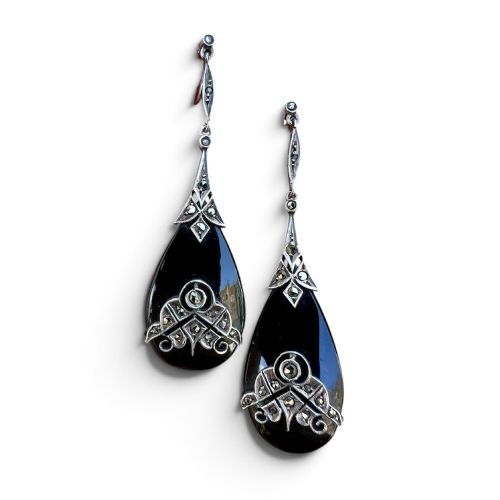
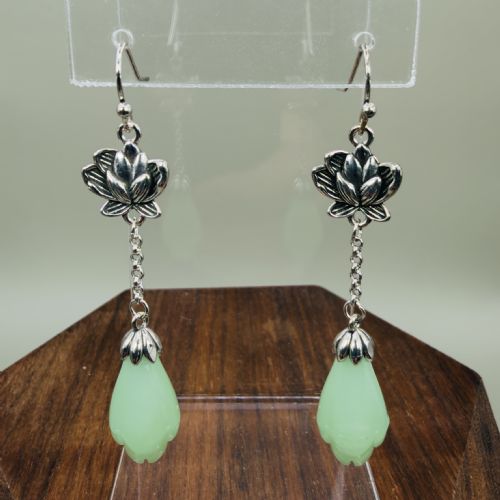
Silver gemstone earrings span several distinct decorative movements, taking the form of drop, hook, cluster, and screwback designs. These pieces range from nineteenth-century work to mid-century modern creations, reflecting shifting tastes in ornamentation.
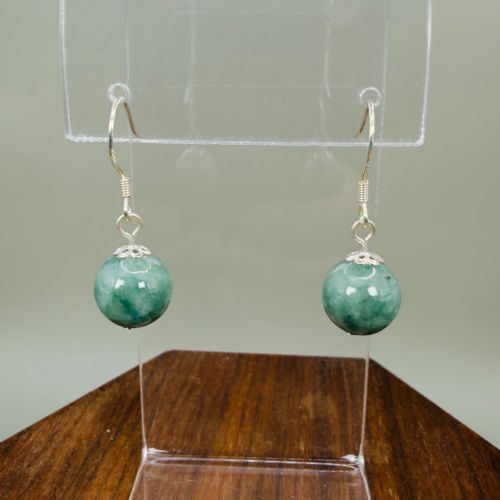
The most common examples on this page are mid-century and Victorian styles, often pairing polished or sterling silver with stones such as aquamarine, onyx, jade, and marcasite. Buyers encounter both delicate botanical drops and bolder geometric cocktail pieces.
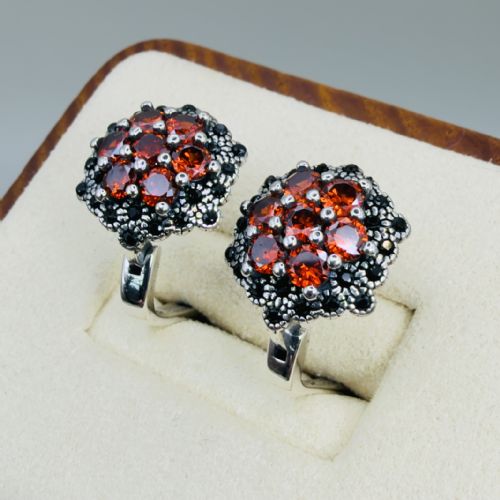
Earrings in this category frequently incorporate stones like mandarin garnets, black tourmaline, amethyst, and amber. These variations show how makers utilised both precious and semi-precious minerals to contrast against the bright white tone of silver.
How they were made
Makers utilised sterling silver and standard silver alongside carved or faceted gemstones, securing stones with claw settings, bezels, or tiny marcasite pavé work. Techniques varied from the detailed wirework of revival styles to the clean geometric lines characteristic of art deco and mid-century modern pieces.
Construction methods adapted to the ear fittings of each era, moving from early screwbacks and hook wires to hinged backs and dangling beads. Jewelers often combined silver with gold in specific pieces, mounting stones like corundum and spinel in mixed-metal settings.
Silver Gemstone Earrings Retail Price Guide 2026
Typical asking prices for silver gemstone earrings among the pieces listed under this phrase on Sellingantiques today, from the lower quarter to the upper quarter. They describe what is for sale here now, not the wider market.
Listings feature items spanning the Victorian era through the 1960s, incorporating materials like jade, aquamarine, and black tourmaline.
What varies in quality
Quality rests upon the precision of the stone setting and the crispness of the silver work, whether in cast motifs or hand-cut facets. Better pieces display a balanced proportion between the metal mount and the chosen gemstone, ensuring the stone remains secure while catching the light.
The sophistication of the lapidary work separates standard items from finer examples, particularly in how aquamarine, jade, or garnet are polished and shaped. Maker attention to the reverse side of the earring and the reliability of the mechanical fixings also mark out superior production.
The Silver Gemstone Earrings Glossary
- Marcasite
- Small, faceted bits of iron pyrite set closely together to create a glittering metallic border. This material was widely favoured in art deco and revival jewellery to imitate the sparkle of cut steel.
- Screwback
- A mechanical earring finding utilising a threaded post and small turning disc to secure the piece on unpierced lobes. This fitting predominates in older items from the early twentieth century.
- Bezel setting
- A metal collar that wraps around the outer edge of a gemstone to hold it securely in place. It offers a smooth outline compared to traditional prong or claw mountings.
- Cluster
- An arrangement of multiple gemstones grouped tightly around a central stone. This layout maximises visual impact and colour contrast in smaller earring designs.
- Baguette cut
- A step-cut rectangular gemstone shape characterised by long parallel facets. This cut appears frequently in mid-century geometric and cocktail jewellery.
Silver Gemstone Earrings: Frequently Asked Questions
How do I care for silver gemstone earrings?
Store silver pieces away from humid environments to slow down natural tarnish development. Clean them gently with a soft cloth designed for precious metals, avoiding harsh chemical dips that can damage softer stones like amber or jade.
Check stone settings periodically to ensure no movement has occurred within the claw or bezel mountings. Keeping each pair separate prevents scratching between harder gemstones and the softer silver surfaces.
Are these earrings for pierced ears?
The selection includes various closure types spanning different decades, encompassing both modern hook wires and older mechanical fastenings. Some earlier examples utilise screwbacks designed specifically for unpierced lobes.
Buyers should examine the specific listing details to confirm whether a pair requires pierced ears or uses clip and screw mechanisms. Conversion by a jeweller is occasionally possible for those who prefer a different fastening style.
How can I tell the period of silver gemstone earrings?
Dating relies on stylistic clues such as the geometric symmetry of art deco or the organic motifs found in Victorian and arts and crafts pieces. Fastening types also provide reliable chronological markers, as screwbacks and specific hinge designs correspond to distinct manufacturing eras.
Material choices further help narrow the timeframe, with certain combinations of stones and silver purity marks typical of mid-century modern production. Comparing construction techniques against documented historical jewellery styles confirms the likely period of origin.
What is Victorian revival style?
Victorian revival jewellery refers to later pieces that deliberately imitate the forms, motifs, and sentimental character of nineteenth-century ornamentation. These items borrow design elements like botanical themes, clusters, and dark stones from earlier decades while using manufacturing methods of their own time.
Such pieces allowed wearers to enjoy the romantic aesthetic of the Victorian era without acquiring fragile or scarce antique items. The listings demonstrate this trend through renewed interest in sentimental gemstone arrangements.