



Silver Footed Platter
A silver footed platter brings genuine weight and polished presence to a room, offering a stable raised stage for tea or display.
Silver Footed Platter
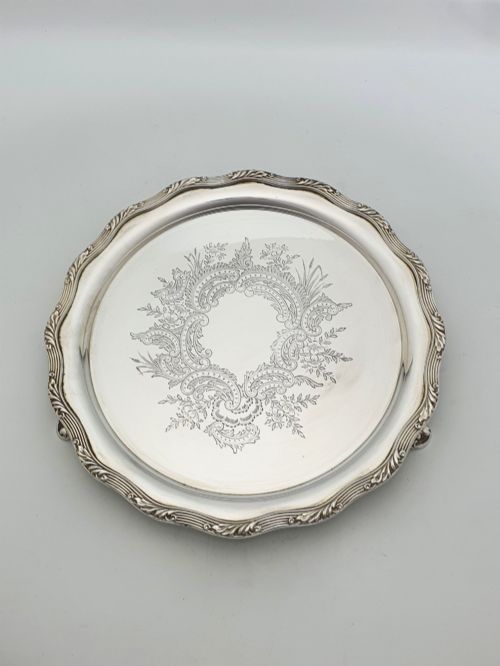
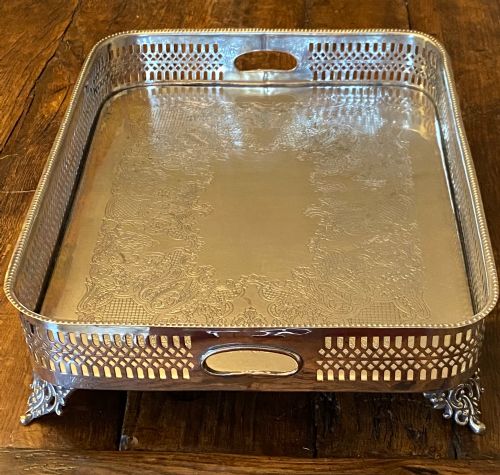
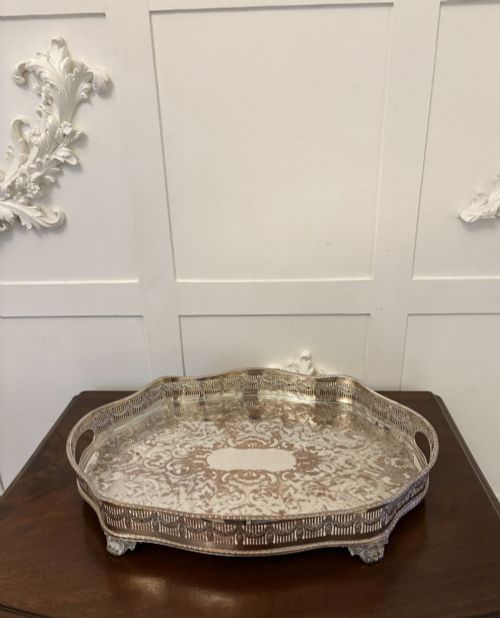
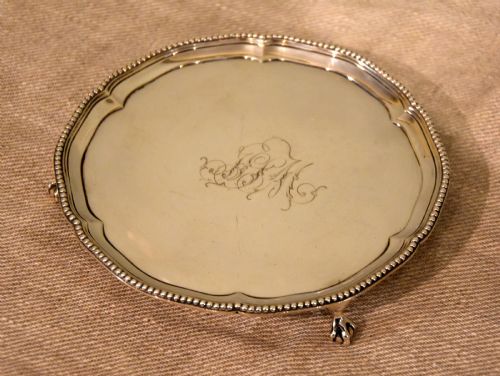
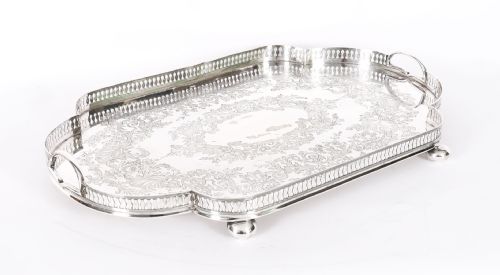
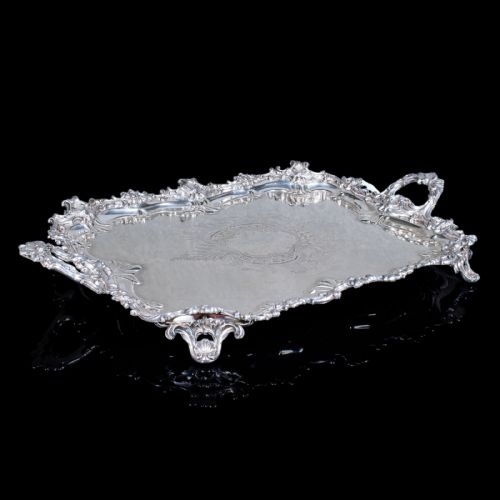
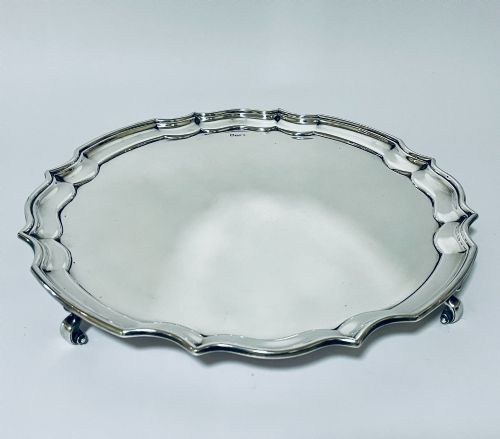
A silver footed platter appears across several centuries, taking the form of salvers, tazzas, gallery trays, and serving dishes raised on feet or a base. When searching for a silver footed platter, a buyer encounters forms ranging from 18th century Georgian sterling silver to 19th century silver plate, Sheffield plate, and later electroplated nickel silver. These pieces serve practical functions for afternoon tea and meat service while doubling as decorative bowls and display trays.
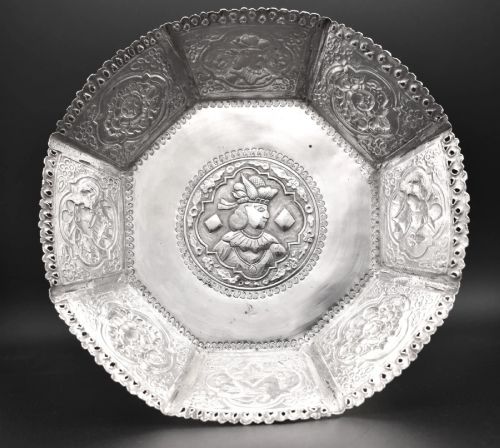
The assortment includes English, Anglo-Indian, and European origins, spanning Victorian, Edwardian, and Grand Regency styles. Pieces such as round salvers with raised detailed rims and engraved surfaces sit alongside heavy repoussé footed bowls and warming dishes. The physical evidence shows makers utilising copper, bronze, and sterling silver alongside plated variations to achieve formal dining utility.
Materials and construction methods
Makers utilised sterling silver and solid silver for high-status commissions, employing heavy casting and hand engraving to create detailed rims and surface decoration. Electroplated nickel silver, silver plate, and Sheffield plate provided durable alternatives, fusing silver layers onto copper or base metal cores.
Techniques such as repoussé allowed artisans to push metal from the reverse to form high-relief motifs on tazzas and decorative bowls. Bronze and copper formed substantial structural bodies before receiving heavy silver plating, ensuring the pieces maintained rigidity during daily service.
Silver Footed Platter Retail Price Guide 2026
Typical asking prices for silver footed platter among the pieces listed under this phrase on Sellingantiques today, from the lower quarter to the upper quarter. They describe what is for sale here now, not the wider market.
Listings feature items spanning the 18th century, Georgian and Victorian eras, up to modern mid-century designs.
Discerning quality in antique metalwork
The distinction between standard domestic items and exceptional commissions rests upon the crispness of the chased or engraved surface decoration and the structural integrity of the raised feet. Heavier gauge metalwork resists bending under weight, while finer hand-engraved borders display precise geometric or floral layouts without wandering lines.
Makers' marks and presentation inscriptions often indicate higher workshop standards and documented provenance. The evenness of the silver coating across high-friction areas and raised rims reveals the initial grade of plating and subsequent care.
James Deakin·John Harrison·Padley Parkin·Peters Hamburg·Fenton Russel·Paul Storr
The Silver Footed Platter Glossary
- Salver
- A flat plate or tray with a raised edge, typically supported on small feet and used for serving drinks or presenting items.
- Tazza
- A shallow bowl or plate mounted on a pedestal stem and foot, originating in classical antiquity and used for display or service.
- Sheffield Plate
- An early composite material made by fusing a thin sheet of sterling silver to a thicker copper ingot, developed in the eighteenth century.
- Repoussé
- A metalworking technique where the artisan hammers metal from the reverse side to form a raised design in relief.
- EPNS
- Electroplated Nickel Silver, a common base metal alloy coated with a thin layer of pure silver through an electrical process.
Silver Footed Platter: Frequently Asked Questions
How do I clean a silver footed platter?
Use a soft cloth and a specialised silver cream designed to lift tarnish without removing the underlying plating or sterling surface. Avoid abrasive pads or harsh chemical dips that can damage engraved details.
Store the platter in a dry environment away from direct sunlight, and wrap unlacquered pieces in acid-free tissue if they remain unused for long periods.
What is the difference between sterling and plated items?
Sterling silver contains solid precious metal throughout, marked by traditional hallmarks indicating purity and assay office origin. Plated items consist of a base metal core, such as copper or nickel silver, covered by a thin exterior layer of pure silver.
Over decades of heavy polishing, plated surfaces can wear thin to reveal the darker base metal underneath, whereas sterling retains its metal content through centuries of use.
How were these platters used historically?
These vessels served a central role in formal dining and afternoon tea, carrying teapots, cups, decanters, or meat courses to the table. Raised feet protected polished wooden furniture from heat damage and allowed servants to lift the heavy trays easily.
Many also functioned as presentation pieces, engraved with family crests or commemorative text to mark significant social occasions.
Can I use an antique tray for food?
Solid sterling silver and sturdy silver-plated items remain entirely suitable for serving dry foods, fruits, or bottled drinks. Care should be taken with acidic foods that can react with older metal surfaces.
For daily modern use, gentle hand washing with warm soapy water preserves the finish far better than mechanical dishwashers.