

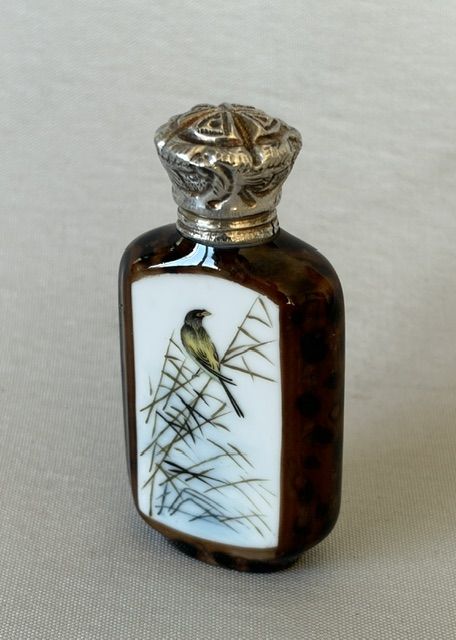
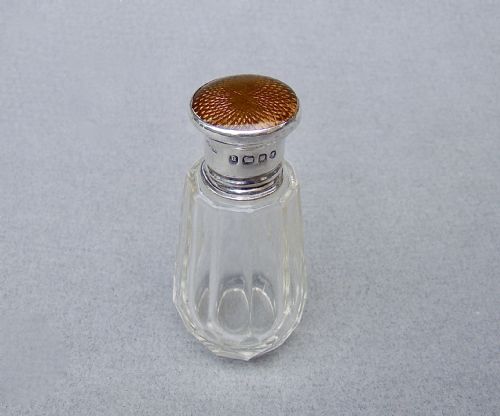


Silver Enamel Vanity Bottle
These silver enamel vanity bottle examples bring together sterling silver, glass, and bright colour for dressing tables.
Silver Enamel Vanity Bottle
When you search for a silver enamel vanity bottle, you enter a field of dressing table accessories made to hold scent or powder. These pieces combine metalwork with decorative coloured surfaces designed for daily use in bedrooms and boudoirs.
The version you are most likely to meet on this page is the scent bottle, often formed from clear glass fitted with a decorated top. These examples date from the Edwardian period through to the mid-century, with many carrying the sharp geometric lines of the Art Deco era.
Makers produced these vanity items in various forms, including perfume atomizers and lidded jars alongside traditional scent bottles. French makers and English workshops shaped these items in sterling silver and metal, finished with patterned enamel work.
How they were made
Makers constructed these bottles using clear glass and cut glass bodies, paired with mounts formed from sterling silver and metal. The glass provides weight and structure, while the silver creates secure collars, caps, and lids.
Surfaces feature enamel and guilloche enamel, a technique where metal is engraved with repetitive patterns before translucent coloured layers are applied. This method allows light to pass through the enamel to the worked metal underneath, creating depth of colour.
Silver Enamel Vanity Bottle Retail Price Guide 2026
Typical asking prices for silver enamel vanity bottle among the pieces listed under this phrase on Sellingantiques today, from the lower quarter to the upper quarter. They describe what is for sale here now, not the wider market.
Some dressing table bottles hide tiny glass dabbers beneath their silver caps for applying a single drop of scent.
What varies in quality
The standard of a silver enamel vanity bottle depends on the precision of the guilloche engraving and the evenness of the enamel layer. Finer pieces display crisp, regular patterns beneath smooth, unblemished colour.
The quality also rests in the weight of the silver mount and the clarity of the cut glass body. Substantial metalwork and well-fitted collars separate standard commercial production from the work of prominent silversmiths.
Henry Perkins·Karl Palda·Mappin And Webb
The Silver Enamel Vanity Bottle Glossary
- Guilloche enamel
- A decorative technique involving precise mechanical engraving beneath translucent enamel. This process creates a recurring geometric pattern that shows through the coloured glass-like coating.
- Sterling silver
- A silver alloy containing a high proportion of pure silver mixed with other metals for durability. This material forms the collars and lids found on dressing table bottles.
- Perfume atomizer
- A specialised bottle fitted with a spray mechanism rather than a simple stopper. These pieces allowed users to mist scent directly onto skin or clothing.
- Vanity jar
- A small lidded container designed for dressing tables to hold creams, salts, or powder. These containers match the materials and styles of accompanying scent bottles.
Silver Enamel Vanity Bottle: Frequently Asked Questions
Are these bottles safe for storing perfume?
These antique containers serve primarily as decorative vanity items rather than modern storage vessels. Old stoppers and seals may not prevent evaporation over time.
Display them empty or with minimal contents to protect the interior glass and metal fittings from degradation.
What styles are common in these vanity pieces?
Art Deco designs dominate the selection, featuring geometric patterns and bold colours typical of the interwar period. Edwardian and French Belle Epoque pieces also appear with softer, more ornate lines.
Mid-century British examples offer simpler forms while retaining the traditional combination of silver mounts and glass.
How can I tell the period of a bottle?
Hallmarks stamped on the silver mounts provide definitive dates and assay office locations for British pieces. Maker marks and registration numbers further help pinpoint the year of manufacture.
Stylistic cues such as the angular motifs of Art Deco or the flowing lines of earlier decades also indicate the era of production.