





Silver Dessert Service Set
A silver dessert service set brings together matched knives, forks, spoons, and serveware for the dining table.
Silver Dessert Service Set
A silver dessert service set encompasses specialised cutlery and serveware designed for fruit, cheese, and sweet courses after a meal. These collections appear across the Victorian, Edwardian, and George V periods, reflecting the formal dining habits of the nineteenth and early twentieth centuries.
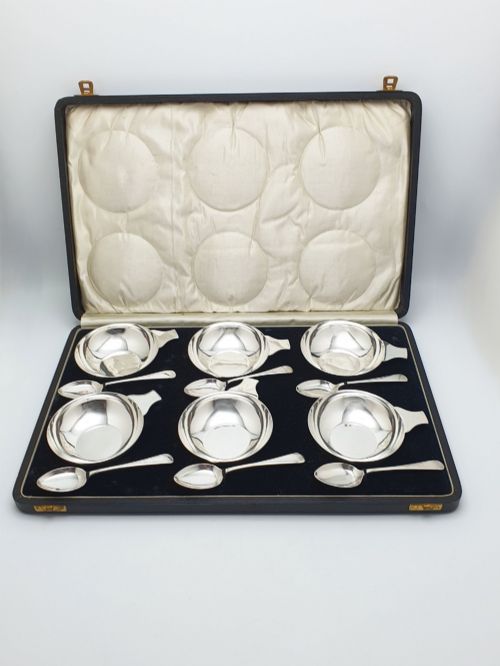
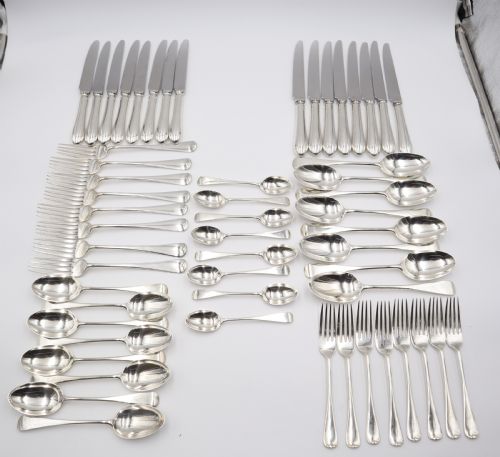
The configurations vary widely between individual dessert sets and large canteens. Common forms include cutlery sets for multiple persons alongside boxed fruit sets containing spoons, nutcrackers, and grape scissors.
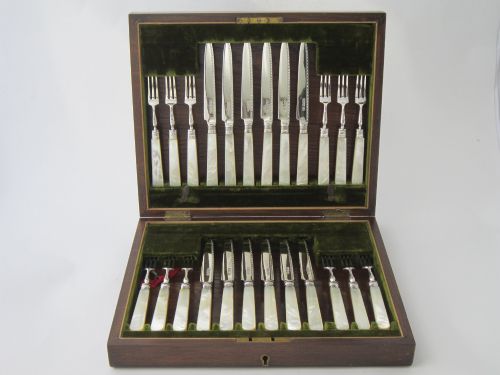
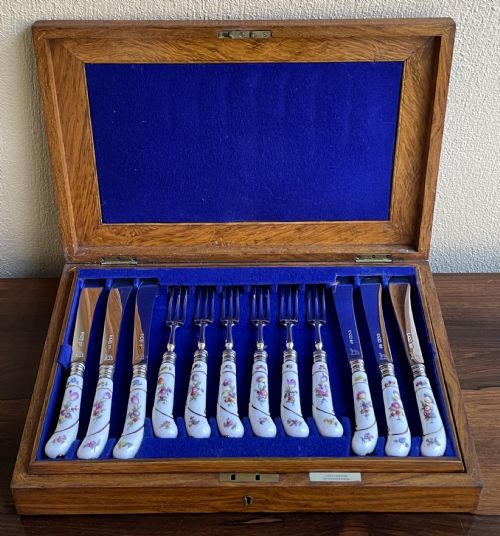
Materials span sterling silver, silver plate, mother of pearl, porcelain, agate, and wood. Many pieces utilise fitted oak cases or velvet linings to store the cutlery securely.
How they were made
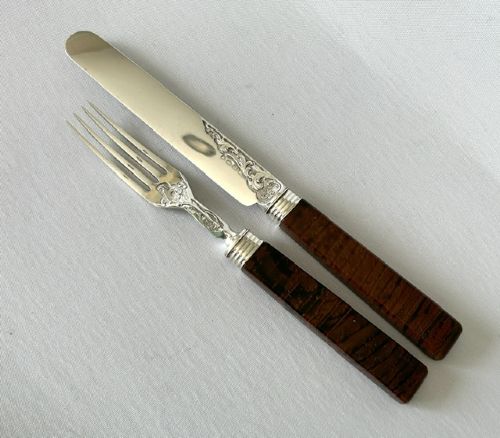
Cutlery handles employ natural materials such as mother of pearl and agate, shaped and pinned to metal blades and tines. Blades and serveware utilise sterling silver or silver plate, often featuring engraved detailing.
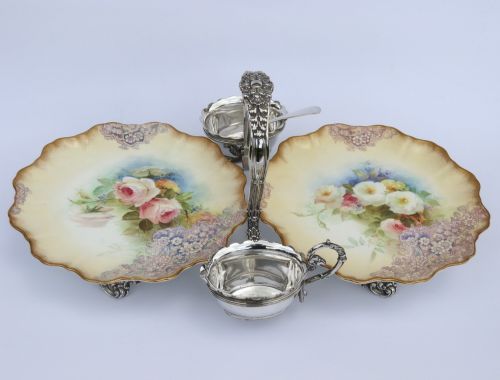
Fitted storage boxes are constructed from wood, frequently oak, and lined with velvet to hold the service components in place. Ceramic plates within the sets combine porcelain bodies with hand-painted decoration.
Silver Dessert Service Set Retail Price Guide 2026
Typical asking prices for silver dessert service set among the pieces listed under this phrase on Sellingantiques today, from the lower quarter to the upper quarter. They describe what is for sale here now, not the wider market.
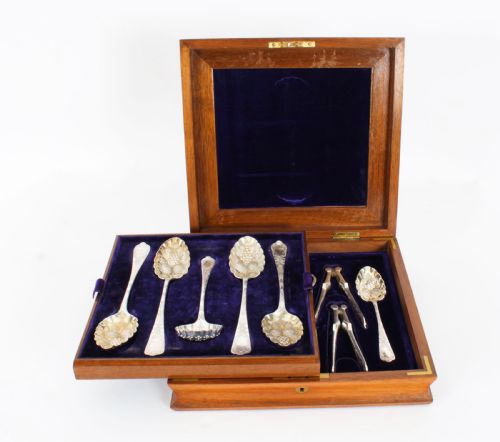
Grape scissors survive in velvet-lined boxes alongside nutcrackers, ready for Victorian dining rooms where fruit required specialised hardware.
What varies in quality
The choice of handle material and metal standard sets apart different examples within the range. Sterling silver components demonstrate higher intrinsic value than silver plate alternatives, while matched handles of mother of pearl or agate show superior craftsmanship.
The inclusion of specialist implements, such as grape scissors and nutcrackers alongside knives and forks, indicates a more comprehensive service. Fitted oak cases and hand-painted porcelain plates further distinguish the execution of the set.
Walker and Hall·Carrington·Hukin and Heath·Doulton Burslem
The Silver Dessert Service Set Glossary
- Sterling silver
- A silver alloy containing 92.5 percent pure silver by mass, standard for quality British tableware. This material appears frequently across the listed cutlery sets.
- Silver plate
- A layer of silver applied to a base metal core, used widely in nineteenth and twentieth-century tableware. This technique allowed elaborate serveware to be produced more affordably.
- Mother of pearl
- The iridescent internal layer of certain mollusc shells, carved to form knife and fork handles. It provides a tactile and decorative grip for dessert cutlery.
- Canteen
- A fitted box or chest designed to store a complete set of cutlery. These wooden cases often feature velvet linings and multiple internal tiers.
Silver Dessert Service Set: Frequently Asked Questions
What is included in a dessert service set?
These sets generally comprise matched knives and forks intended for fruit or cheese courses. Some examples incorporate serving spoons, nutcrackers, and grape scissors.
Larger configurations arrive in fitted wooden canteens designed to hold cutlery for multiple persons.
How were these sets used?
Dining traditions of the nineteenth and early twentieth centuries required specific cutlery for the final sweet or fruit course of a formal meal. Acidic fruits required silver blades to prevent tarnishing and tainting the flavour.
Servants brought the boxed sets to the table or sideboard for guests to use during dessert.
How do I care for silver dessert cutlery?
Hand washing in warm soapy water preserves the metal components and protects delicate organic handle materials like mother of pearl. Modern dishwashers should be avoided because heat and harsh detergents damage the wooden cases and linings.
Occasional gentle polishing maintains the finish on sterling silver and silver plate.
How can I tell the period of a set?
Hallmarks stamped onto the metal components provide direct dates and assay office origins for sterling silver items. Stylistic clues such as Victorian engraving or Edwardian box designs offer further indicators of age.
Fitted oak cases and accompanying porcelain plates also reflect the manufacturing fashions of their respective decades.