





Silver Dessert Knives Forks
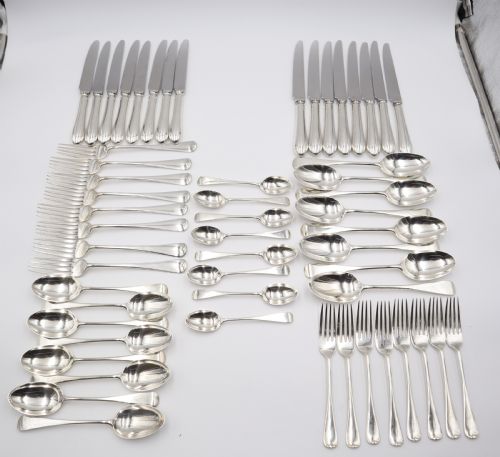
Silver dessert knives forks are table implements for fruit and cheese, found in fitted wooden boxes with mother of pearl or silver handles.
Silver Dessert Knives Forks
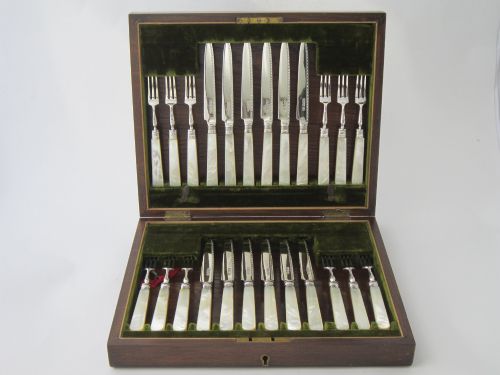
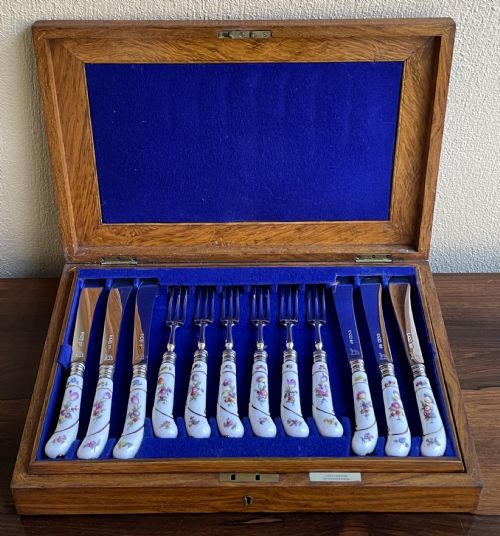
Silver dessert knives forks appear in fitted wooden cases, often lined with velvet and fashioned from oak or mahogany. These sets are designed specifically for the final courses of a meal, featuring matched implements for fruit and cheese.
The evidence shows forms ranging from cased canteens for twelve persons down to boxed pairs and sets of four or six. You will frequently encounter Victorian and Edwardian examples alongside Georgian pieces, often housed in their original presentation boxes.
How they were made
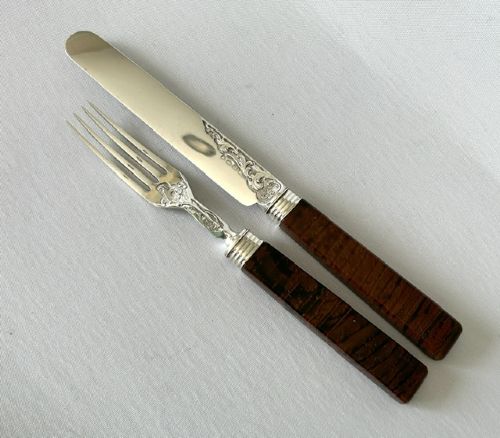
Blades and tines are forged from sterling silver or silver plate, sometimes paired with steel, whilst handles are fashioned from mother of pearl, agate, or porcelain. Many incorporate decorative patterns such as Queens or Coburg, reflecting the prevailing style of the period.
Cased sets are typically housed in oak or mahogany boxes lined with velvet to protect the contents. The metal components are shaped and polished, with individual pieces bearing hallmarks where solid silver is used.
Silver Dessert Knives Forks Retail Price Guide 2026
Typical asking prices for silver dessert knives forks among the pieces listed under this phrase on Sellingantiques today, from the lower quarter to the upper quarter. They describe what is for sale here now, not the wider market.
Some sets paired delicate silver with agate or porcelain, ensuring that slicing an apple felt like a minor aristocratic event.
What varies in quality
Quality depends upon the uniformity of the matched set and the integrity of the handle materials, such as mother of pearl or agate. Finer examples display crisp detail in patterns like Queens and are complete with their original fitted wooden boxes.
The distinction between solid sterling silver and silver plate marks a shift in grade, as does the presence of gilt work on solid silver blades. Original boxes lined with velvet maintain the completeness and integrity of the set.
Carrington·Aaron Hadfield·Mappin & Webb
The Silver Dessert Knives Forks Glossary
- Mother of pearl
- An iridescent inner layer of mollusc shell used for knife and fork handles. It provides a smooth, tactile grip that contrasts with the silver metal.
- Canteen
- A fitted box or case designed to store a set of cutlery securely. These are frequently constructed from oak or mahogany and lined with velvet.
- Silver gilt
- Silver that has been coated with a thin layer of gold on its surface. This technique adds a rich, warm tone to dessert and fruit knives.
- Queens pattern
- A decorative relief design found on the handles of flatware and cutlery. It is characteristic of nineteenth-century manufacturing styles.
Silver Dessert Knives Forks: Frequently Asked Questions
What were silver dessert knives forks used for?
These implements were utilised at the end of a meal for eating fruit and cheese. They kept guests from using their main course cutlery for delicate foods.
The inclusion of specific fruit knives and forks in cased sets indicates a formal approach to dining. They were kept in dedicated wooden boxes between uses.
How do I store silver dessert knives forks?
Keeping the pieces inside their original fitted wooden box protects the metal and handles from damage. Velvet linings help prevent scratching when the knives and forks are laid in their slots.
Storing them in a dry environment prevents tarnishing of the silver and protects organic handle materials like mother of pearl or wood from moisture.
Are these sets usually complete?
Many surviving sets retain their full complement of knives and forks, often numbering six or twelve pieces. Fitted boxes generally have designated spaces for every single implement.
Checking the interior of the case reveals if any pieces are missing from the original arrangement. Canteens for twelve persons demonstrate the larger configurations available.
How can I tell the period of a set?
Stylistic indicators such as Queens or Coburg patterns point towards specific nineteenth-century eras. Materials like porcelain or agate also offer clues to the manufacturing decade.
Hallmarks stamped on sterling silver components provide precise dates of assay. Cased sets from the Georgian, Victorian, and Edwardian periods each exhibit distinct box construction and lining choices.