


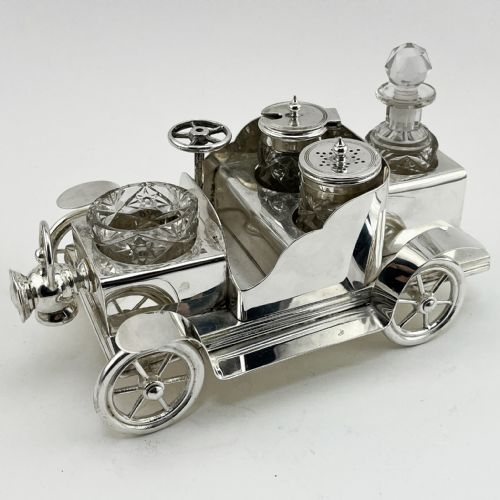


Silver Cruet Bottles
These silver cruet bottles bring period dining tables to life, offering cut glass and polished metal for oil, vinegar and seasoning.
Silver Cruet Bottles
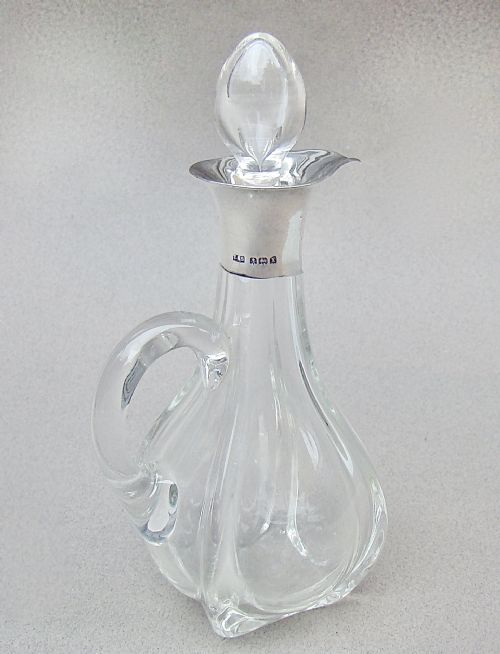
Silver cruet bottles form part of larger condiment and cruet sets designed to sit in the centre of the dining table during the Georgian, Victorian and Edwardian eras. Buyers searching for silver cruet bottles encounter individual glass vessels fitted with sterling silver or silver plated mounts, often housed within fitted stands or frames.
The versions most commonly met on this page date from the Edwardian period and the nineteenth century, ranging from simple sterling silver pairs for oil and vinegar to larger silver plated multi-bottle frames. These vessels combined utility with display, holding essential liquids and condiments ready for formal meals.
Materials and construction
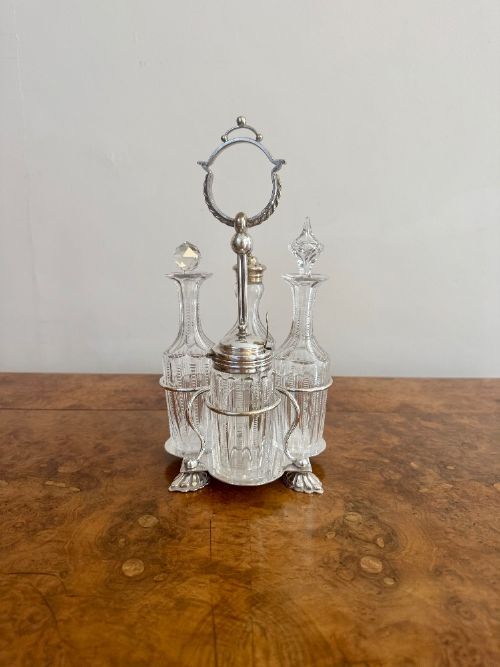
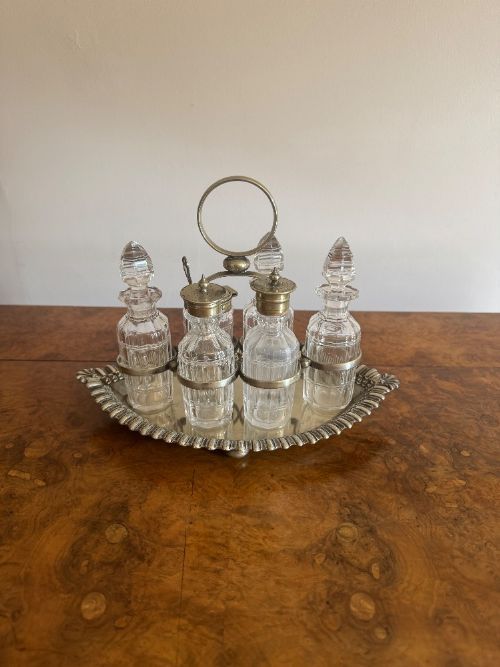
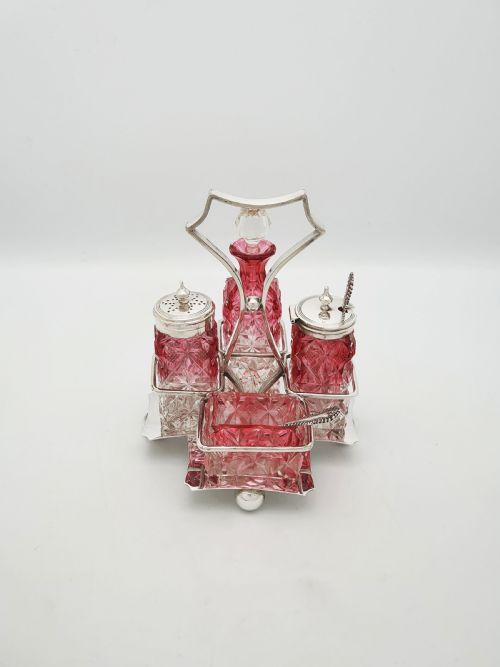
Makers combined heavy cut glass and cranberry glass with sterling silver, Old Sheffield plate and standard silver plate to form these bottles and their accompanying frames. Glass bodies were frequently diamond-cut or faceted to catch the light, then fitted with hinged silver caps or collars.
Metalwork involved traditional silversmithing techniques, including casting, piercing and electroplating over base metals like nickel silver. Stands often incorporated ebonised wood bases or central carrying handles welded securely to the bottle frames.
Silver Cruet Bottles Retail Price Guide 2026
Typical asking prices for silver cruet bottles among the pieces listed under this phrase on Sellingantiques today, from the lower quarter to the upper quarter. They describe what is for sale here now, not the wider market.
Listings feature silver cruet bottles spanning the Georgian, Victorian, and Edwardian periods, utilising cut glass, sterling silver, and silver plate.
Judging quality and craftsmanship
Quality rests in the weight of the metal and the clarity of the glass. Superior examples feature thick-walled cut glass bottles free from chips, paired with heavy sterling silver mounts bearing clear hallmarks rather than thin silver plate over base metal.
Design complexity also sets pieces apart, from simple three-bottle frames to grand seven-bottle sets with ornate cast mounts and matching stoppers. The retention of original matched glass bottles within a period frame distinguishes a coherent ensemble from a later assembled grouping.
Walker & Hall·Charles Thomas Fox·Elkington & Co·Hester Bateman·Wade Wingfield Wilkins
The Silver Cruet Bottles Glossary
- Cruet set
- A matched collection of bottles and jars for holding vinegar, oil, mustard and other condiments, usually held together in a metal frame. These sets occupied the centre of the dining table during the eighteenth and nineteenth centuries.
- Old Sheffield plate
- An early form of composite metal produced by fusing a thin sheet of silver to a thicker copper base. This technique was widely used before the invention of electroplating in the mid-nineteenth century.
- Cranberry glass
- A rich red glass coloured by the addition of gold chloride to the molten batch. It appears frequently in decorative Victorian tablewares and cruet inserts.
- Sterling silver
- An alloy consisting of silver and a small proportion of other metals to increase durability while maintaining a high purity standard. British pieces carry official assay office hallmarks to verify this standard.
- Ebonised wood
- Timber treated with a dark stain or finish to imitate ebony. It provided a contrasting dark base for silver mounts in Georgian and Victorian stands.
Silver Cruet Bottles: Frequently Asked Questions
What were silver cruet bottles used for?
These bottles held liquid condiments such as oil, vinegar and sometimes soy or essence for seasoning food at the table. They allowed hosts to serve fine liquids cleanly and elegantly during formal meals.
The bottles sat within fitted stands equipped with handles, making it easy to pass the condiments among guests. Each bottle featured a specific stopper or pourer suited to its contents.
How do I date a silver cruet set?
Dating relies on hallmarks stamped onto the silver mounts, which indicate the assay office and year of production. Stylistic details, such as Edwardian restraint or Victorian ornamentation, also point to the correct era.
Unmarked silver plated sets require examination of the manufacturing technique, base metal, and frame design. Old Sheffield plate generally indicates an eighteenth or early nineteenth century origin.
Are the glass bottles usually original?
Many surviving sets retain their original cut glass or cranberry glass bottles, often matching the precise contours of the frame. Because glass was prone to breakage over the centuries, replacements do occur.
Matching glass thickness, pattern, and wear at the base helps determine whether the bottles belong to the frame. Original bottles fit their designated rings without excessive movement.
How should I clean silver cruet mounts?
Silver mounts and plated frames require gentle cleaning with a mild, non-abrasive polish designed for silver. Care should be taken to avoid getting polish trapped in the cut glass patterns or wooden bases.
Removable glass bottles can be washed separately in warm soapy water. Avoiding harsh chemical dips preserves the original patina on older silver and plated surfaces.