


Silver Collar Sword Stick
These silver collar sword stick examples are concealed blade walking canes that offer gentlemanly discretion and tactile craftsmanship.
Silver Collar Sword Stick
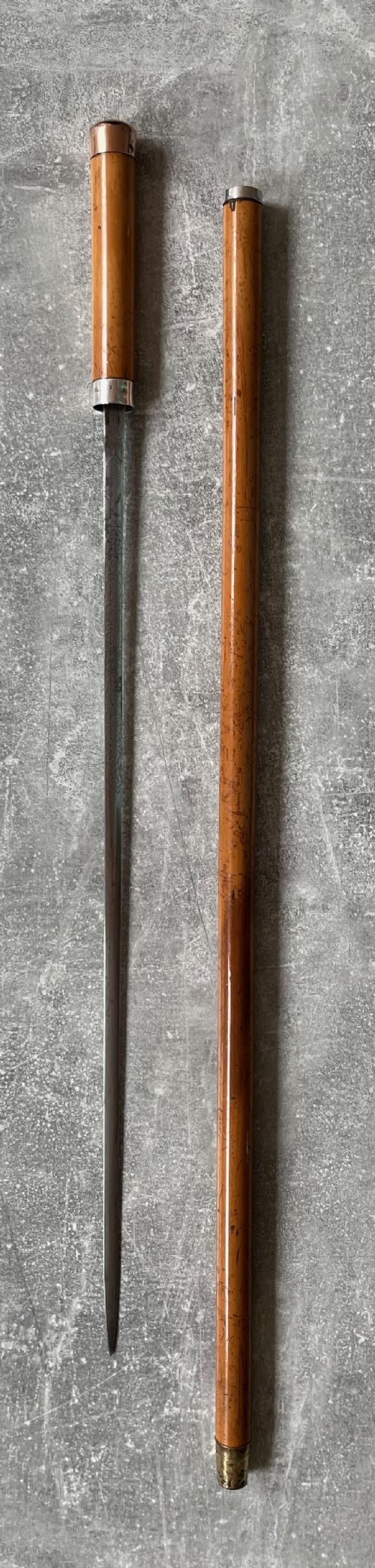
A silver collar sword stick combines a standard walking cane with a concealed steel blade, designed for personal protection or carriage during the Victorian and Edwardian eras. When you search for this phrase, you find practical self-defence implements disguised as polite accessories for the gentleman about town.
The most common version on this page pairs a malacca cane shaft with a hallmarked silver collar and a discreet release mechanism. These pieces frequently date from the late nineteenth century through to the interwar period of the nineteen thirties.
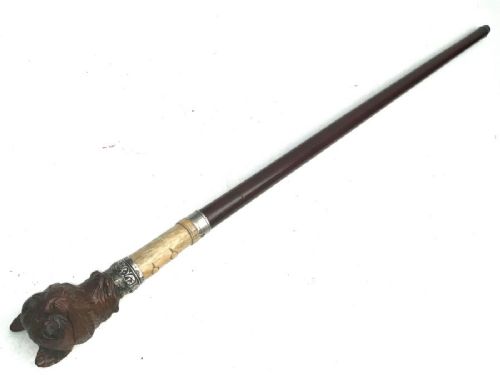
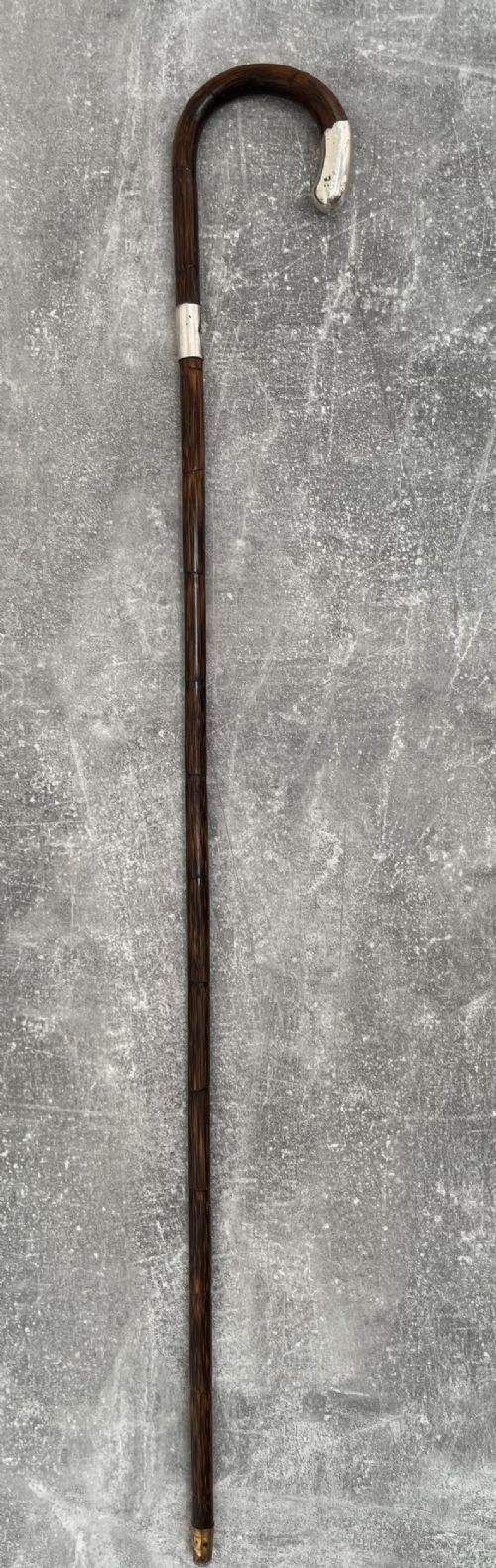
Makers utilised various natural woods and handles alongside the titular metal mount, creating distinct regional English variations from London and Birmingham workshops. Collectors encounter diverse handle configurations ranging from simple horn knops to carved root ball grips.
How they were made
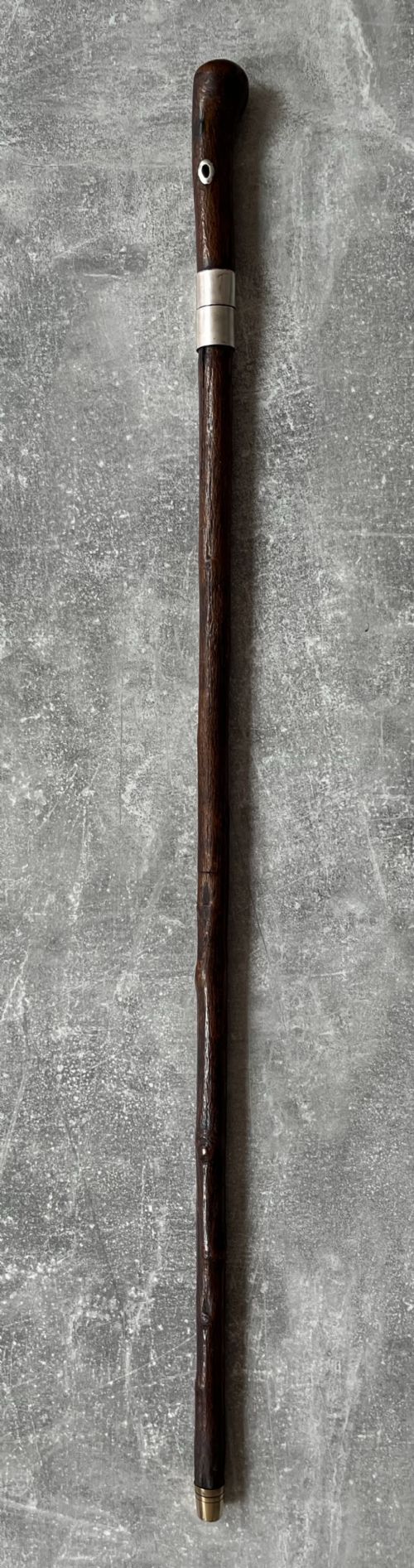
Craftsmen shaped natural shafts from malacca, hazel, rosewood, chestnut or hardwood, fitted with threaded or friction-secured metal collars to reinforce the top of the cane where the handle joins. These collars often bear assay marks indicating the assay office and year of manufacture.
The concealed blades utilise forged steel, sometimes signed by notable makers such as Wilkinson or produced in Toledo, seated securely inside the wooden channel. Horn, bone, wood or metal handles cap the construction, concealing the hidden blade mechanism from casual view.
Certain pieces feature masonic symbols or novelty handles, hiding secret loyalties beneath the guise of a standard afternoon stroll.
What varies in quality
The grade of a piece rests upon the rigidity of the concealed blade and the precision of the locking mechanism between cane and handle. Superior examples maintain a straight shaft that conceals the blade without rattle or looseness.
Material selection dictates the upper tier, where figured malacca shafts meet fully hallmarked silver mounts and branded steel blades. Lesser pieces show simpler hardwood construction and plain metal collars without assay marks.
Wilkinson Blade
The Silver Collar Sword Stick Glossary
- Malacca
- A type of smooth rattan cane imported from Southeast Asia, prized for its mottled brown finish and resilience. It forms the most common shaft material for these pieces.
- Collar
- The metal band encircling the top of the cane shaft just below the handle. On these pieces, it is typically made of silver and sometimes bears hallmarks.
- Knop
- A rounded knob forming the handle of the walking stick. They appear in materials like horn, bone, wood and silver.
- Wilkinson
- A renowned British sword-making firm supplying high-quality steel blades for military and civilian use. Their blade signatures indicate premium manufacture.
- Hallmark
- An official stamp applied to precious metals indicating standard of purity and place of assay. Birmingham and London marks frequently appear on these collars.
Silver Collar Sword Stick: Frequently Asked Questions
What is a silver collar sword stick?
A silver collar sword stick is a walking cane that conceals a steel blade inside its wooden shaft, featuring a decorative silver band at the top.
These pieces served as fashionable accessories and personal protection tools for gentlemen during the nineteenth and early twentieth centuries.
How do you release the hidden blade?
Most examples utilise a screw thread, a push-button catch, or a simple friction fit that releases the handle from the shaft.
Owners pulled the handle straight up to draw the steel blade from its wooden scabbard.
How do I identify the date of a piece?
Assay hallmarks stamped onto the silver collar provide the exact year of manufacture and the city where the silver was tested.
Stylistic details like handle shape and wood choice also help narrow down whether a piece is Victorian or Edwardian.
Were these used as weapons?
They were carried primarily as gentlemen's walking aids with the secondary capability for self-defence in urban environments.
Carrying them provided reassurance during travel when personal security was a genuine concern.
How should I display or store them?
Store them upright in a traditional umbrella stand or horizontally in a dedicated display case away from direct heat sources.
Keep the internal steel blade lightly oiled to prevent corrosion inside the wooden channel.