

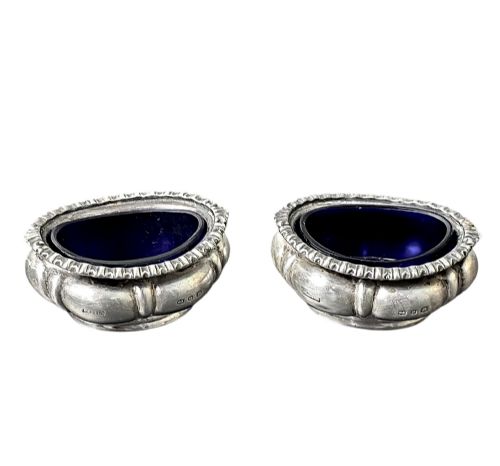
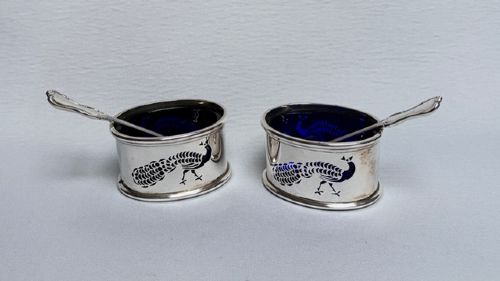
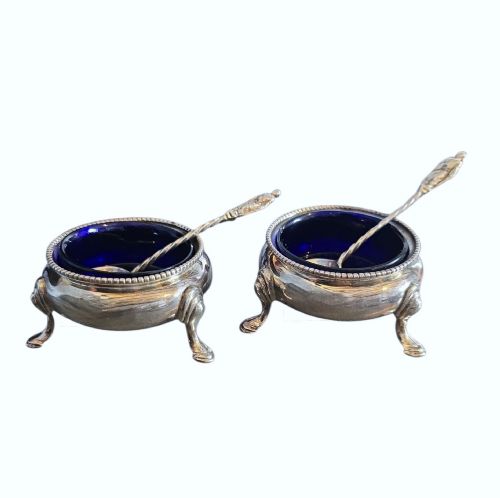
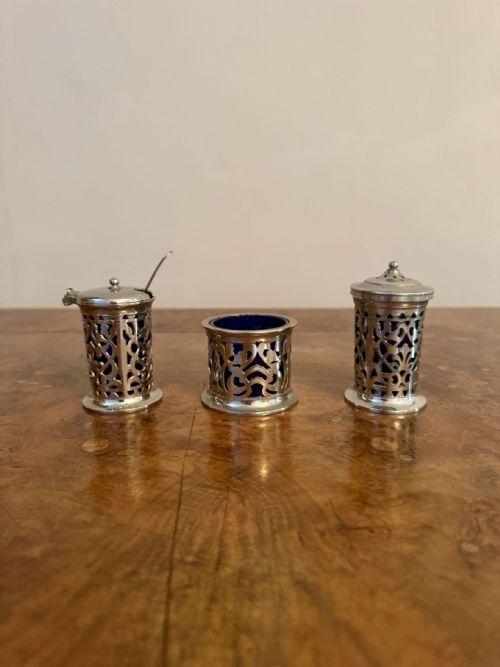



Silver Cobalt Glass Salts
These silver cobalt glass salts combine brilliant blue liners with gleaming silver frames to bring colour and utility to any dining table.
Silver Cobalt Glass Salts
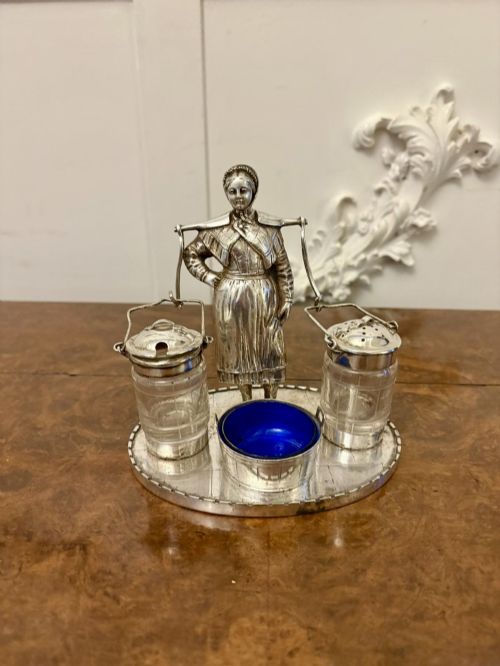
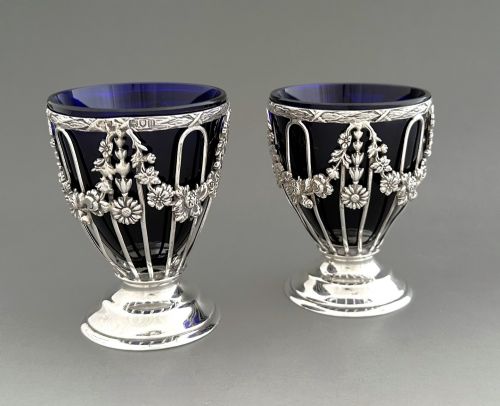
Silver cobalt glass salts are small open vessels used for holding table salt, typically formed of a metal framework holding a rich blue glass liner.
The selections here span multiple eras, most frequently appearing in Victorian and Edwardian examples alongside Art Deco and Georgian style pieces.
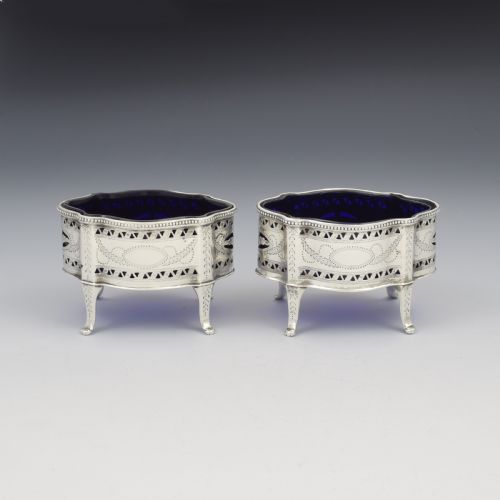
Forms range from pierced serpentine holders and boat-shaped table salts to boxed sets complete with their original spoons and condiment pots.
How they were made
The metal components rely on sterling silver or silver plate, shaped through piercing, wirework, and casting into forms like boat-shaped table salts and mustard pots.
Glass liners are blown in deep cobalt blue hues to sit snugly within the silver pierced or solid frames.
Silver Cobalt Glass Salts Retail Price Guide 2026
Typical asking prices for silver cobalt glass salts among the pieces listed under this phrase on Sellingantiques today, from the lower quarter to the upper quarter. They describe what is for sale here now, not the wider market.
What varies in quality
Quality rests in the crispness of the pierced metalwork and the weight of the silver frame supporting the glass.
The presence of matching original liners and fitted spoons distinguishes finer sets from later replacements.
The Silver Cobalt Glass Salts Glossary
- Salt cellars
- Small open vessels used on the dining table to hold granular salt before the invention of the mechanical shaker.
- Sterling silver
- A silver alloy containing ninety-two point five percent pure silver by mass, standard for quality British tableware.
- Cobalt glass
- Deep blue glassware coloured by the addition of cobalt salts during manufacture.
- Condiment pots
- Tableware vessels designed to hold mustard, pepper, or other sauces alongside salt cellars.
Silver Cobalt Glass Salts: Frequently Asked Questions
How were silver cobalt glass salts used?
Diners used them at the table by pinching salt out with small spoons or fingers to season individual portions.
They sat beside each place setting or were shared between guests as part of a formal dining service.
How do I clean silver salt cellars?
Wash the removable glass liners gently in warm soapy water while keeping moisture away from glued or delicate joints.
Polish the silver frames with a soft cloth and appropriate silver cleaner to maintain the shine.
Are original glass liners important?
Original liners fit the metal frames precisely and match the period manufacture of the outer silver housing.
Replacements can still function well for daily use, but matched originals hold greater interest for collectors.
How do I date these salt cellars?
Hallmarks stamped on the sterling silver components provide specific assay office marks and date letters for British pieces.
Stylistic details like Edwardian wirework or Victorian piercing also point towards specific manufacturing decades.