
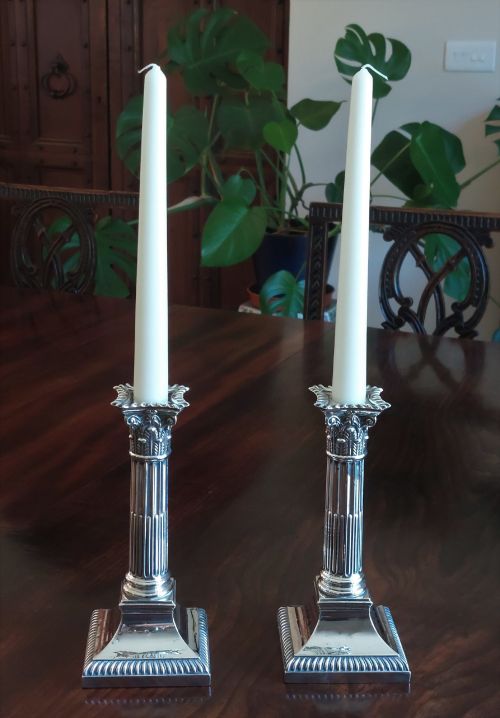
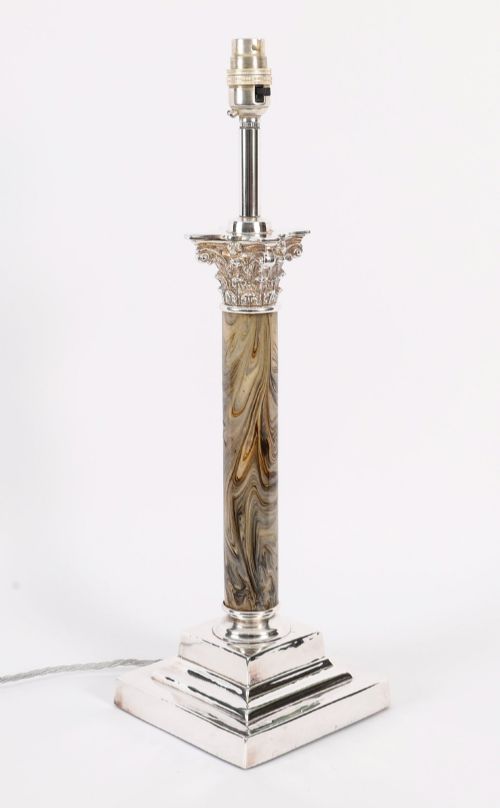
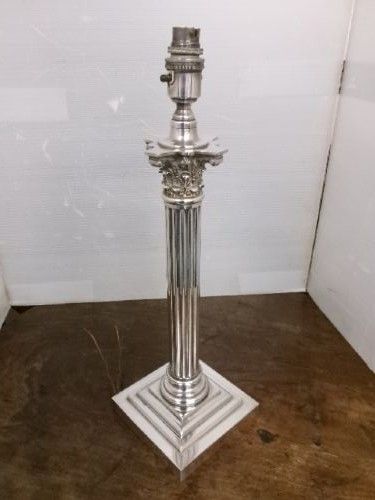
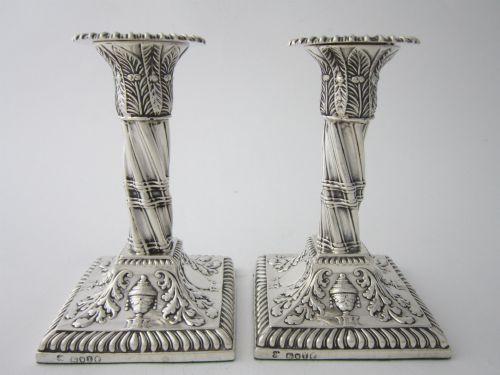
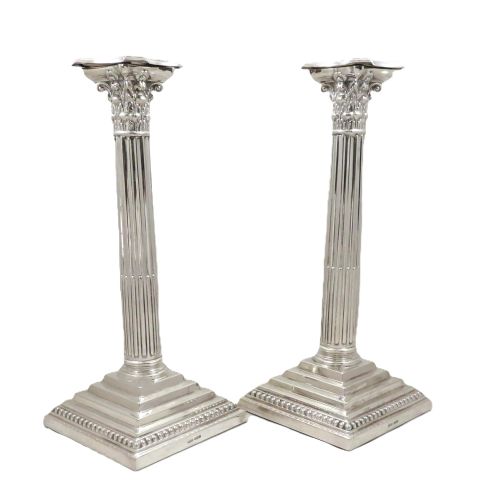
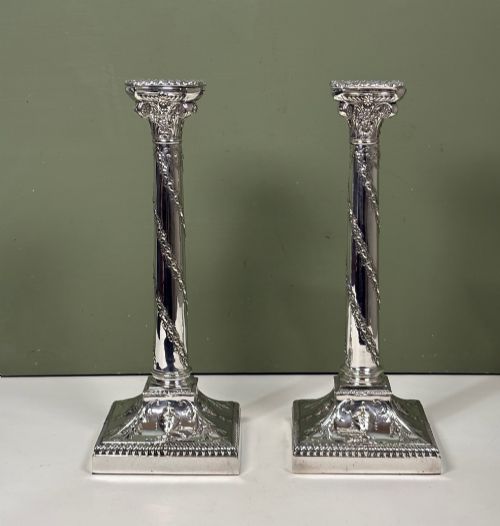
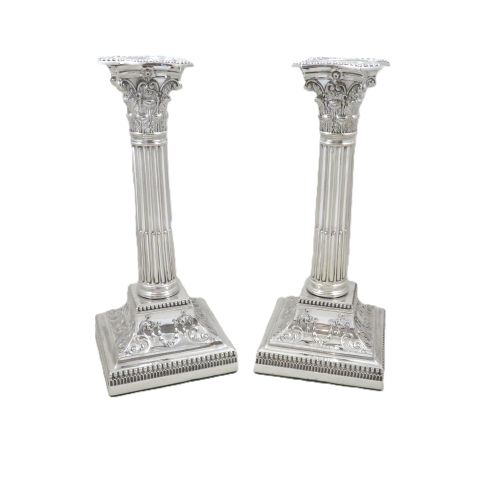

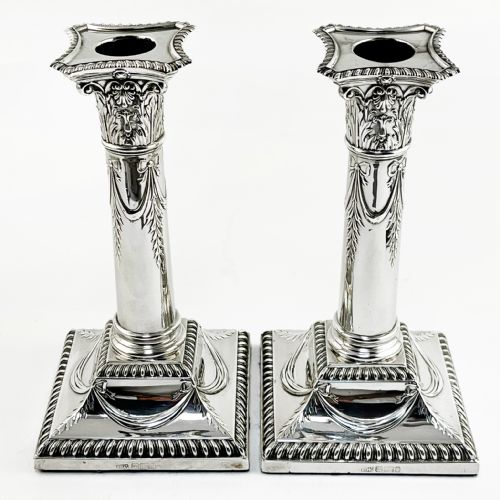


Silver Classical Column Candlesticks
Silver classical column candlesticks bring architectural dignity to a room, drawing on ancient orders to lend grandeur to any table.
Silver Classical Column Candlesticks
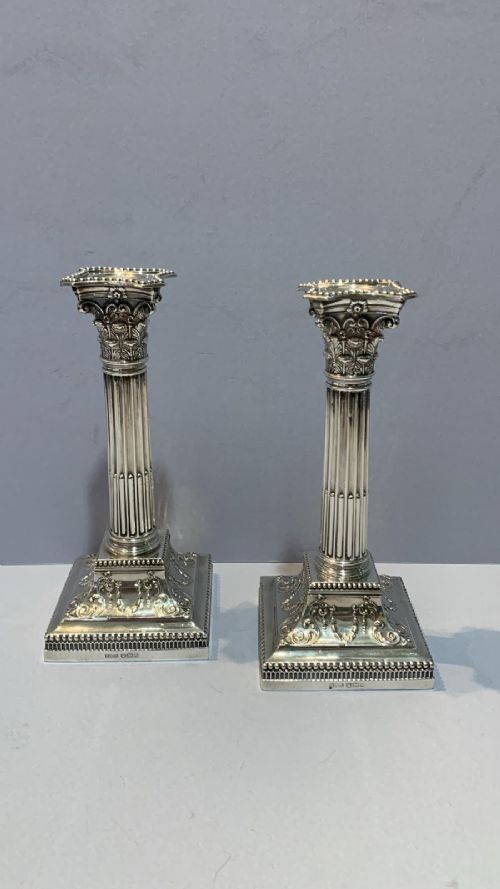
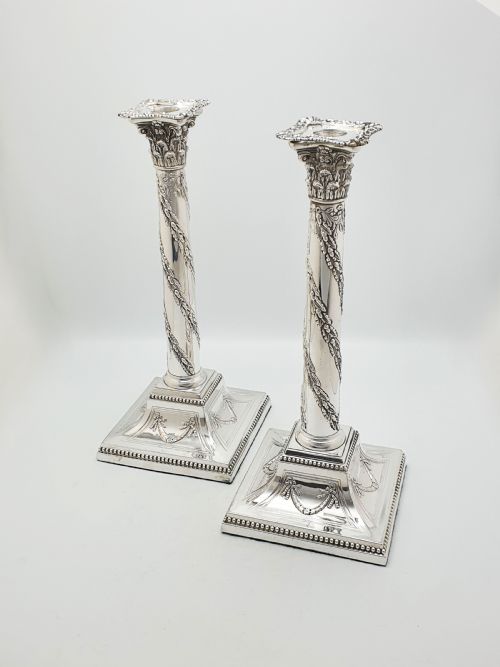
When you search for silver classical column candlesticks, you are looking at items designed to emulate the proportions of ancient Greek and Roman architecture, mostly taking the form of Corinthian columns. These pieces appear frequently as paired items created for domestic illumination during the Victorian, Edwardian, and early twentieth-century periods.
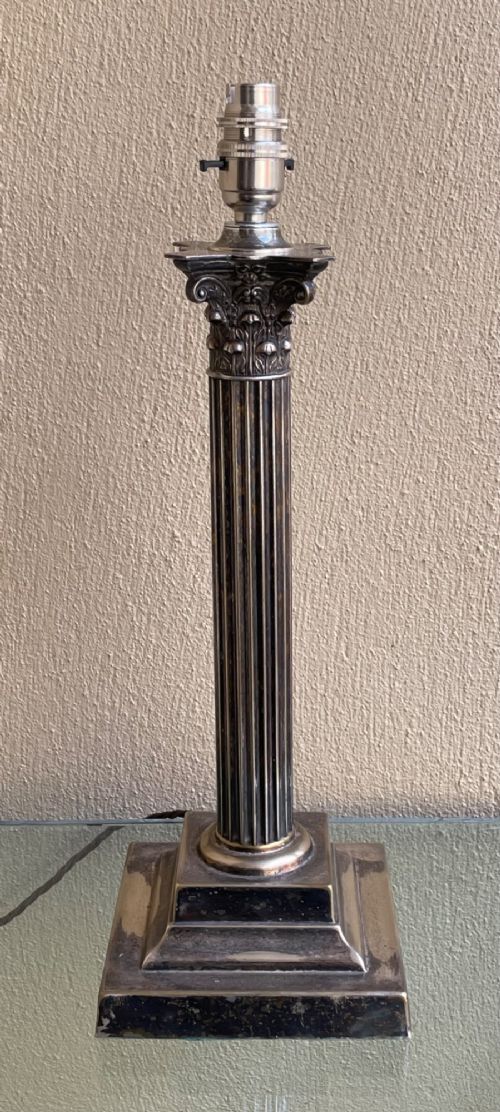
The selection ranges from smaller mantlepiece candlesticks to monumental table lamps and multi-light candelabras. Alongside standard candle holders, converted table lamps feature prominently, retaining their architectural shafts while serving modern lighting needs.
How they were made
The construction of these pieces relies on a combination of metals, predominantly sterling silver and silver plate over a base metal, alongside specialist variants like nickel silver and silvered bronze. Many examples utilise weighted bases to ensure stability, supporting the vertical column shafts without tipping.
Detailing on the capitals and fluted shafts requires precision casting and stamping techniques, particularly visible in the acanthus leaves characteristic of the Corinthian order. Workshops employed skilled silversmiths to assemble these components cleanly, ensuring seamless joins between the square stepped bases and the columns above.
Some columns come equipped with miniature lion's paw feet, ensuring even your table lamps are prepared to pounce.
What varies in quality
The distinction between standard items and superior examples lies in the crispness of the casting on the column capitals and the depth of the metalwork. Higher quality pieces display sharply defined acanthus foliage and well-proportioned fluting that mirrors genuine stone architecture.
Substantial weight and solid structural integrity separate finer productions from lighter, mass-produced alternatives. The quality of the silver plating or the gauge of the sterling silver determines how well the surface ages and polishes over decades of use.
Garrard & Co·Harrison Brothers & Howson·Walter Latham & Son·John Pound & Co·Ferdinand Barbedienne
The Silver Classical Column Candlesticks Glossary
- Corinthian column
- A classical architectural order featuring an ornate capital decorated with rows of acanthus leaves. This form is the most common design found on the shafts of these candlesticks.
- Sterling silver
- An alloy consisting of pure silver and other metals, usually copper, meeting a strict fineness standard. Pieces bearing this designation carry proper hallmarks denoting their metal purity.
- Silver plate
- A layer of silver applied to a base metal such as copper or nickel silver. This technique offered a more accessible route to owning grand architectural tableware.
- Candelabra
- A branched candlestick holding multiple lights. Certain pieces in this category include removable arms allowing them to function as single sticks or multi-light fixtures.
- Pricket candlestick
- A style featuring a central spike upon which a candle is impaled rather than dropped into a socket. These items occasionally appear converted into lamps from early twentieth-century contexts.
Silver Classical Column Candlesticks: Frequently Asked Questions
How do I clean tarnished silver candlesticks?
Use a soft cloth and a dedicated silver polish designed to lift tarnish without removing the underlying plating or sterling surface. Avoid abrasive materials that can scratch the delicate fluting of the columns.
Take extra care around the recessed details of the Corinthian capitals where polish can accumulate. Gentle brushing with a soft-bristled brush helps clear residue from these intricate areas.
Were these always meant for candles?
While the majority began life supporting wax candles, many examples were subsequently adapted into table lamps during the twentieth century. This conversion often involved running wiring through the central column.
Original candlesticks and period conversions both hold a distinct place in domestic interiors. Collectors value both the untouched candle holders and the professionally wired lamp adaptations.
How can I tell Victorian from Edwardian pieces?
Victorian examples often display heavier, more ornate proportions with robust detailing like lion's paw feet. They reflect the high-Victorian appetite for solid architectural revival forms.
Edwardian pieces tend toward slightly more refined, lighter styling while retaining the classic column format. Hallmarks and date letters stamped onto the silver provide the most definitive guide to precise age.
Are weighted bases original?
Most tall candlesticks require weighted bases filled with a supportive core material to keep them upright and stable. This construction method is standard practice for tall silver tableware to prevent tipping.
Inspecting the underside usually reveals a baize or felt covering over the weighted interior. Maintaining this original padding helps protect fine furniture surfaces from scratches.